
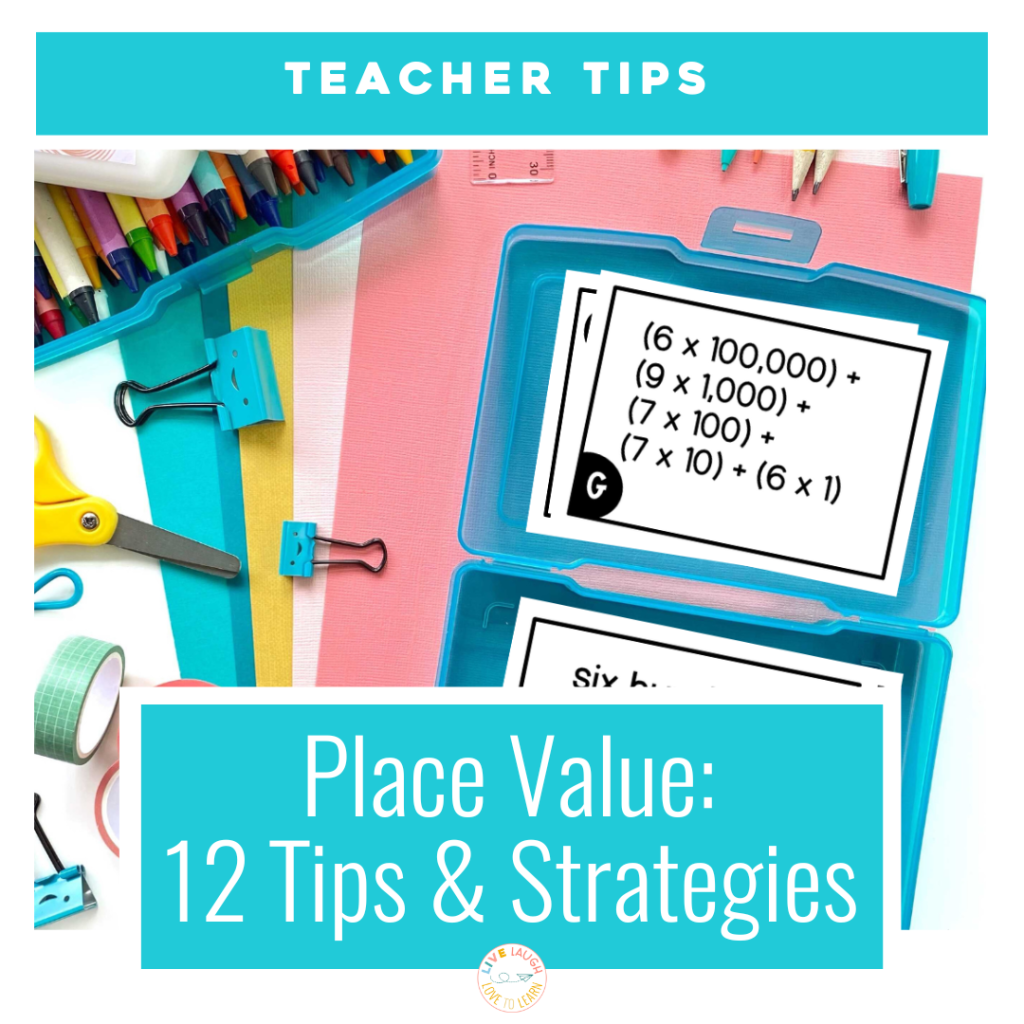
Teaching place value to upper elementary students is a crucial milestone in their math education. It lays the foundation for understanding larger numbers, decimals, and more advanced mathematical concepts. To help you make place value engaging and effective for your students, I am sharing some of my favorite tips and strategies. From hands-on activities to real-world applications, these ideas are designed to help your students master place value.
Table of Contents
Place Value Visual Aids
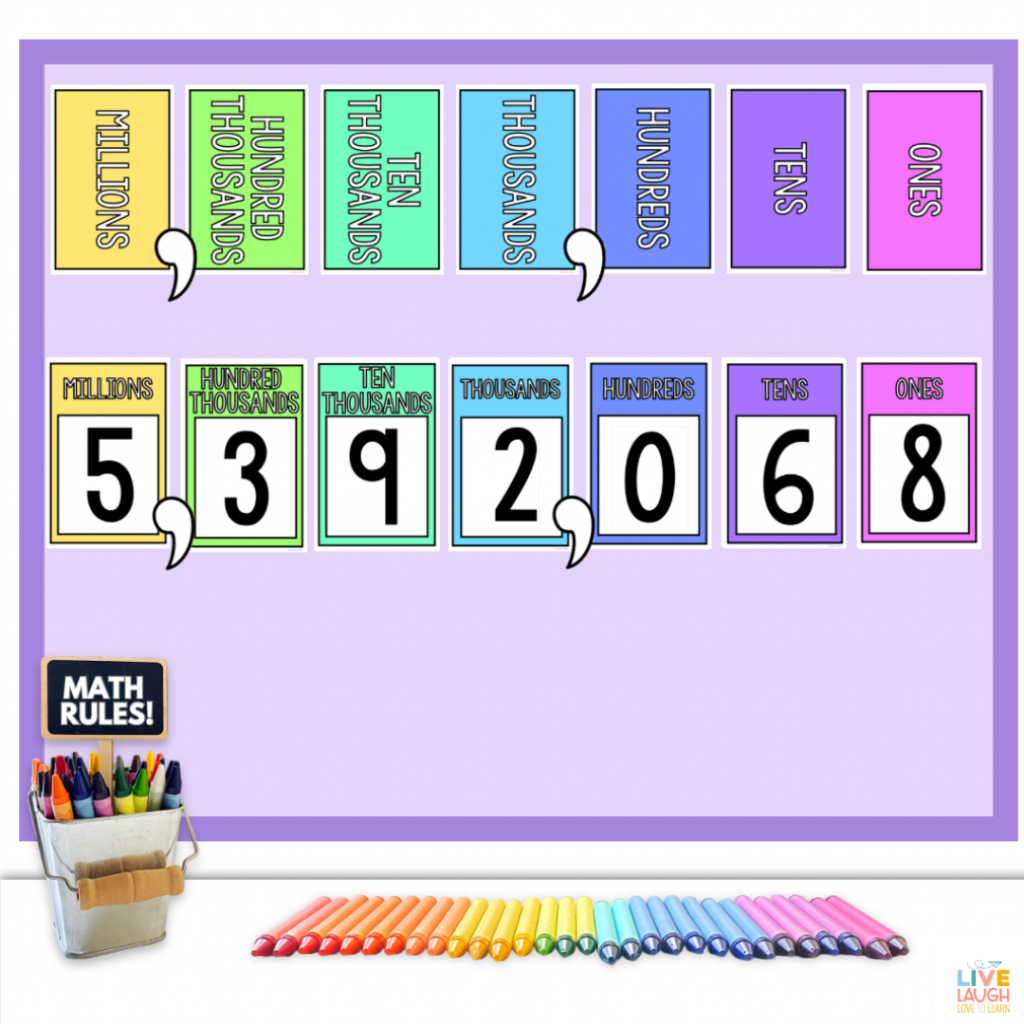
Visual aids are your allies when teaching place value. They provide students with a tangible representation of abstract concepts, making it easier for them to grasp the fundamentals. Consider using place value charts, base-ten blocks, number lines, and anchor charts to illustrate the relationship between digits and their positional value. You may also choose to create an interactive place value display to show and discuss numbers.
Hands-On Activities
Engagement is key to effective learning. Encourage active participation with hands-on place value activities such as building numbers with base-ten blocks, using an interactive place value bulletin board, matching and sorting task cards, or playing interactive place value games. These activities make learning fun and memorable. Hands-on activities are a great choice for engaging students in math stations rotations while you are working with small groups.
Explore Expanded Form
Introduce students to expanded form, a powerful concept that allows them to break down larger numbers into their constituent parts. For example, 4,732 can be expressed as 4,000 + 700 + 30 + 2. This reinforces their understanding of place value.
Connect with Word Form
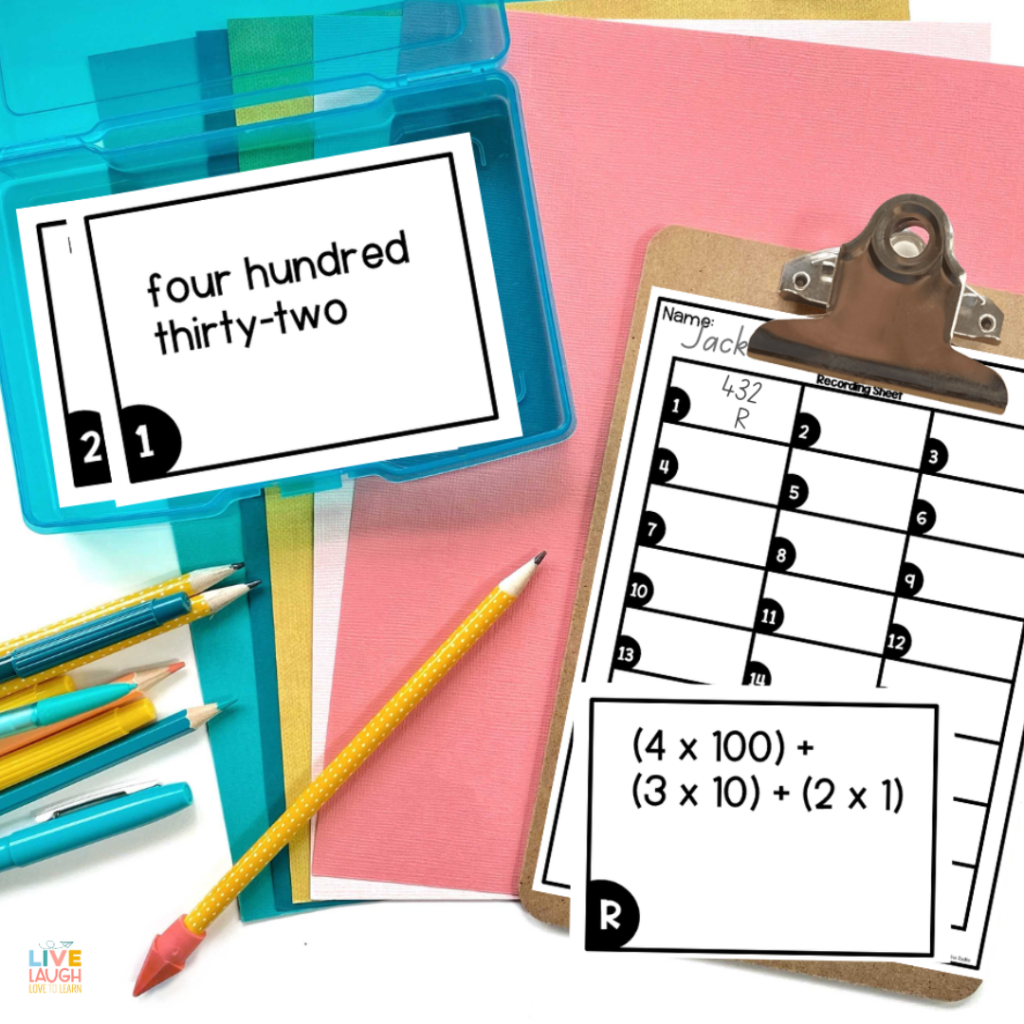
Strengthen the connection between place value and word form. Practice reading and writing numbers in word form, such as saying “four thousand seven hundred thirty-two” for 4,732. This helps students relate place value to everyday language.
Comparison Activities
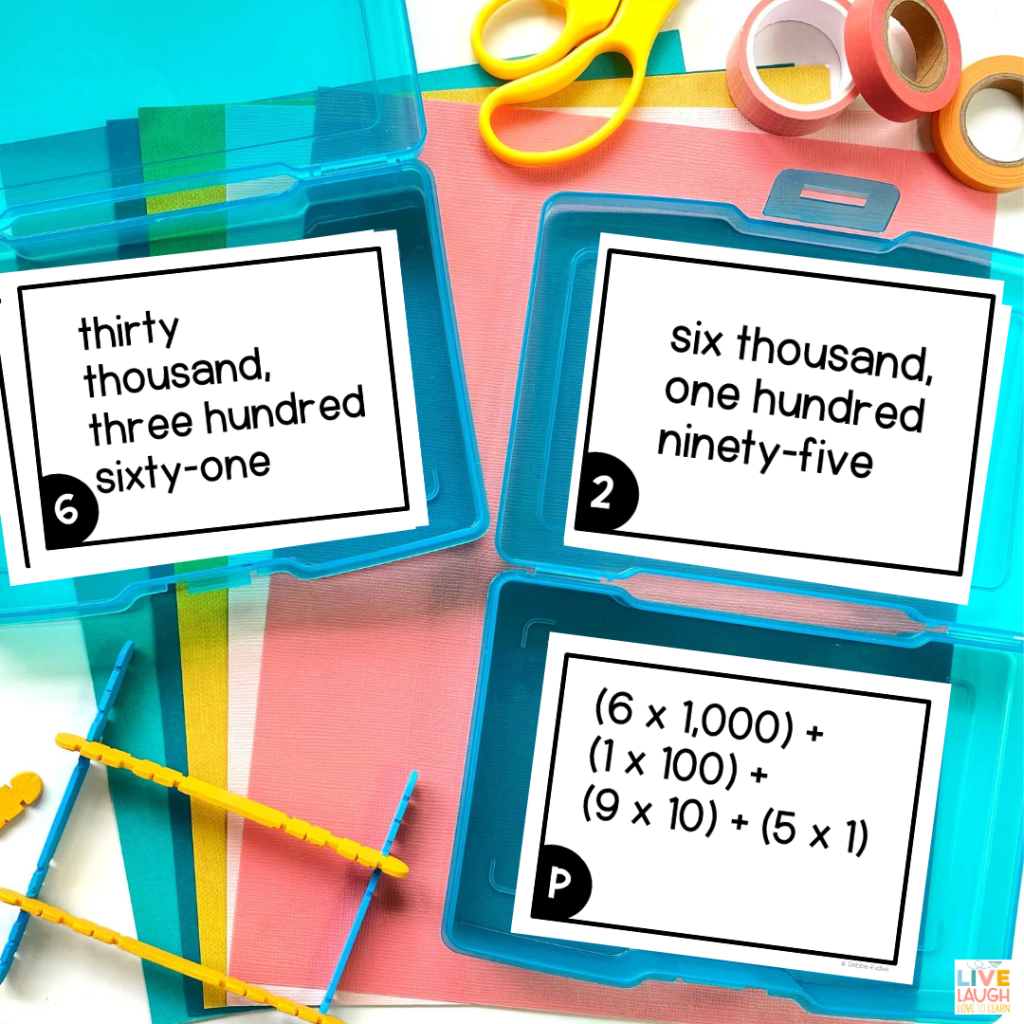
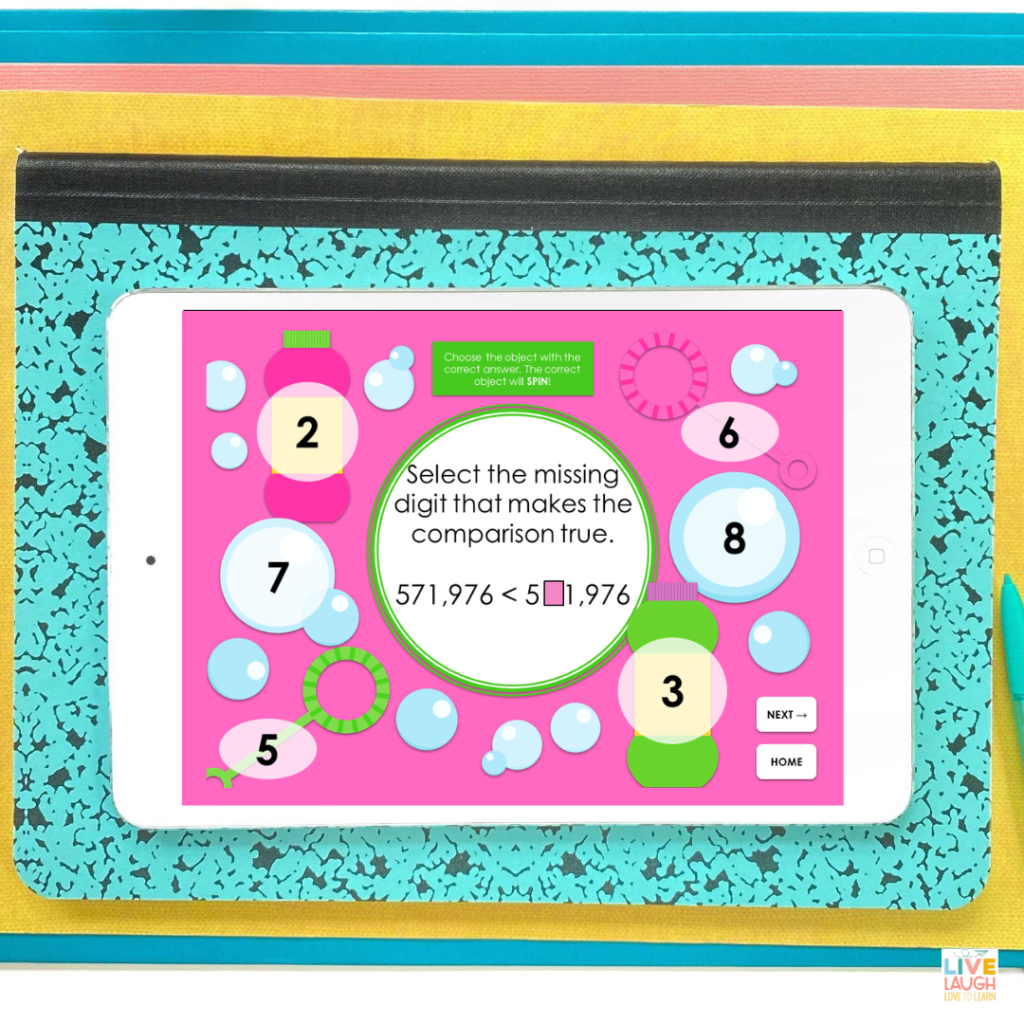
Use comparison activities to illustrate the importance of digits in different place values when comparing numbers. Incorporate symbols like “<,” “>,=” to teach students how to compare numbers effectively.
Real-World Examples
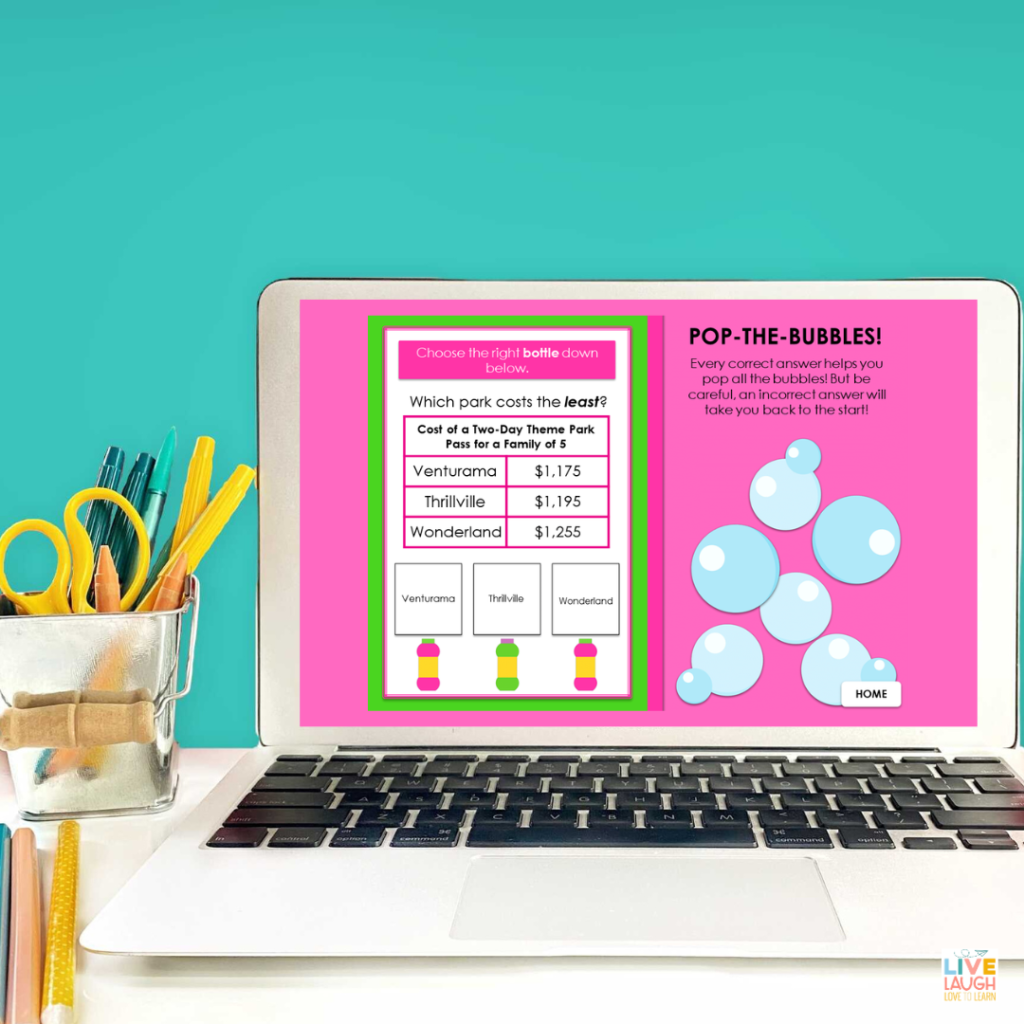
Demonstrate the real-world relevance of place value. Show students how place value plays a crucial role in everyday scenarios, such as reading large numbers on price tags, measuring quantities, or discussing population figures.
Daily Practice
Incorporate daily place value exercises or problem-solving activities into your lesson plans. Consistent practice reinforces place value concepts and helps students retain what they’ve learned. Consider having a “number of the day” activity. Post a number in word form, standard, form, or expanded notation and have students write the number write or show the number in other ways.
Engage With Math Games
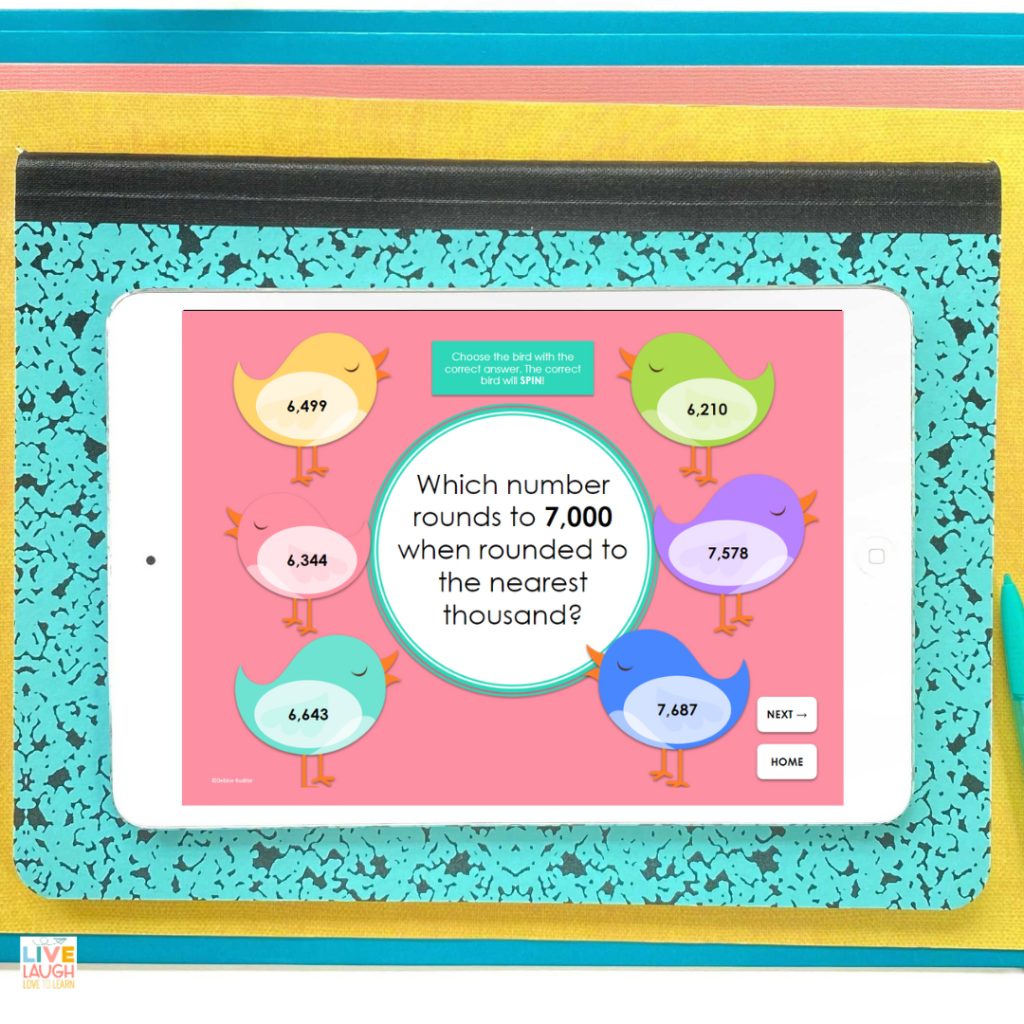
Infuse fun and competition into your lessons with math games like “Place Value Bingo,” “Place Value War,” or interactive digital and online games that make learning an enjoyable experience.
Real-World Problem-Solving
Challenge your students with real-world problems that require them to apply their place value knowledge. For instance, calculating change in a store or measuring ingredients in a recipe can provide practical contexts for learning.
Reinforce Vocabulary
Ensure students are familiar with key place value vocabulary, including terms like “digit,” “place,” “value,” “expanded form,” “word form,” “standard form,” and “compare.” Incorporate math vocabulary whenever you are talking to students about numbers such as dates, time, page numbers, money, etc. and encourage your students to do the same!
Conclusion
Teaching place value to upper elementary students can be an exciting journey of discovery. By implementing these tips and strategies in your classroom, you’ll empower your students to master place value, setting them on a path to mathematical success. With the right tools and techniques, you’ll make learning this fundamental math concept fun and memorable for your students.

Looking for more math tips?
4 Steps to Integrate Math and Reading
Pumpkin Investigation – 9 Hands-On Math and Science Activities