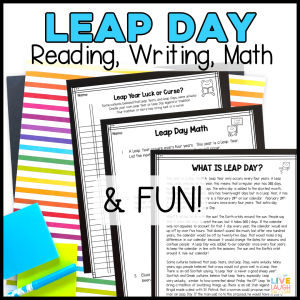
Since Leap Day only occurs once every four years, it is a significant event that deserves recognition, particularly in a classroom setting. In this blog post, I will share how I engage my students in Leap Day activities that blend both learning and fun.
What is Leap Day?
Reading and Understanding Leap Day
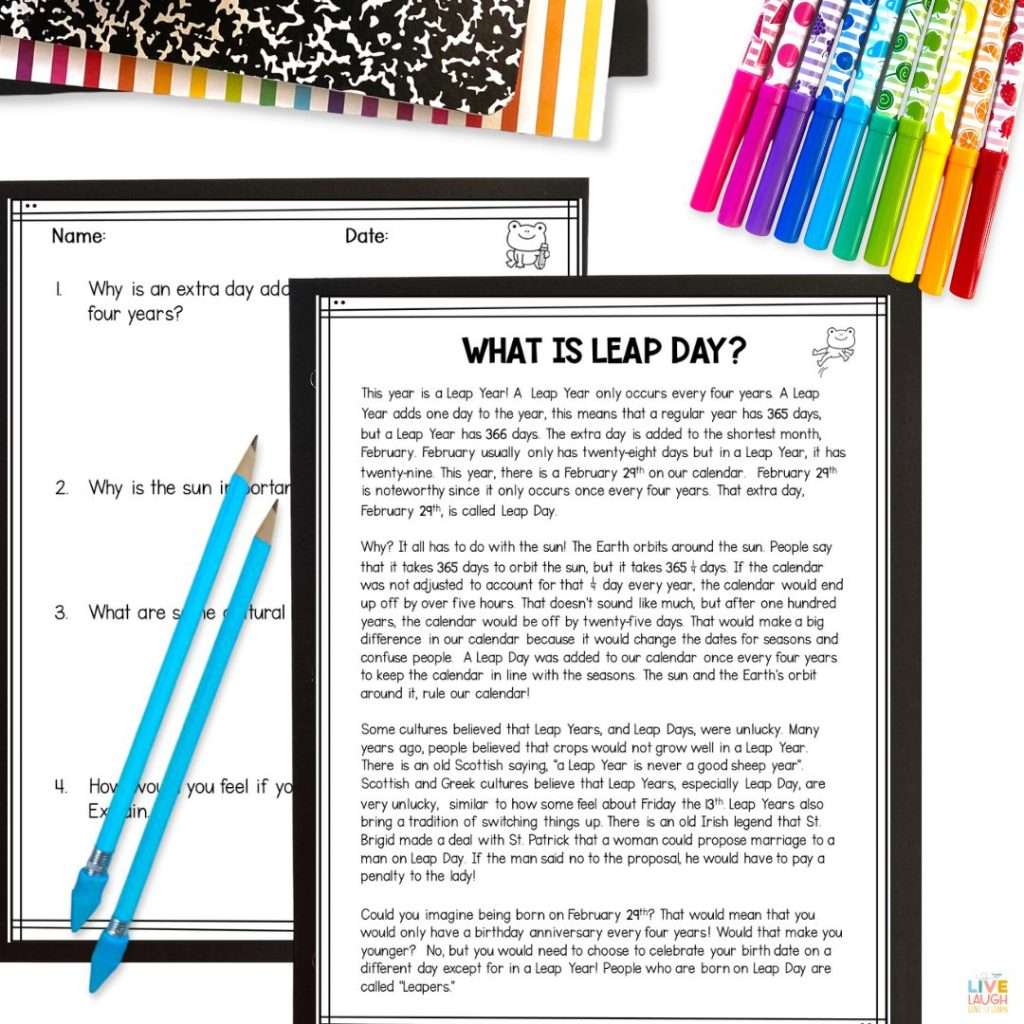
For Leap Day, first I have my students read a passage about the science behind this special day and answer comprehension questions. This activity reinforces our science curriculum and helps students understand the correlation between the Earth and the sun.
Exploring Cultures and Traditions
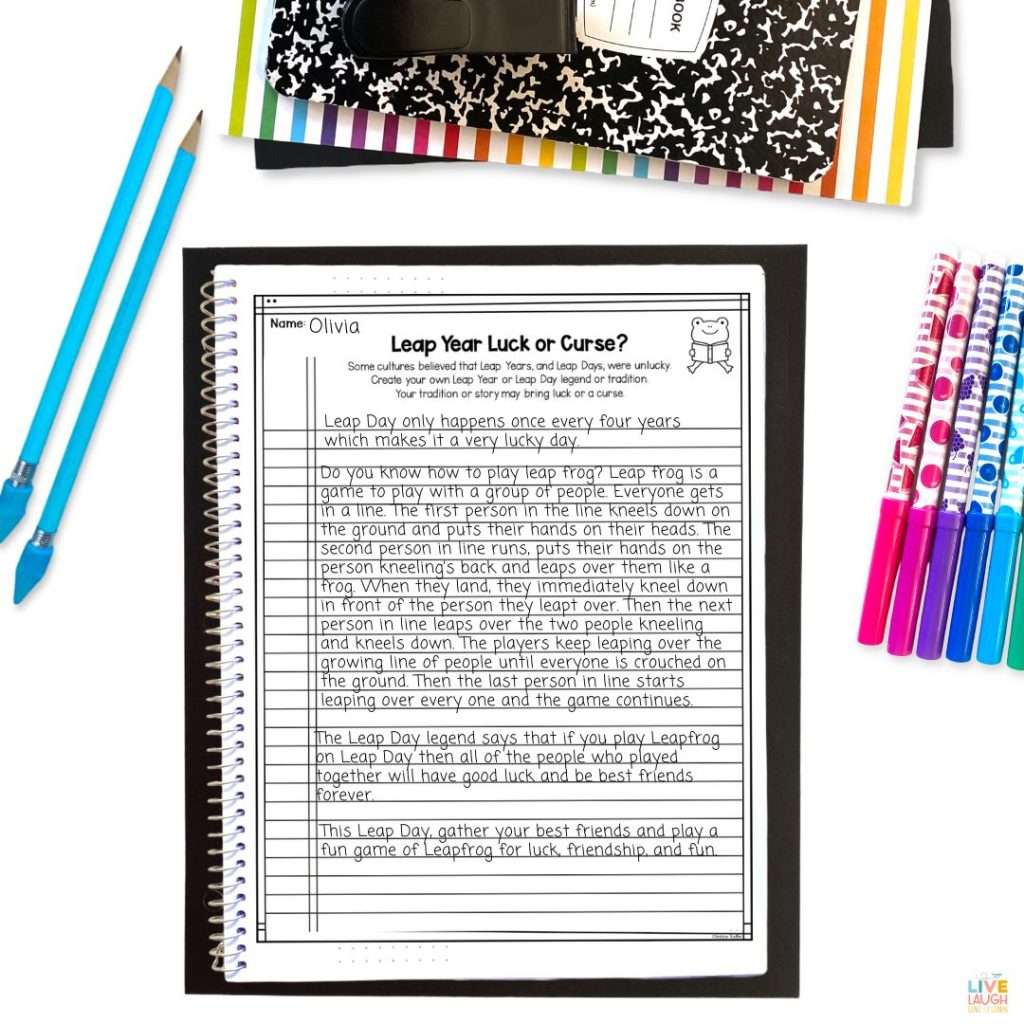
The passage we just read sheds light on the beliefs of different cultures concerning leap years, as well as the legends and traditions associated with them. As a part of this reading activity, I have introduced a creative writing prompt to encourage students to come up with their own legend about whether leap years or leap days bring good or bad luck. It will be exciting to see my students create their very own stories on the topic of “Leap Year Luck or Curse”.
Math Activities
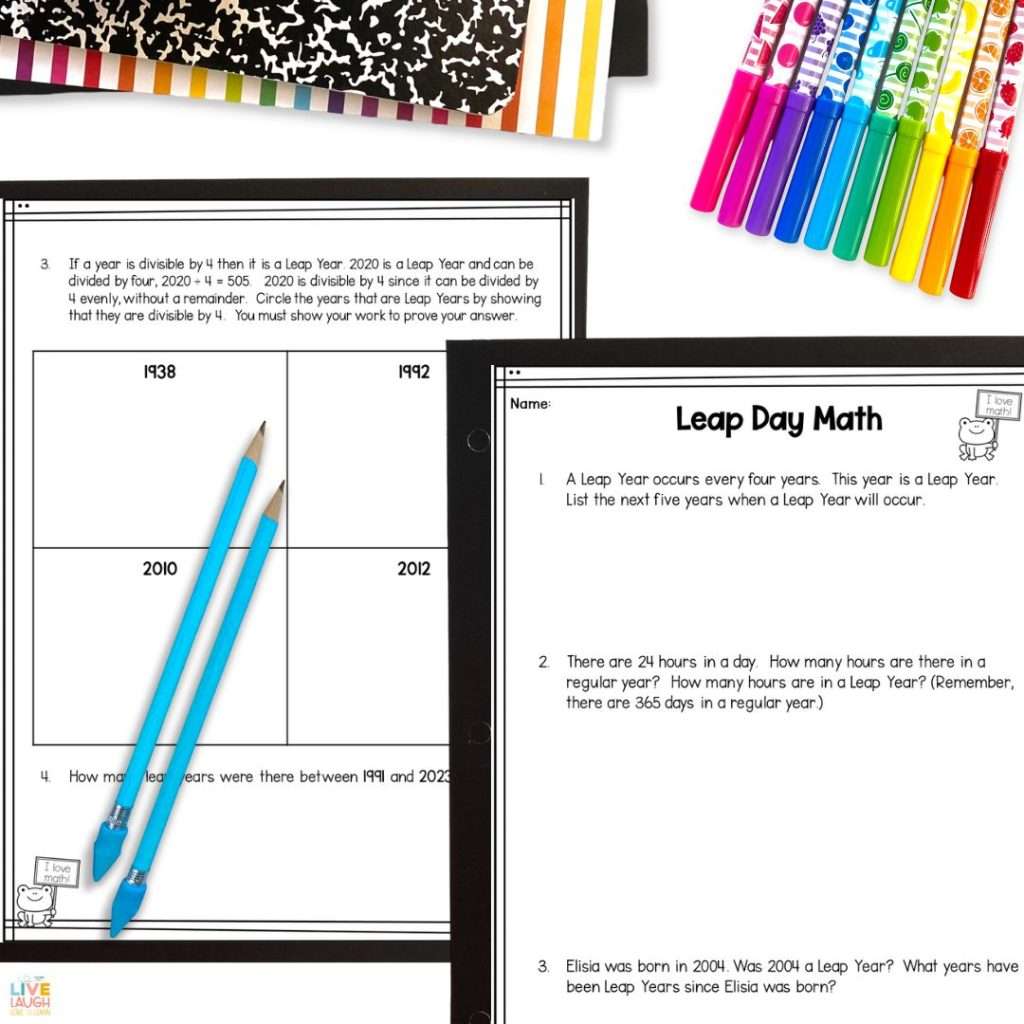
Leap Year is a rare event that also presents an exciting opportunity for math exploration. I provide math problems that encourage collaboration among students, fostering a deeper understanding of mathematical concepts related to the real world. Students use math problem solving skills to determine if certain years were leap years and when the next leap years will occur.
Setting Leap Day Goals
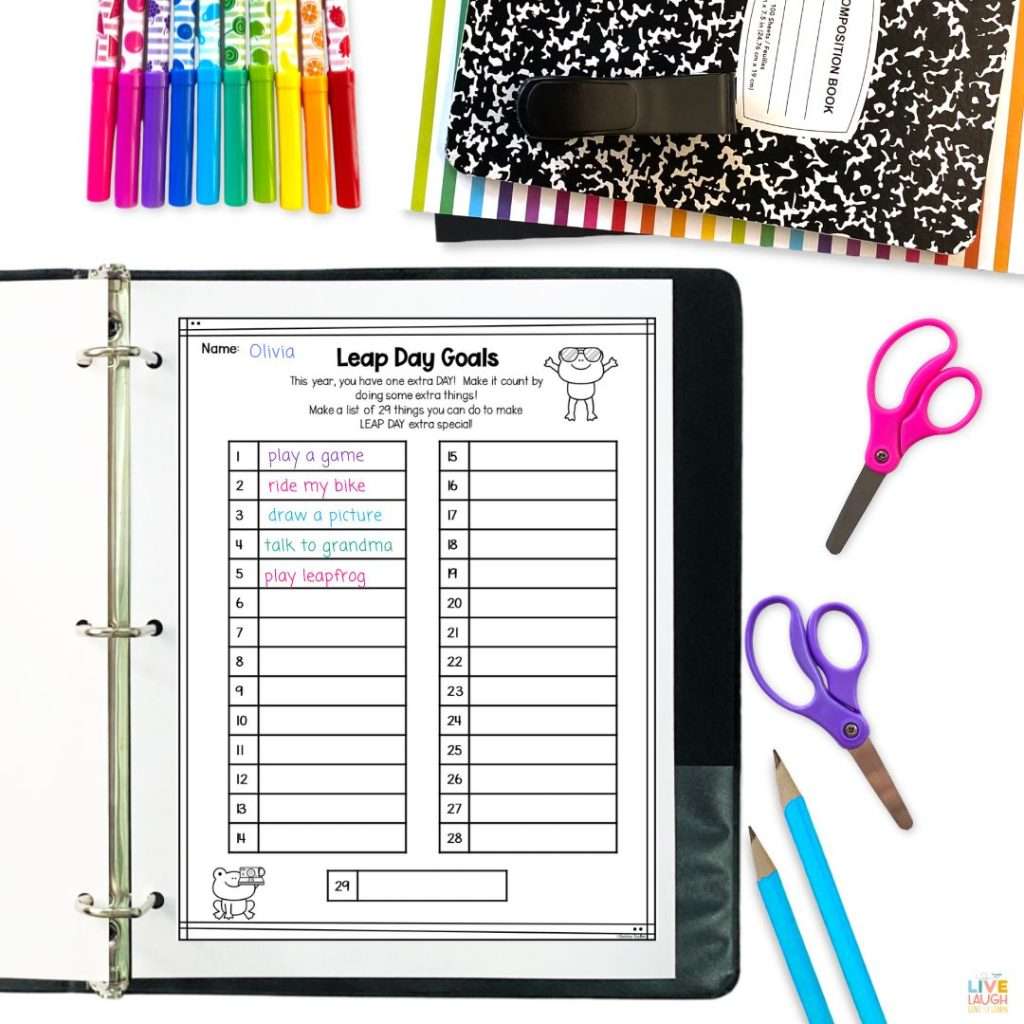
In order to take advantage of the additional day, the students participate in brainstorming sessions to generate a list of 29 additional activities they can do on Leap Day. The excitement is noticeable as they exchange ideas, maximizing the potential of this once-every-four-years opportunity.
STEM Challenge in Science
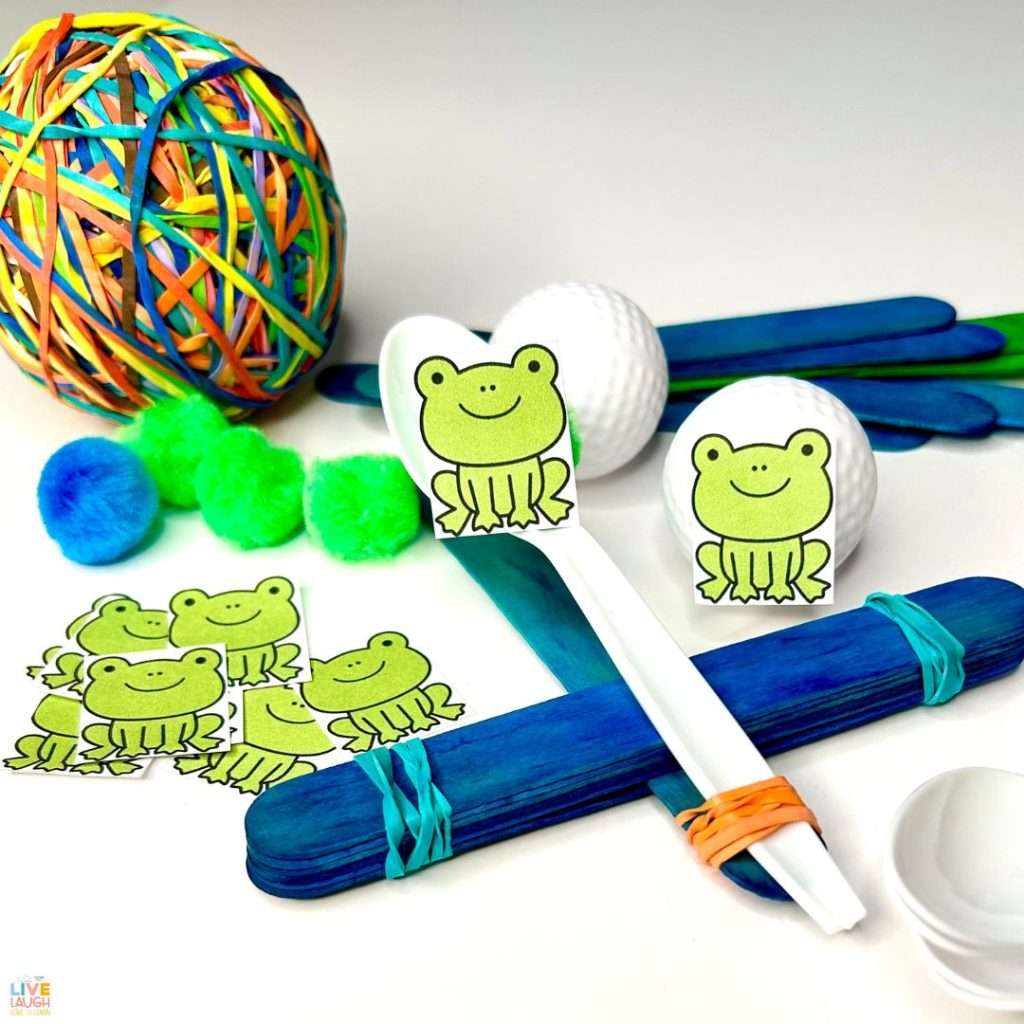
In science class, we do a fun Leap Day STEM Challenge that involves designing and creating a Leap Frog Leap Day Catapult. The objective of the challenge is to incorporate the engineering design process into our project. This means that we have to go through a series of steps, including problem identification, brainstorming, prototyping, and testing, in order to come up with the most effective and efficient design for our catapult. The project is not only fun and engaging, but it also allows us to develop our critical thinking, problem-solving, and teamwork skills.
Wordsearch Puzzle
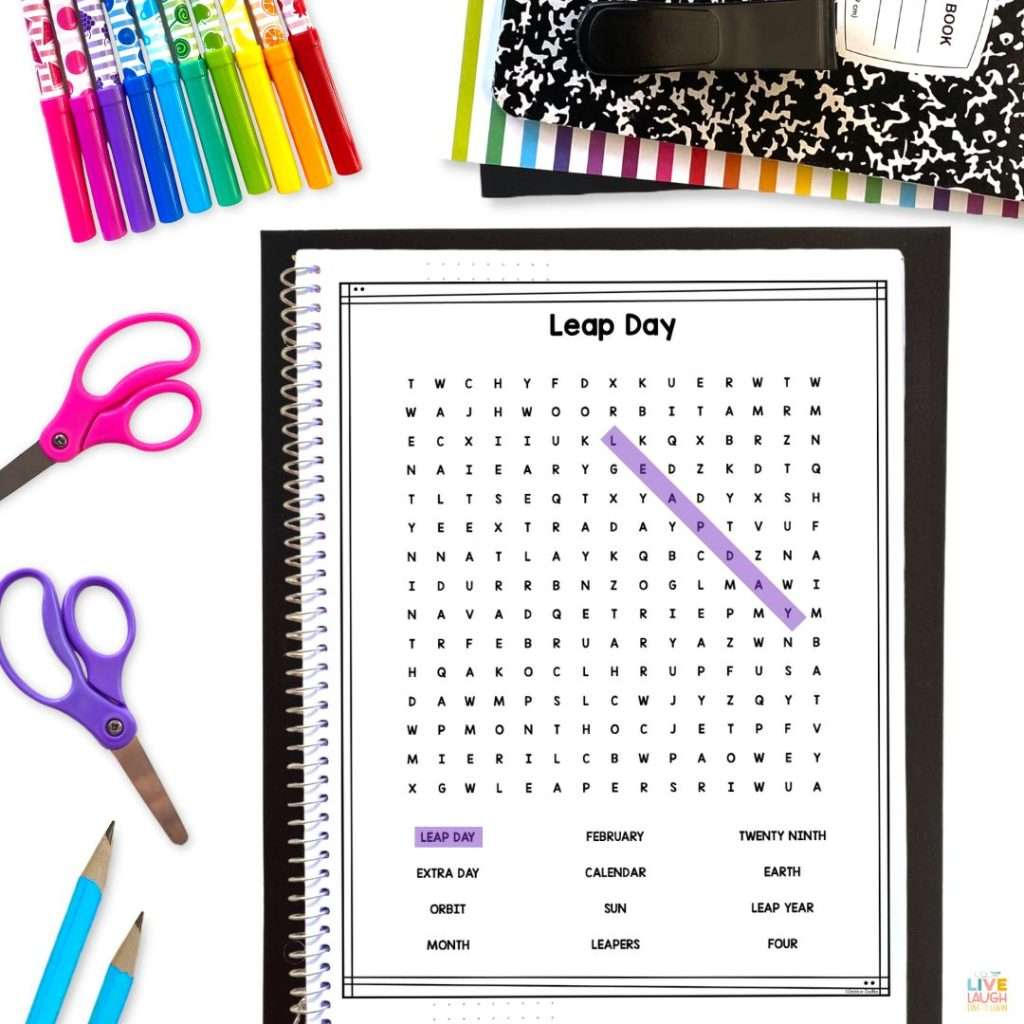
To add a little extra excitement to our Leap Day celebration, I like to include a word search puzzle with Leap Year related words. It’s a great morning activity for my students and they always appreciate finding one on their desk when they come into the classroom.
Make Leap Day special for students with fun and educational activities!

Want this no-prep Leap Day Reading, Writing, Math, and Fun resource pack?
See it here!