
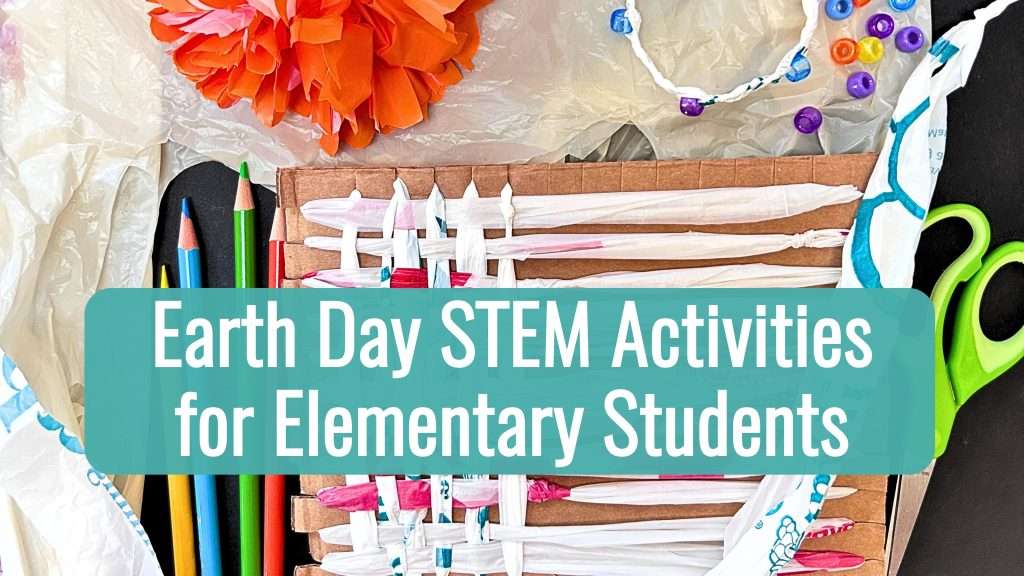
Earth Day STEM activities for elementary students should be meaningful, but too often they turn into glue, glitter, and chaos. Sound familiar?
If you’ve ever walked away from an Earth Day activity feeling like it was “cute” but not particularly impactful, you’re not alone. Most teachers don’t want a holiday craft, they want something that actually matters.
The good news? Earth Day is the perfect opportunity to give students real-world problem-solving paired with the social-emotional learning skills they need to thrive. When STEM meets SEL, Earth Day becomes more than a holiday, it becomes a launchpad for critical thinkers who understand their role in the world.
Table of Contents
Why Earth Day STEM Just Makes Sense
There’s a reason Earth Day activities hit differently than a typical Thursday science lesson. Here’s why STEM challenges are a natural fit for this time of year:
- Real-world problems create instant engagement. When students are solving actual environmental challenges, not made-up scenarios, they lean in.
- Science and responsibility go hand in hand. Environmental topics give students a reason to care about what they’re learning.
- SEL integration is effortless. Teamwork, perseverance, and creative problem-solving aren’t add-ons, they’re built into the process.
Instead of worksheets or crafts, students can actually think like engineers solving real environmental challenges. That’s a lesson worth showing up for.
What Makes a “Meaningful” Earth Day Activity?
Not all Earth Day activities are created equal. A truly meaningful one goes beyond coloring a recycling symbol or making a poster. A meaningful Earth Day activity should:
- Connect to a real-world environmental issue students can understand and relate to
- Include problem-solving or critical thinking, not just following steps
- Allow for creativity and student voice in the solution
- Encourage collaboration and shared responsibility
- Include structured reflection, this is your SEL tie-in, and it’s where the real learning happens
This is exactly why I started creating STEM challenges that intentionally include SEL skills. When reflection is baked into the activity, not bolted on at the end, students walk away with more than a finished product. They walk away with a framework for thinking.
4 Earth Day STEM Activities for Elementary Students (Grades 3–5)
Here are my favorite Earth Day STEM activities for elementary students, each one rooted in a real environmental problem and designed to get students thinking, collaborating, and reflecting.
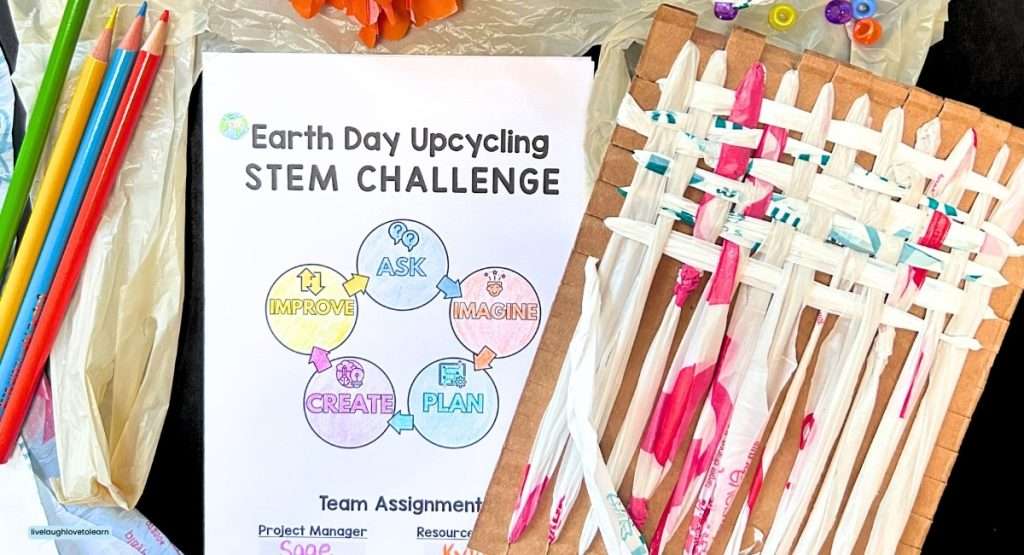
🌱 1. Plastic Bag Upcycling STEM Challenge
The Problem: Plastic bag waste is one of the most visible and relatable environmental issues for elementary students. They’ve seen it. They’ve used plastic bags. And that connection makes this challenge immediately personal.
What Students Do: Students are challenged to design a useful product using plastic bags as their main material. The key word here is “useful”, this isn’t a craft, it’s a functional design challenge.
SEL Skill Focus: Problem-Solving. Students learn that solutions don’t come from wishing the problem away, they come from working with what’s available.
Why Teachers Love It: The reflection component pushes students to evaluate their own designs critically. “Did your product solve the problem? What would you change?” Those conversations are gold. If you want a ready-to-use version with built-in reflection prompts, rubrics, and student pages, check out the Plastic Bag Upcycling STEM Challenge on TPT.
🌍 2. Community Impact STEM Challenge
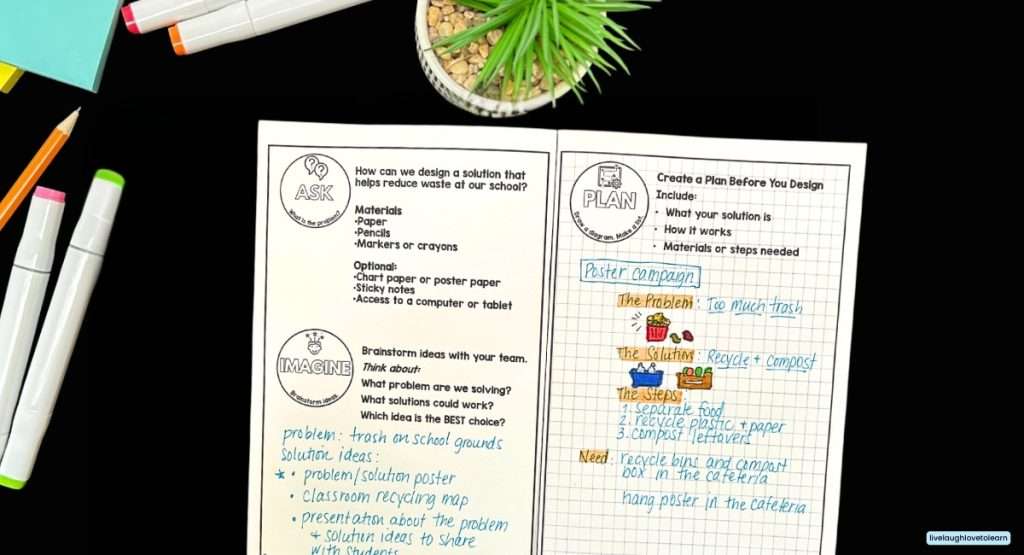
The Problem: Environmental issues aren’t just happening somewhere else, they’re happening in your students’ own community. This challenge asks students to look around and identify a real problem worth solving.
What Students Do: Students research local environmental issues, choose one that matters to them, and design a solution that could realistically make a difference. This is project-based learning with heart.
SEL Skills Focus: Responsibility and Collaboration. Students practice the idea that they don’t have to wait until they’re grown up to make an impact, they can start right now.
Why It’s a Differentiator: The real-world connection is everything. When students see that their ideas could actually help their community, engagement skyrockets. Grab the done-for-you version here: Community Impact STEM Challenge.
📊 3. School Clean-Up Data Challenge
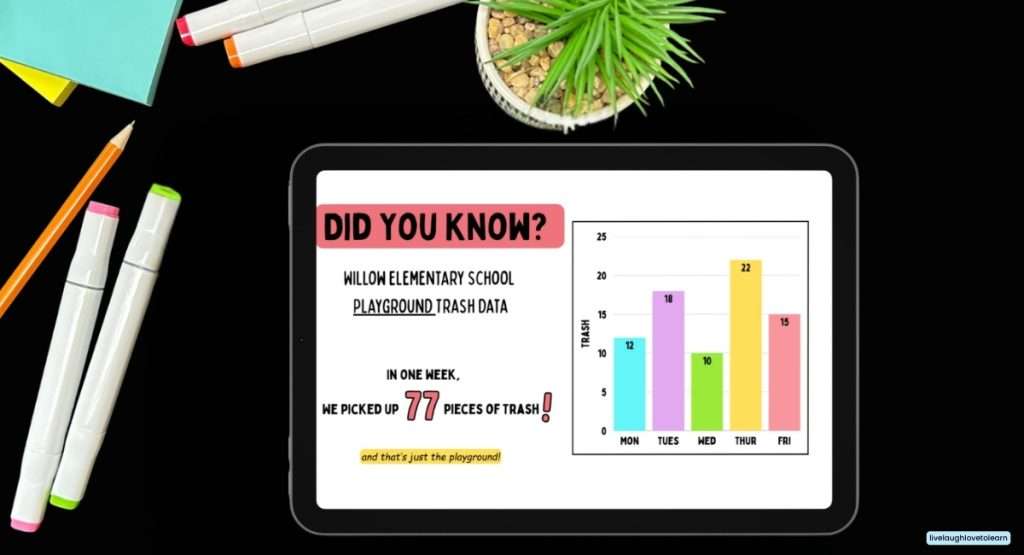
Want to sneak in some math? Have students conduct a school clean-up and track what they find, how many pieces of litter, what types, from which locations. Students then analyze their data to identify patterns and propose solutions.
It’s Earth Day + data literacy in one fell swoop, and it gives students a real sense of the scope of the problem in their own environment.
📢 4. Conservation Awareness Campaign
For a strong ELA tie-in, challenge students to design a real awareness campaign, complete with a target audience, a clear message, and a plan for reaching people. Students practice persuasive writing, audience awareness, and communication skills while also learning that advocacy is a form of problem-solving. Perfect for pairing with a writing unit.
How to Add SEL to Any Earth Day Activity
You don’t have to use a pre-built resource to make your Earth Day STEM activity meaningful. Here are some quick strategies to weave SEL into whatever you’re already doing:
- Set a team goal before building. Ask: “What does success look like for your group today?”
- Assign clear roles: project manager, resource manager, analyst, and lead builder, so every student contributes.
- Use reflection questions throughout, not just at the end. Try: “What problem did your team solve? What would you improve next time?”
- Teach one mini SEL skill before starting. Spend 5 minutes on problem-solving strategies, communication techniques, or what perseverance looks like in action.
For more ideas on integrating SEL into your STEM routine, check out my other posts on engaging students in real-world environmental issues and 4 meaningful Earth Day activities.
Easy Classroom Implementation Tips
STEM challenges don’t have to be complicated to be effective. Here’s how to keep things running smoothly:
- Keep materials simple. Recyclables, paper, tape, and scissors are all you need for most challenges. The constraint is the point.
- Set time limits for each stage. A timer for the planning phase, the building phase, and the reflection phase keeps energy up and prevents decision fatigue.
- Use anchor charts to set expectations before you begin. What does teamwork look like? What do we do when we disagree?
- Don’t skip the reflection. Seriously, this is where the learning sticks. A five-minute debrief is worth more than ten extra minutes of building time.
Want It Done for You?
If you’re short on time (and who isn’t?), I’ve done the heavy lifting for you. My Earth Day STEM challenges include everything you need to run a meaningful, low-prep activity:
- Student-facing pages with structured prompts
- Built-in SEL reflection questions
- Rubrics and teacher guides
- Flexible enough to use in one day or across the whole week
Grab the Plastic Bag Upcycling Challenge or the Community Impact Challenge individually, or save with the bundle if you want both.
Earth Day Is More Than a Day
When we give students real problems to solve, we’re not just teaching science, we’re teaching them how to think. How to collaborate. How to see themselves as people who can make a difference.
Earth Day isn’t a once-a-year checkbox. It’s a mindset, and these STEM challenges help make it one. Students who leave your classroom asking “What can I do about this?” are students who have internalized something that will last long past April.
What if your Earth Day activity actually made students think differently about their impact? That’s the goal. And it’s absolutely within reach.
Happy Earth Day!
