
Introduction
Happy Leap Year!
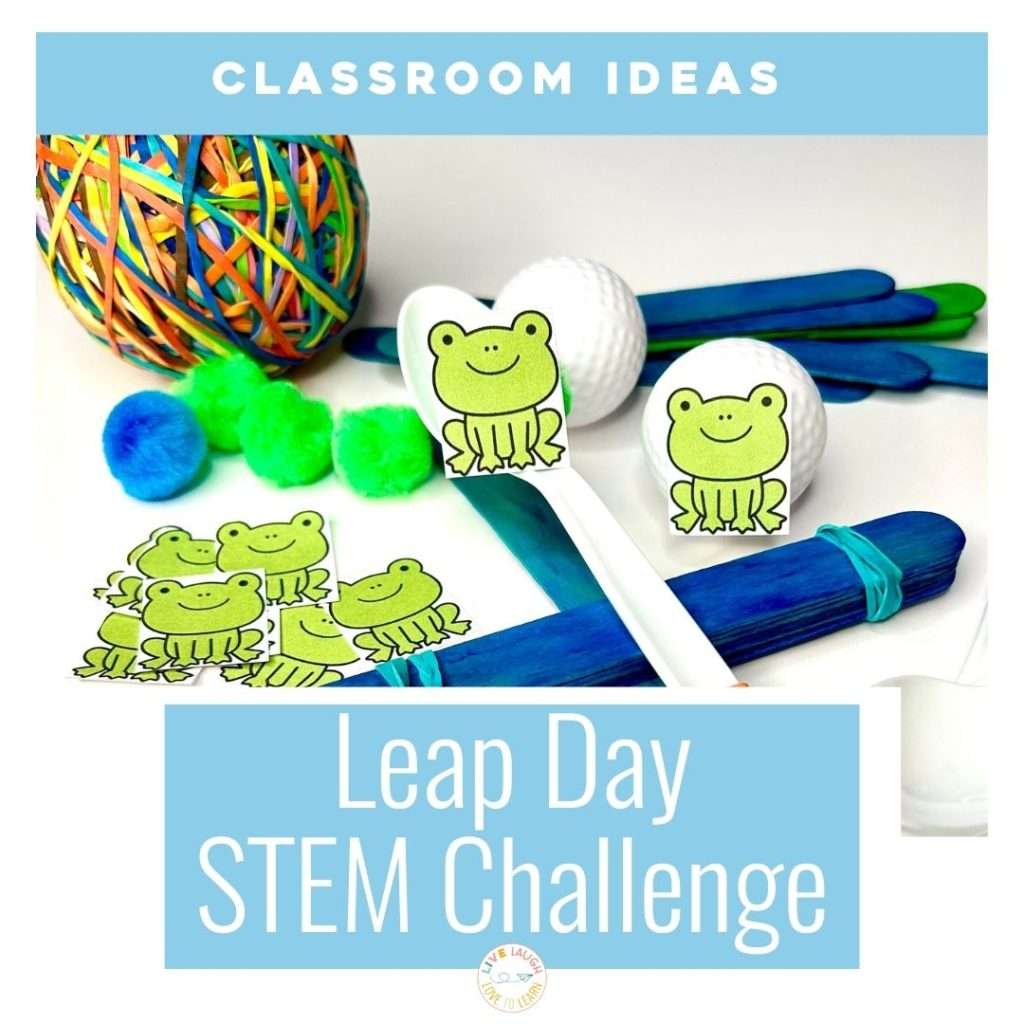
Leap Day only happens once every four years and it’s a special occasion that deserves to be celebrated. In my classroom, we celebrate with a whole day of Leap Day Activities. In science, we do an engaging, team-building Leap Day Leap Frog Catapult STEM Challenge. This challenge not only adds an element of fun to the day but also helps students learn important science and engineering skills.
The Challenge Overview
Objective and Rules
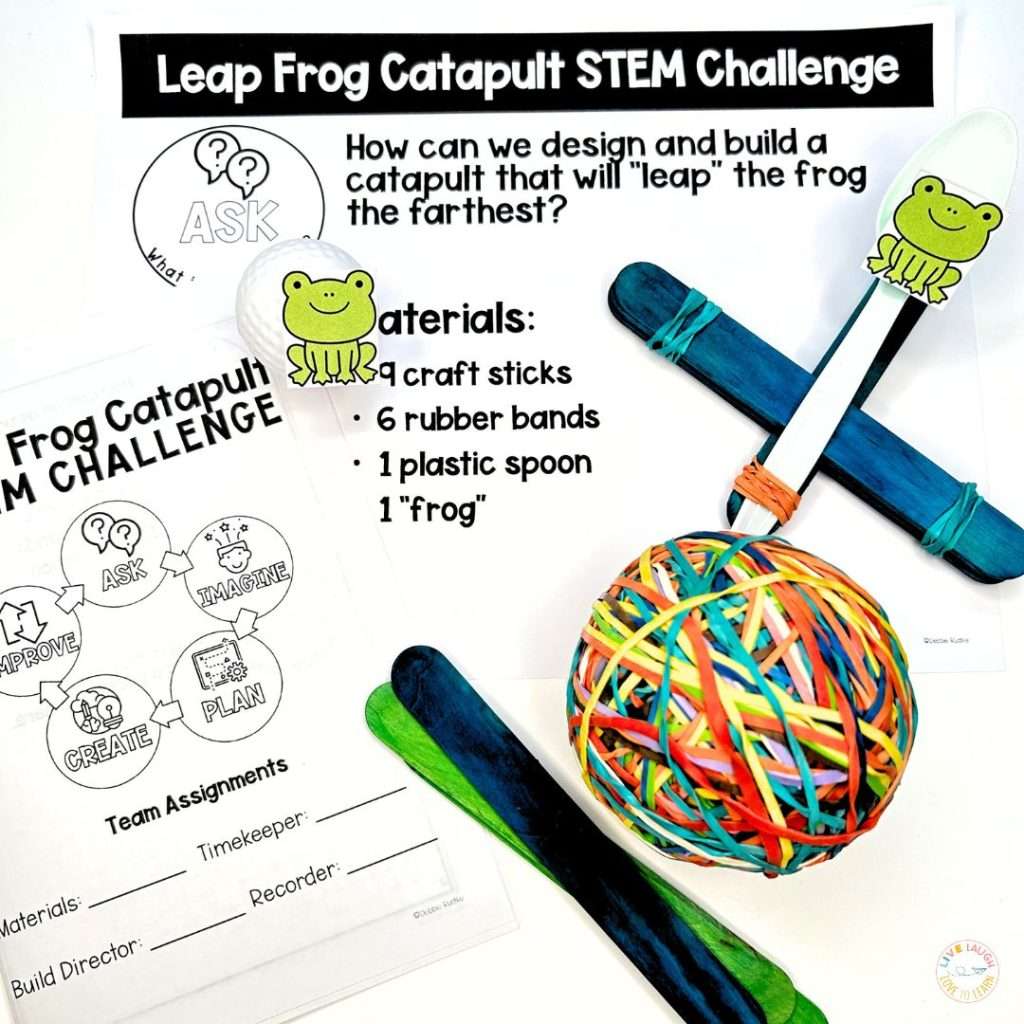
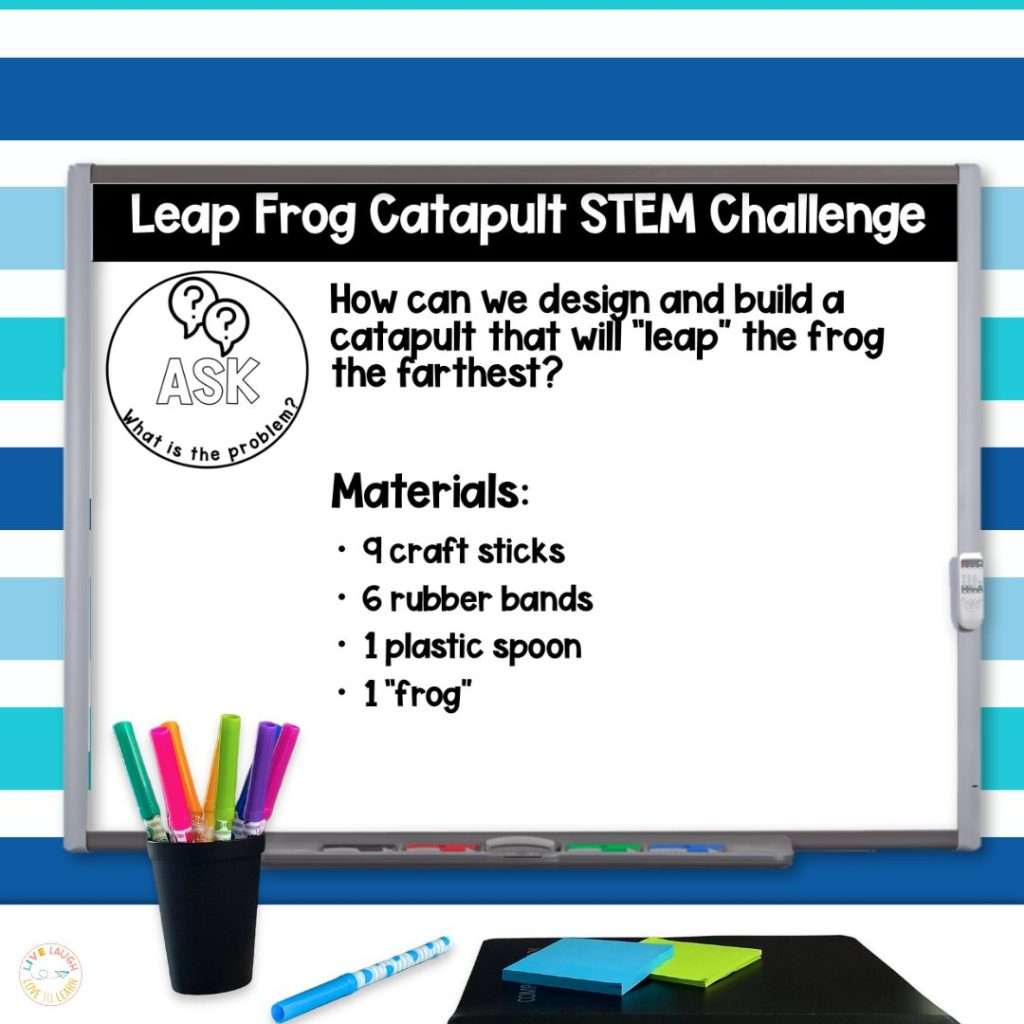
The primary objective of the Leap Day Leap Frog Catapult STEM Challenge is to design and build a catapult that can launch a “frog” the farthest possible. To ensure a fair competition, I provide my students with clear rules and guidelines for the challenge. The emphasis is on innovation, collaboration, and implementing scientific principles in an engaging and interactive way.
Engaging in the Challenge
Designing and Having Fun
After explaining the objective and rules, I hand out the required materials to each team. The students are then given the freedom to design their own catapults, which helps to foster their creativity and problem-solving skills. Throughout the challenge, students actively engage in answering questions, recording ideas, making observations, and collecting data. This hands-on experience encourages them to think critically and apply scientific concepts in real-time.
Teamwork and Cooperative Learning
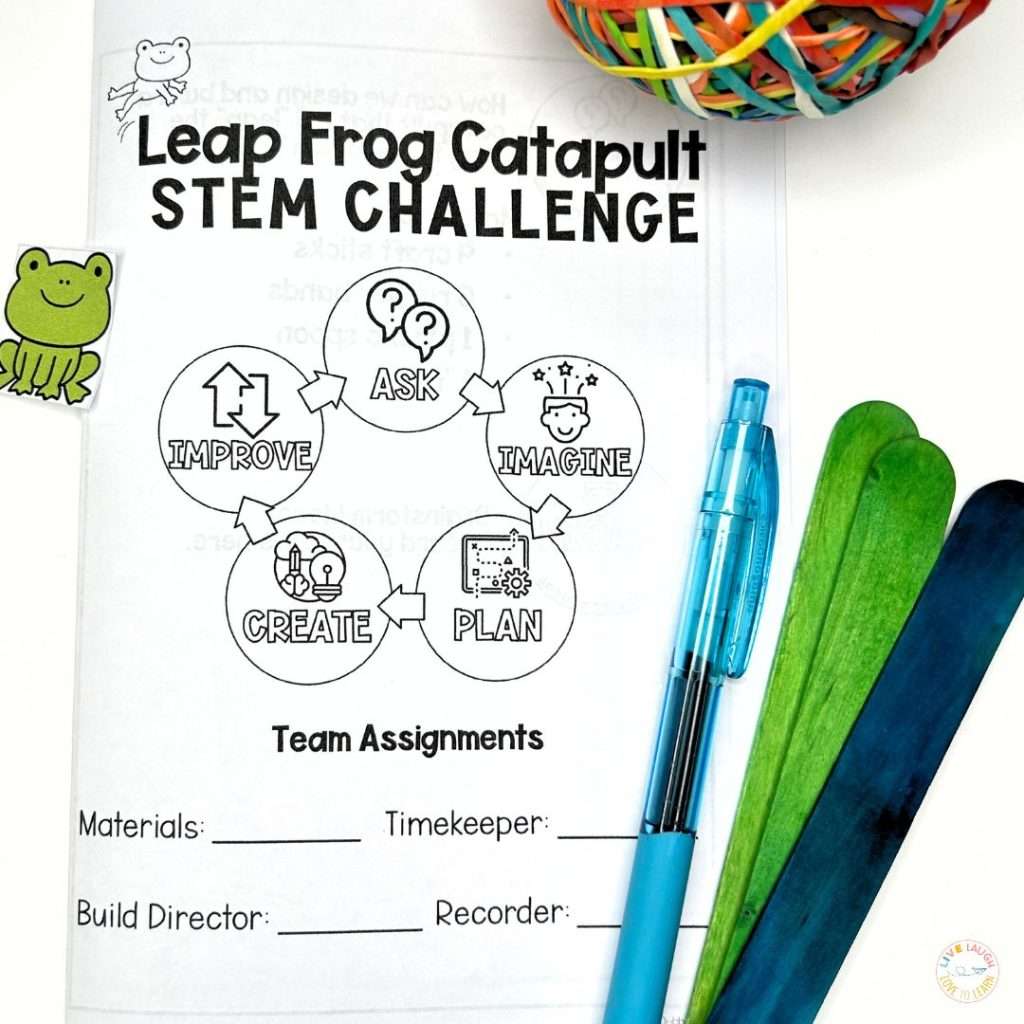
To improve the learning experience, students are work in teams of three or four, with each member being assigned specific roles within the team. This approach promotes teamwork and collaborative learning and enables students to work together more effectively. The challenge provides an excellent opportunity not only to explore STEM concepts but also to develop crucial interpersonal skills.
The Challenge Process
Planning and Building
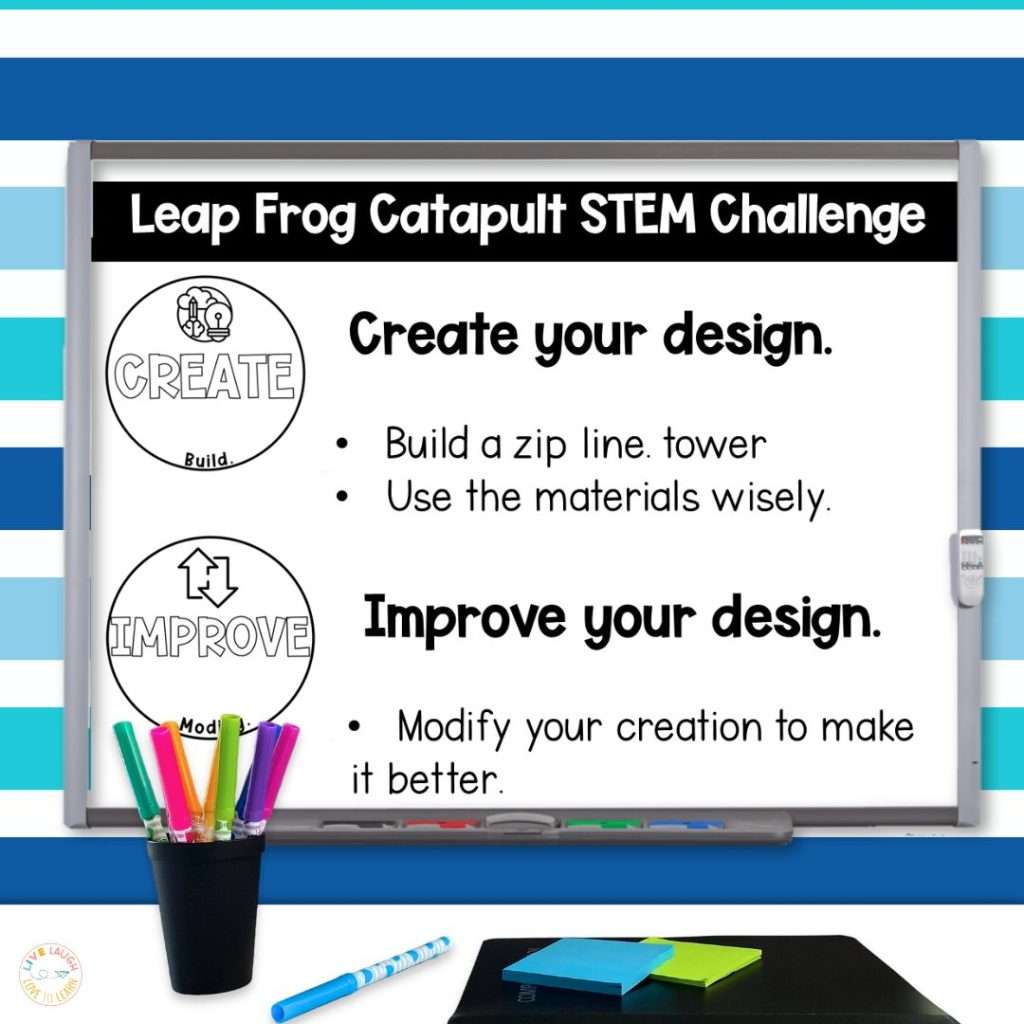
Teams follow the engineering design process that begins with imagining, brainstorming, and finally planning their catapult design. They will need to take into account factors like the angle, force, and how they will use the materials. Next comes the building phase, where teams bring their designs to life. The challenge is iterative in nature, which motivates students to experiment with different approaches and make revisions based on their observations.
Testing and Revising
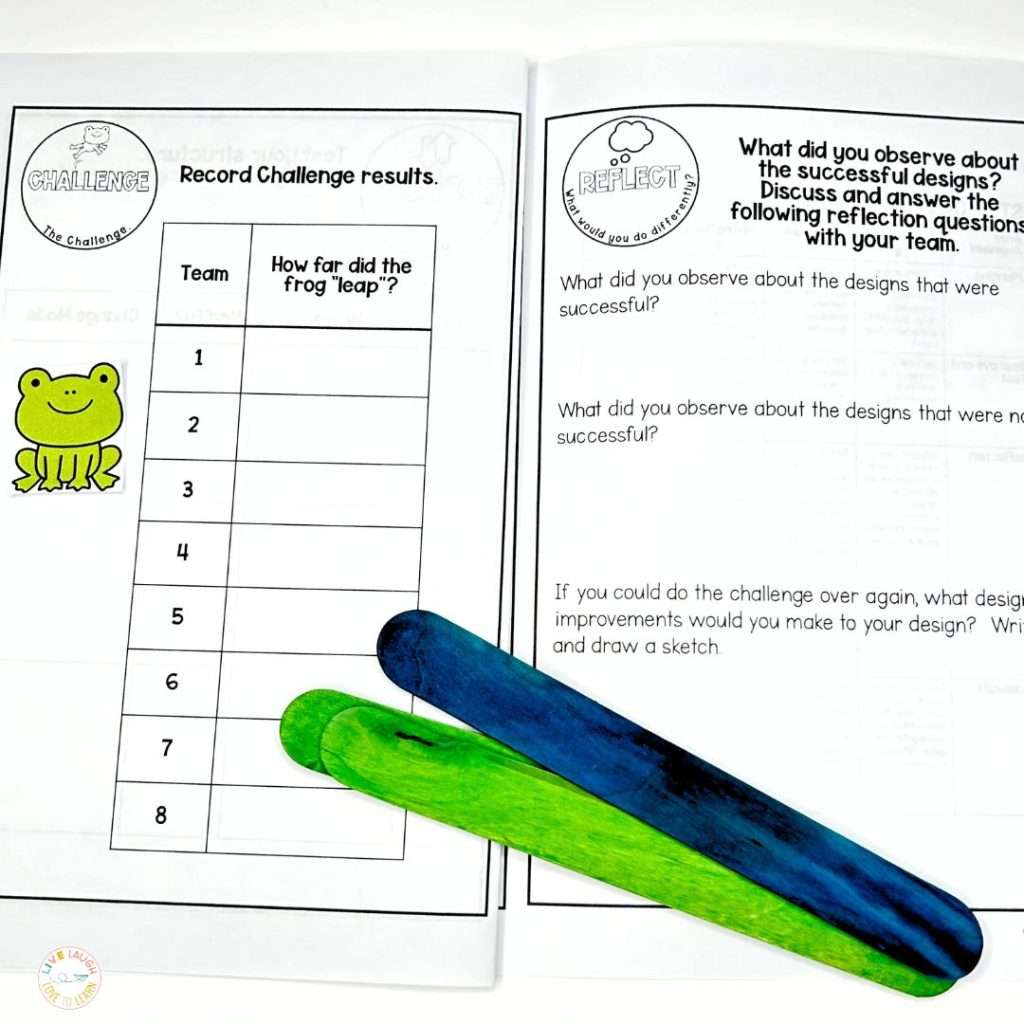
During the frog-launching competition, each team will have two opportunities to launch their frog using their catapult. This testing phase is highly important as it allows students to evaluate the effectiveness of their designs. After each attempt, teams will analyze the results and make necessary adjustments to improve the performance of their catapults. This iterative cycle reinforces the significance of the engineering design process and emphasizes the value of learning from failures.
Reflection and Winners
Reflecting on Designs
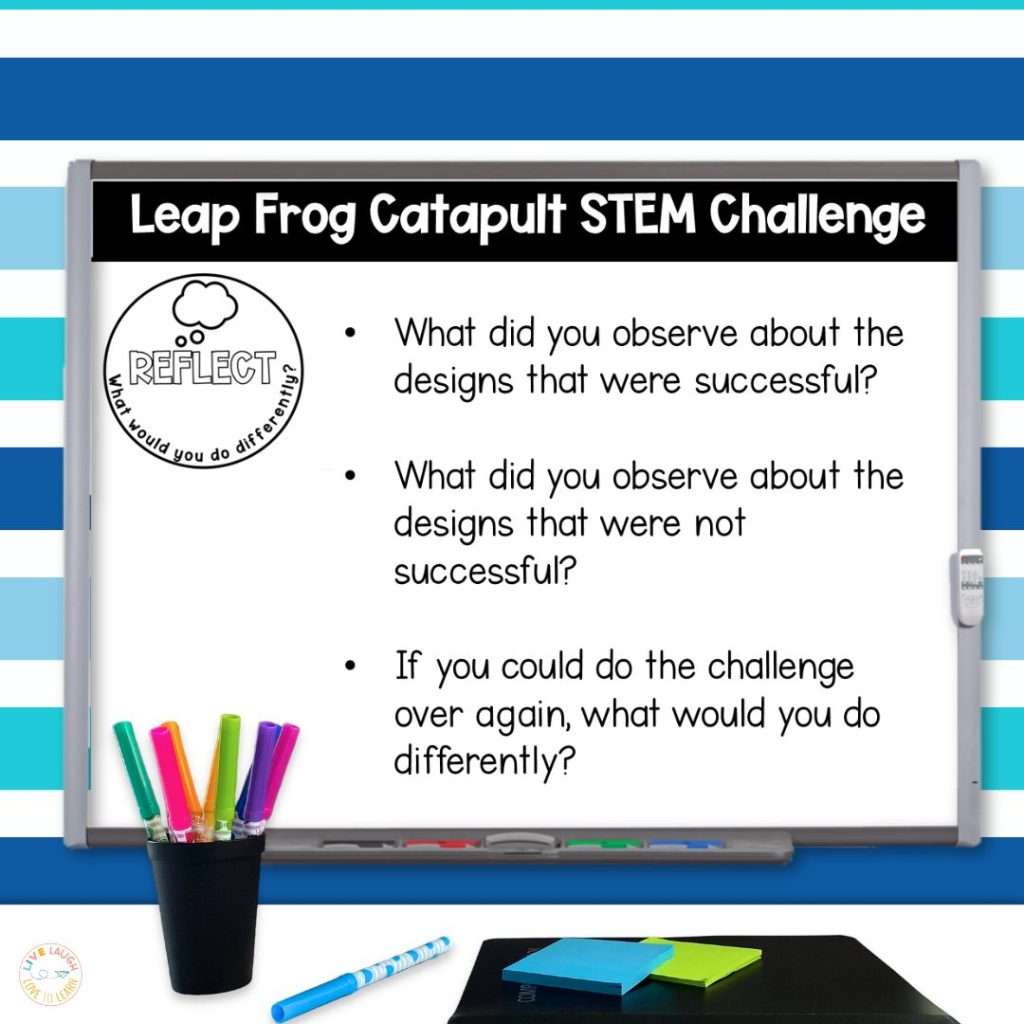
Once the challenge comes to an end, the students participate in a reflective process where they discuss and analyze which designs worked the best and what aspects did not work as intended. This reflective discussion motivates students to think critically about their strategies and recognize areas for improvement, which in turn reinforces a growth mindset.
Determining the Winner
The team that successfully leaps the frog the farthest is the winner. This competitive element adds an extra layer of excitement to the challenge. The winning team not only celebrates their victory but also takes pride in their application of STEM skills and teamwork.
Combine Learning and Fun
The Leap Day Leap Frog Catapult STEM Challenge is a fantastic way to celebrate Leap Year in the classroom. By combining fun with learning, students not only enjoy the thrill of competition but also develop essential science and engineering process skills. This engaging activity is a leap towards fostering a love for STEM education and collaborative learning among students.

Leap Day Leap Frog Catapult STEM Challenge Resource
Interested in introducing the Leap Day Leap Frog Catapult STEM Challenge to your students? I have created a resource that you can access HERE. The resource includes the instructions for teachers, the challenge slides to print or project, and a team journal booklet for planning, testing, revising, and reflecting on the design challenge. A 20-point rubric is also included to make assessment easier.