
If you’ve ever taught angles and thought, “Why is this not sticking?”, you’re not alone.
Angles are one of those geometry concepts that seem simple… until students are asked to identify, classify, or apply them in real situations. That’s where strong, visual anchor charts make all the difference.
A good angle anchor chart doesn’t just define acute, obtuse, right, and straight angles, it gives students something to refer back to, talk about, and use while solving problems.
In this post, I’m sharing angle anchor chart ideas that actually help students understand angles, not just memorize definitions.
Why Angle Anchor Charts Matter in Upper Elementary
By grades 3-5, students are expected to:
- Identify and classify angles
- Compare angle sizes
- Apply angle knowledge in shapes, diagrams, and word problems
That’s a lot, especially for visual and hands-on learners.
Angle anchor charts help by:
- Making abstract concepts concrete
- Supporting math talk and vocabulary
- Giving students a visual “thinking tool” during independent work
When anchor charts are interactive, visual, and connected to real life, students are far more likely to internalize the concept.
Must-Have Elements of an Effective Angle Anchor Chart
Before we jump into examples, here’s what I’ve found makes an anchor chart actually useful (and not just wall décor):
- Clear definitions in student-friendly language
- Visual angle examples (not just labels)
- Color-coding or symbols to show angle size
- Real-world or relatable connections
- Space for student input or interaction
Keep these elements in mind as you build or choose your charts.
1. Angle Anchor Chart Ideas That Make Geometry Click
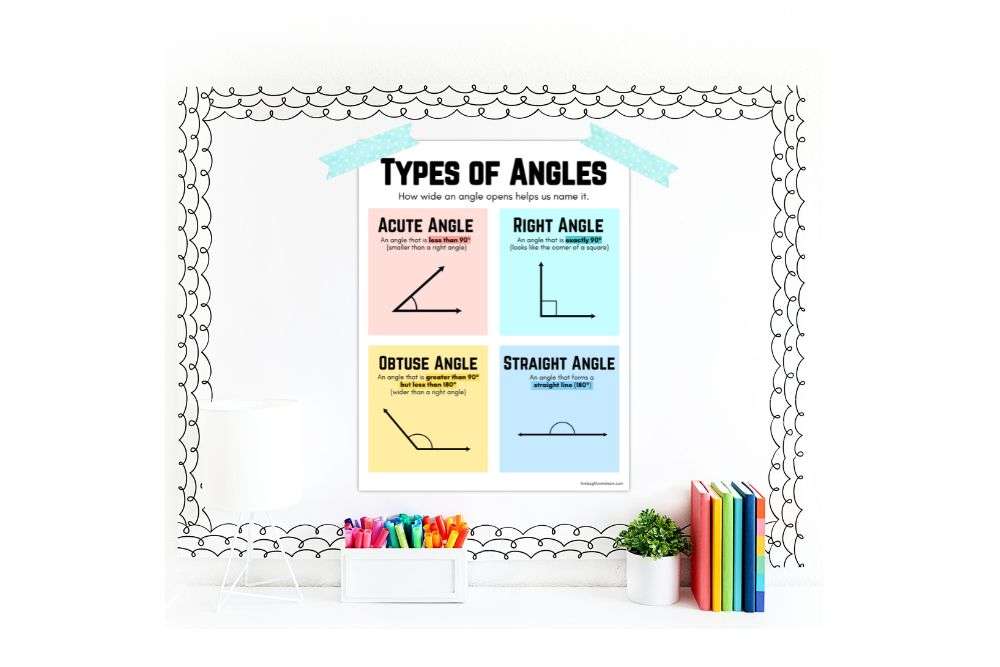
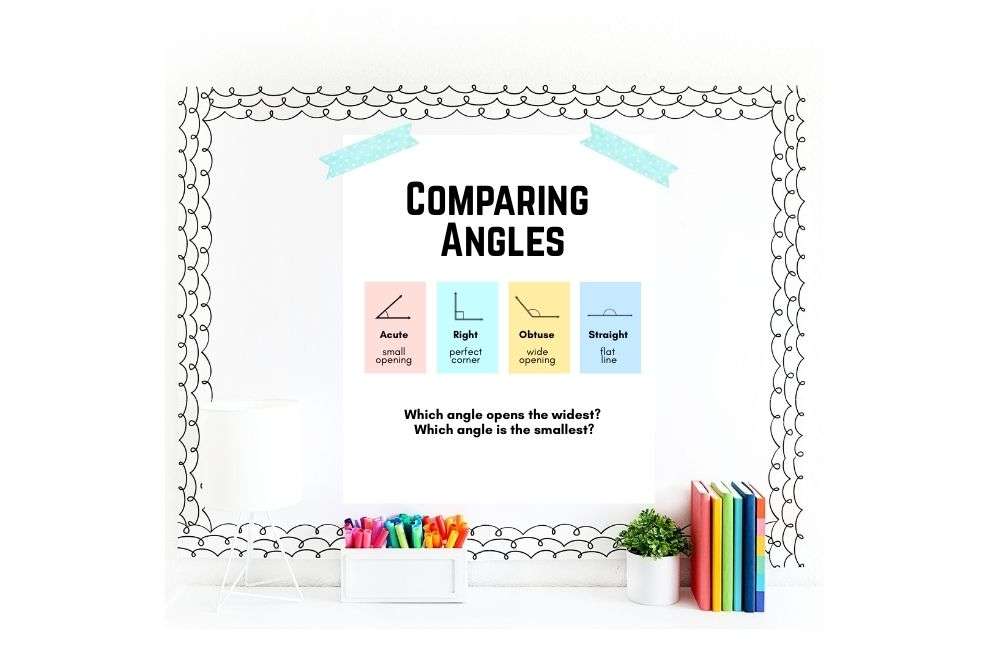
Instead of listing angle types in isolation, place them side by side so students can visually compare size:
- Acute – smaller than a right angle
- Right – exactly 90°
- Obtuse – larger than a right angle but less than 180°
- Straight – a straight line (180°)
💡 Teacher tip: Use color or arm drawings to show how angles “open” wider as they get larger.
2. Angle Body Movements Anchor Chart
This one is always a hit.
Have students use their arms or bodies to form:
- Acute angles
- Right angles
- Obtuse angles
Add simple stick figures or photos to the chart.
Why it works:
Students remember how it felt, not just what it looked like.
Angle Vocabulary + Visual Clues Chart
Pair each angle word with:
- A definition
- A visual cue
- A memory trick
Example:
- Right angle → looks like the corner of a book
- Straight angle → looks like a straight road
This chart supports vocabulary development and helps struggling readers.

4. Real-Life Angles Anchor Chart
Angles are everywhere, but students don’t always see them.
Create a chart that includes:
- Clock times
- Open scissors
- Ladders
- Slides
- Sports examples
This is a perfect place to connect math to student interests.
5. Geometry of Football: Angles in Action ⚽🏈
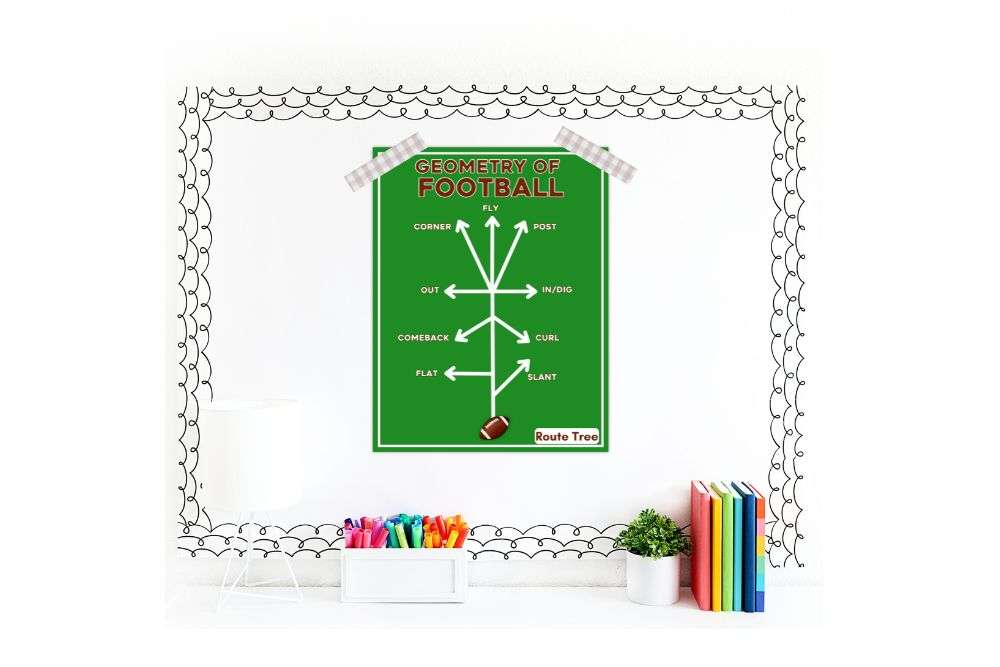
One of my favorite ways to make angles click is by connecting them to football route trees.
In football, each route creates a different angle:
- Slants
- Outs
- Posts
- Flats
Students can identify, classify, and compare angles while working with something that feels real and engaging.
👉If you’re looking for hands-on ways to reinforce angle concepts after introducing them with anchor charts, check out my post 10 Activities to Teach Angles, which includes a FREE Geometry of Football activity students love.
If You’re Looking for More Angle Practice
Anchor charts are a great foundation, but students really learn angles when they have chances to classify, measure, and check their thinking on their own.
If you’re looking for low-prep practice to pair with these anchor chart ideas, I use these two resources in my own classroom:
- Classify and Measure Angles Sort and Solve Task Cards – perfect for small groups, partner practice, math centers, or test-prep
- Classify and Measure Angles Self-Checking Game – perfect for independent practice, or math centers
These aren’t required to teach angles well, just helpful options if you want ready-made practice to go with your anchor charts.
Final Thoughts: Anchor Charts That Actually Support Learning
Angle anchor charts are most effective when they:
- Stay up and get referenced
- Connect to movement, visuals, and real life
- Support, not replace, hands-on learning
Visual supports like anchor charts don’t just help with math understanding, they also support student confidence and independence, especially for learners who need structure and clarity.
When students can see, move, and talk about angles, geometry starts to make sense.
And that’s when it finally clicks.
