A calm down corner can be one of the most helpful tools in your classroom, but only if students know how to use it.
Without clear expectations, a calm down corner can quickly turn into a place to avoid work, take an extra-long break, or simply hang out.
But that doesn’t mean you need to give up on the idea.
The goal of a calm down corner isn’t to remove students from learning. It’s to give them a short, structured way on how to use a calm down corner to regulate their emotions so they can return to learning ready to participate.
The difference comes down to how you introduce and manage the space.
What a Calm Down Corner Is Really For
A calm down corner is a designated classroom space where students can use simple self-regulation strategies when their emotions are getting in the way of learning.
It isn’t a punishment.
It isn’t a reward.
And it isn’t free time.
Think of it as a reset space.
Students notice that they’re becoming frustrated, angry, overwhelmed, worried, or upset. They step away briefly, choose a strategy that helps them regulate, check in with themselves, and then return to the classroom activity.
That last step matters.
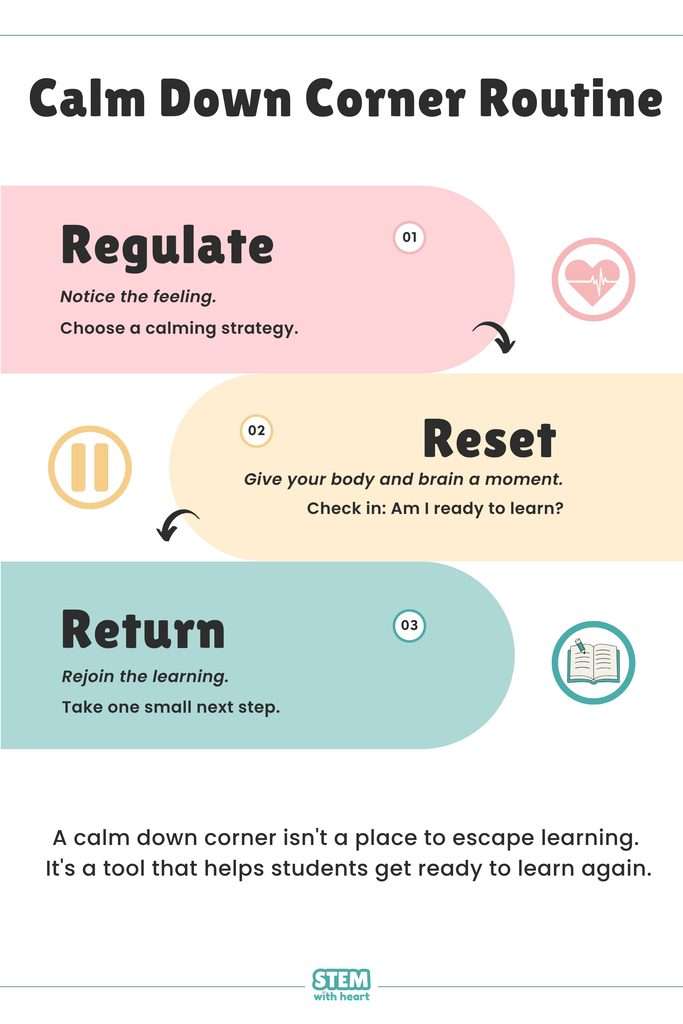
The goal is always regulate, reset, and return.
1. Teach How to Use a Calm Down Corner Before Students Need It
One of the biggest mistakes we can make is setting up a beautiful calm down space and assuming students will automatically know how to use it.
They won’t.
Treat the calm down corner like any other classroom routine.
Before students begin using it independently, explicitly teach:
- when they might use the space
- how to move to the space
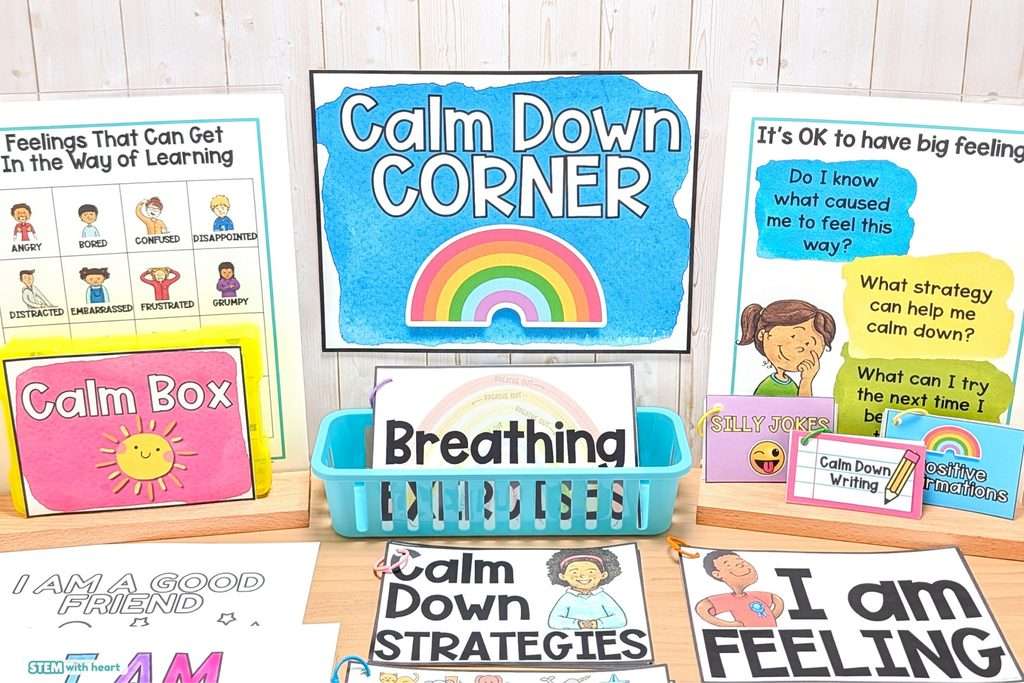
- what tools are available
- how to choose a strategy
- how long they should stay
- what to do when they’re ready to return
Model it yourself.
You might say, “I’m getting frustrated because something isn’t working the way I expected. I’m going to take a few slow breaths, reset, and then try again.”
You can also practice different scenarios as a class.
The few minutes you spend teaching the routine at the beginning can save a lot of instructional time later.
2. Keep the Calm Down Strategies Simple
More isn’t always better.
A calm down corner filled with dozens of toys, sensory materials, games, books, and activities can become overwhelming, or incredibly entertaining.
Instead, provide a small collection of purposeful strategies students can learn to use independently.
For example, students might:
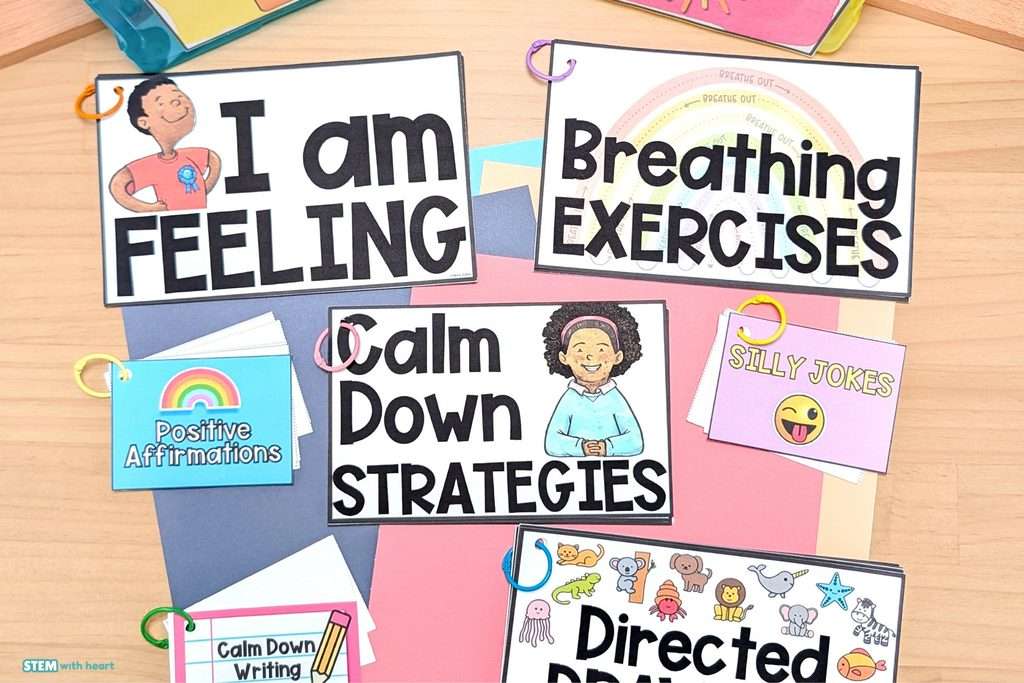
- practice a breathing strategy
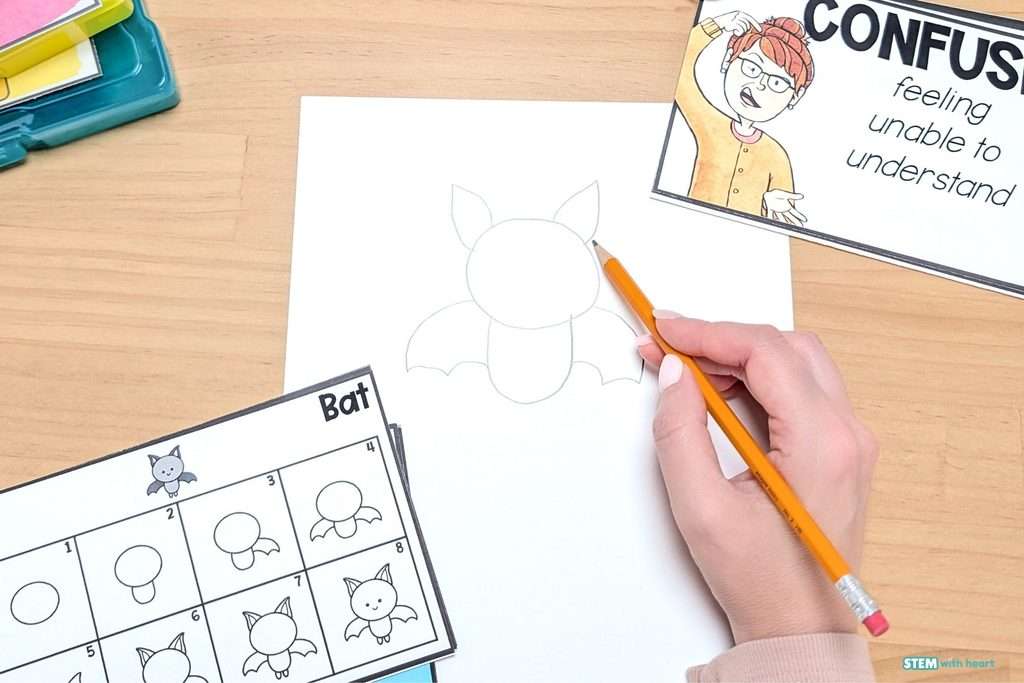
- use a grounding exercise
- identify how they’re feeling
- read a positive affirmation
- complete a quick reflection
- stretch or use another simple movement strategy
Students don’t need to complete every activity.
The goal is to learn, “What helps me when I feel this way?”
Over time, students begin building their own toolbox of regulation strategies they can use even when they aren’t physically sitting in the calm down corner.
Not sure which strategies to include? Here are 10 calm down strategies for kids that can help students find what works for them
3. Create a Predictable Calm Down Corner Routine
If you’re worried about students losing learning time, give the calm down corner a simple beginning-to-end routine.
For example:
Check In → Choose a Strategy → Reset → Return
First, the student identifies what they’re feeling.
Next, they choose one calming or regulation strategy.
Then they check in with themselves again: Am I ready to learn?
If the answer is yes, they return to the classroom activity.
A predictable routine makes the space feel less like an open-ended break and more like a classroom tool.
You can even post the steps in the calm down area so students don’t need to ask you what to do each time.
4. Set a Time Expectation Without Making It a Race
Students shouldn’t spend half of math in the calm down corner, but emotional regulation doesn’t always happen on a two-minute timer, either.
Instead of focusing only on an exact number of minutes, teach students that the calm down corner is intended for a brief reset.
For some classrooms, a visual timer can help students understand what “brief” feels like.
You might also establish a routine such as choosing one strategy and then checking in:
Did this strategy help? Am I ready to return?
If a student regularly needs significantly more time, that’s useful information. The student may need additional support beyond what a classroom calm down corner is designed to provide.
5. Don’t Turn Every Visit Into a Conference
Imagine finally getting yourself calm…and immediately having an adult ask:
“What happened?”
“Why did you do that?”
“What were you thinking?”
“What should you have done instead?”
That’s a lot.
Reflection can be valuable, but students don’t necessarily need a lengthy conversation every time they use the calm down corner.
Sometimes the successful outcome is simply:
I noticed I was getting overwhelmed. I used a strategy. I returned to learning.
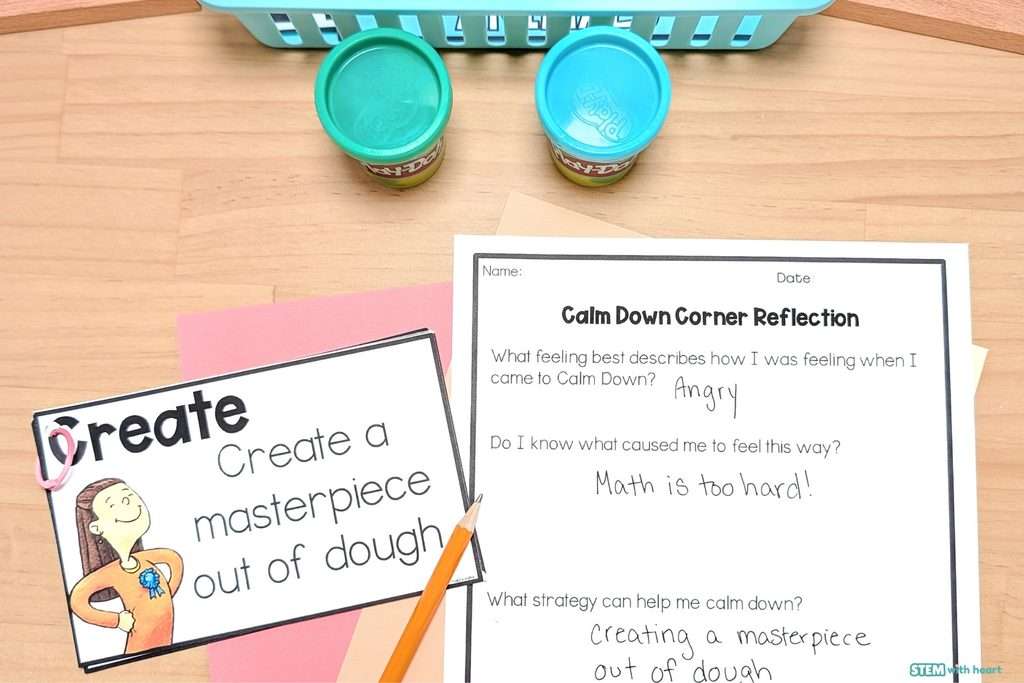
For situations that do require problem solving, a quick reflection form or conversation can happen after the student is regulated.
Regulation comes first. Problem solving comes second.
6. Make Returning to Learning Part of the Routine
We often spend so much time thinking about how students enter the calm down corner that we forget to teach them how to leave it.
Make returning to learning an explicit part of the process.
Students should know:
- where to go when they’re ready
- how to quietly rejoin the class
- what to do if they missed directions
- how to find the work they need to continue
The easier you make re-entry, the less instructional time students lose.
A simple “Ready to Learn” step can reinforce the idea that the calm down corner isn’t the destination. It’s a tool that helps students get back to what they need to do.
7. Pay Attention to Patterns
If the same student is heading to the calm down corner every day during writing, that’s worth noticing.
If several students suddenly need a break during the same transition, that’s worth noticing too.
The calm down corner shouldn’t just help students manage emotions in the moment. It can also give you useful information about when and why students are struggling.
You might notice patterns related to:
- difficult academic tasks
- transitions
- peer conflicts
- sensory overload
- specific times of day
- unclear expectations
Those patterns can help you decide whether a student needs another strategy, or whether something about the classroom routine itself needs adjusting.
Sometimes those patterns are a sign that students need more support managing everyday classroom stress. These 6 strategies to help students manage stress can help you build additional coping tools into your classroom routines, before students reach the point where they need a reset.
The Goal Isn’t More Time in the Calm Down Corner
A successful calm down corner isn’t one that students use constantly.
It’s one that teaches students skills they gradually begin using on their own.
A student who once needed to leave the group to use a breathing card may eventually take one slow breath at their desk.
A student who needed help identifying an emotion may eventually recognize, I’m getting frustrated. I need to reset before I say something I regret.
That’s the bigger goal: self-awareness and self-management that students can carry beyond the calm down corner.
Want an Easy Way to Get Started?
You don’t need an elaborate setup to start teaching students how to recognize and manage big feelings. Grab my FREE Managing Feelings Posters to give students simple visual reminders for identifying their emotions and thinking about what they can do next.
→ Get the Free Managing Feelings Posters
Keep Your Calm Down Corner Structured and Simple
If you want a calm down space without having to create all of the routines, visuals, and strategies yourself, my Calm Down Corner Kit includes tools designed to help students identify their feelings, choose a regulation strategy, reflect when needed, and return to learning.
The updated teacher resources also walk you through introducing the space and teaching students how to use the tools before they need them.
Because the goal isn’t to create a place where students escape learning.
It’s to give them the skills they need to regulate, reset, and get back to it.
Prefer a digital option? My Digital Calm Down Corner gives students an interactive way to choose calming strategies, reflect, reset, and check in when they’re ready to return to learning.
Want a hands-on calm down space? → Printable Calm Down Corner Kit
Want students to work through strategies digitally? → Digital Calm Down Corner
Here’s to helping kids learn, grow, and thrive. 💛
With heart,