
If you’re looking for one change that will make your STEM challenges more meaningful, this is it: build in time for reflection in STEM. It doesn’t take long, it doesn’t require extra materials, and the impact on student learning is real.
Ask any upper elementary teacher what happens the moment a STEM challenge ends, and you’ll likely hear the same thing: controlled chaos. Students are buzzing, structures are (sometimes literally) falling apart, and everyone wants to talk at once. It’s loud, it’s exciting, and it’s also one of the most powerful teaching moments of the entire lesson.
But only if you capture it.
Journaling, self-assessment, and intentional goal setting aren’t just add-ons to a STEM challenge, they’re what transform a fun hands-on activity into genuine, lasting learning. Here’s why reflection in STEM matters, and how to make it work in your 3rd, 4th, or 5th grade classroom.
What Is Metacognition, and Why Does It Matter in STEM?
Metacognition is simply thinking about your thinking, the ability to step back and ask:
What did I do?
Why did it work (or not work)?
What would I do differently?
It sounds sophisticated, but upper elementary students are absolutely capable of it with the right prompts and practice. And research consistently shows that students who develop metacognitive skills:
- Retain information more deeply
- Transfer learning to new situations more effectively
- Become more independent, self-directed learners
- Build resilience when things don’t go as planned
STEM is the perfect context for developing these skills because failure is built into the process. A boat that sinks, a bridge that collapses, a design that doesn’t hold, these aren’t mistakes to hide.
They’re data.
Reflection in STEM is how students learn to read that data and use it.
The Case for STEM Journaling
A STEM journal gives students a dedicated space to document their thinking before, during, and after a challenge. It doesn’t need to be elaborate, even a simple notebook or a structured recording sheet does the job beautifully.
Here’s what consistent STEM journaling builds over time:
A record of growth. When students can flip back through their journals and see how their thinking has evolved, it’s genuinely motivating. They can see their own progress in real time.
Vocabulary and communication skills. Writing about STEM concepts reinforces the language of science, engineering, and math in a way that talking alone doesn’t.
Accountability and focus. When students know they’ll be writing about their process, they pay closer attention during the process. The reflection shapes the doing.
A bridge between concrete and abstract. Hands-on activities engage students physically. Journaling helps them make the mental leap to understanding the why behind what they experienced.

3 Ways to Use Reflection in STEM Challenges
You don’t need to use all three every time, but rotating through these formats keeps reflection feeling fresh and purposeful.
1. Individual self-assessment
After a challenge, have each student reflect privately on their own contribution and learning. Useful prompts include:
- What was your role in the group today, and how did you do in that role?
- What’s one thing you’re proud of from today’s challenge?
- What’s one thing you’d change if you did this again?
- What did you learn today that surprised you?
This is where honest self-reflection happens. Students aren’t performing for a grade or a partner, they’re having a real conversation with themselves about their learning.
2. Team journaling
A shared team journal captures the group’s thinking and decision-making process. One student records for the team (rotate this role!) while others contribute ideas.
Great prompts for teams:
- What was our original design plan, and what changes did we make along the way?
- What was our biggest challenge as a team? How did we handle it?
- If we could redesign, what would we do differently, and why?
Team journaling also builds collaboration skills. Students have to negotiate whose idea gets recorded, how to describe a disagreement constructively, and how to give credit to each other’s contributions.
Want to learn my system for helping students work together in STEM? Read “STEM Team Roles – The Simple System That Makes Group Work Work“.
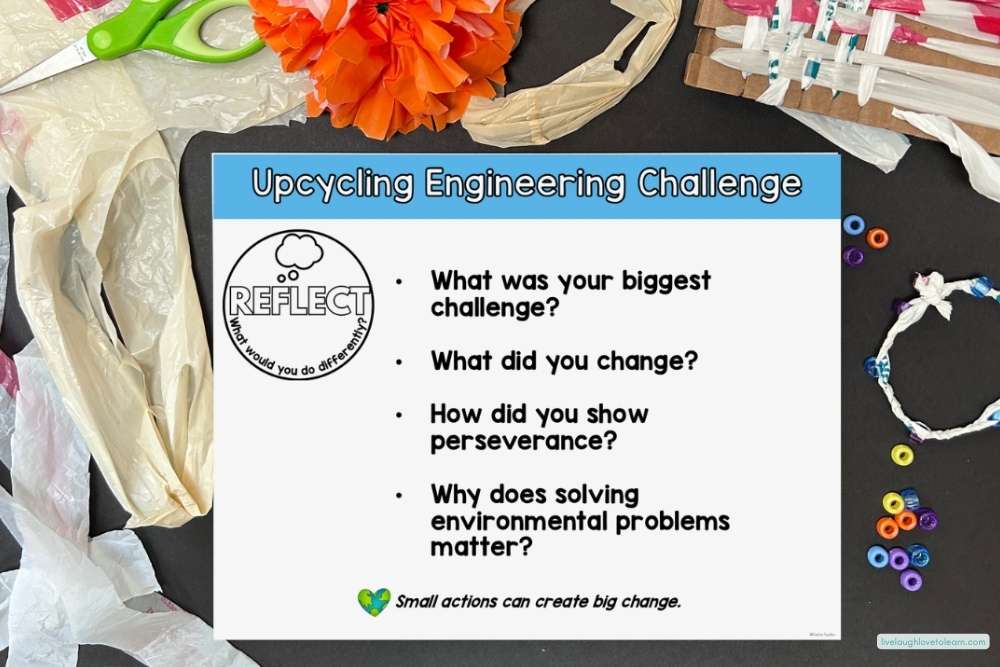
3. Goal setting for next time
This is the most underused type of reflection, and one of the most powerful. After completing a challenge and reviewing their journal entries, have students set one specific goal for the next STEM challenge:
- “Next time, I want to listen more during the planning phase before jumping to building.”
- “Our team needs a better system for making decisions when we disagree.”
- “I want to test my design earlier so we have time to fix it.”
When students carry a personal goal from one challenge to the next, STEM stops being a series of disconnected activities and starts feeling like a real growth journey.

How to Make Reflection in STEM a Classroom Habit (Without It Feeling Like a Chore)
The biggest obstacle to consistent reflection is time, or the feeling that there isn’t any.
Here are a few practical ways to make it stick:
Build it into the challenge structure from the start. If students know reflection is always part of STEM time, it becomes expected rather than an afterthought. Reserve the last 10 minutes of every challenge for it.
Use structured prompts, not open-ended blank pages. “Write about what you learned” is too vague for most 3rd–5th graders. Specific sentence starters and focused questions make the reflection faster, easier, and more meaningful.
Share out selectively. You don’t need to turn every reflection into a whole-class discussion, but occasionally spotlighting a student’s insight (“I want to share what Maya wrote about her team’s redesign process…”) shows students that their thinking matters.
Let students see their own patterns. A few times a year, have students re-read several past entries and notice: How has your thinking changed? What keeps coming up as a challenge for you? This kind of meta-reflection is incredibly powerful for building self-awareness.
Built-In Reflection: What My STEM Challenges Include
One reason I designed my STEM Challenges the way I did is because I wanted reflection to be seamless, not something teachers have to tack on separately.
Each challenge includes:
- A team journal where groups document their design process, track changes, and debrief together
- An individual self-assessment so every student reflects on their personal contribution and learning
Everything is structured with age-appropriate prompts, so even students who are new to STEM journaling can engage meaningfully right away. You bring the challenge, the reflection tools are already there.
If you’re new to STEM challenges, my post How to Run STEM Challenges in Your Classroom is a good place to start.
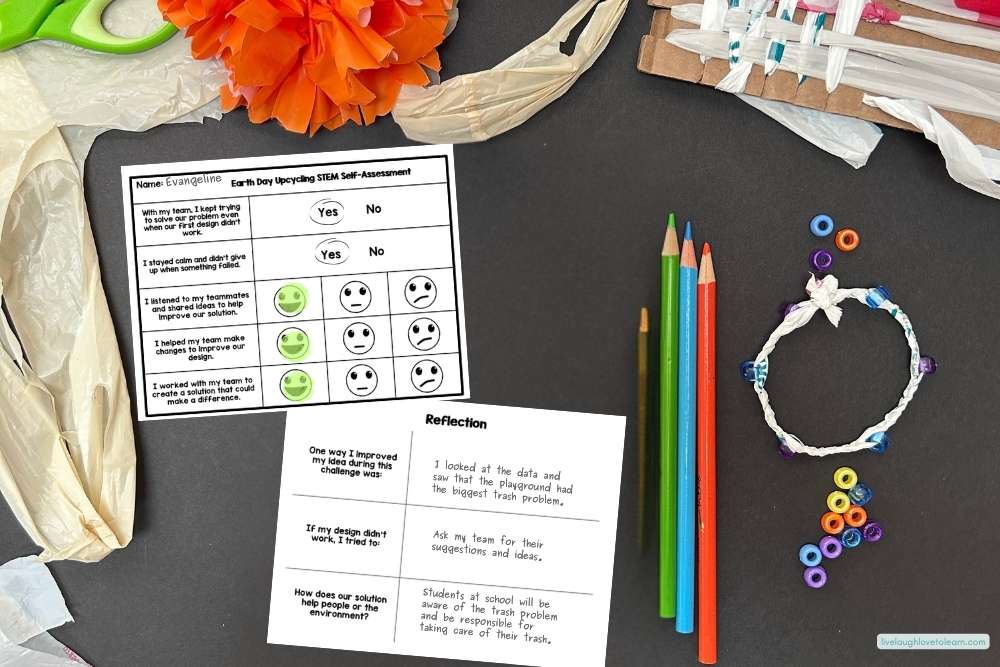
Browse my STEM Challenges in my TPT shop to find the right fit for your class.
The Bigger Picture
When we slow down and ask students to reflect, we’re teaching them something that goes far beyond STEM. We’re teaching them to be learners, curious, self-aware, resilient learners who understand that struggle is part of the process and growth is always possible.
That’s a skill that will serve them long after they’ve forgotten which team’s foil boat held the most pennies.
Give reflection in STEM a real place in your practice.
Your students, and their future teachers, will thank you.
Happy teaching,
