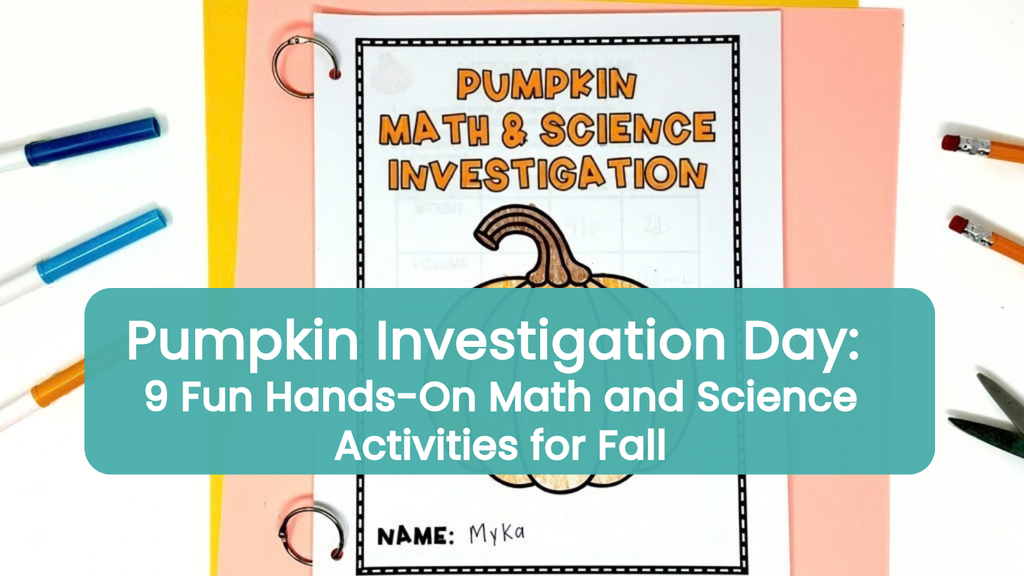
Looking for a hands-on way to bring fall into your math and science lessons? A Pumpkin Investigation Day turns an ordinary pumpkin into a tool for exploring measurement, estimation, observation, data collection, and more.
With just a few pumpkins and simple classroom supplies, students can measure, predict, compare, count, and investigate as they work through nine hands-on pumpkin math and science activities. It’s an easy way to add seasonal fun to your classroom while keeping the learning meaningful, and your students will love discovering what’s inside!
These activities work especially well for a fall science and math day, a Halloween alternative, or a seasonal STEM rotation. Here are nine pumpkin investigation activities you can use with your students this fall.
Why Host a Pumpkin Investigation Day?
Pumpkins are a natural fit for hands-on learning. Students can make predictions, test their ideas, collect data, and compare results, all while working with something familiar and seasonal.
A Pumpkin Investigation Day also gives students a chance to practice math and science skills in a real-world context. Instead of simply reading about measurement, estimation, or physical properties, students can weigh a pumpkin, measure its circumference, observe its features, and investigate what’s inside.
Best of all, the same pumpkin can be used for multiple activities, making it easy to turn one seasonal experience into a full morning of meaningful math and science learning.
How to Plan a Pumpkin Investigation Day
Planning a Pumpkin Investigation Day doesn’t have to be complicated. You can ask each student to bring in a small pumpkin, request pumpkin donations from families or local businesses, or provide a few pumpkins for students to share. You definitely don’t need one pumpkin per student, pairs or small groups work well for most of the activities.
Before your investigation, gather a few simple supplies such as rulers, measuring tapes, scales, containers for seeds, and crayons or colored pencils. If students will be investigating the inside of their pumpkins, having an adult cut off the tops ahead of time can make the day run much more smoothly.
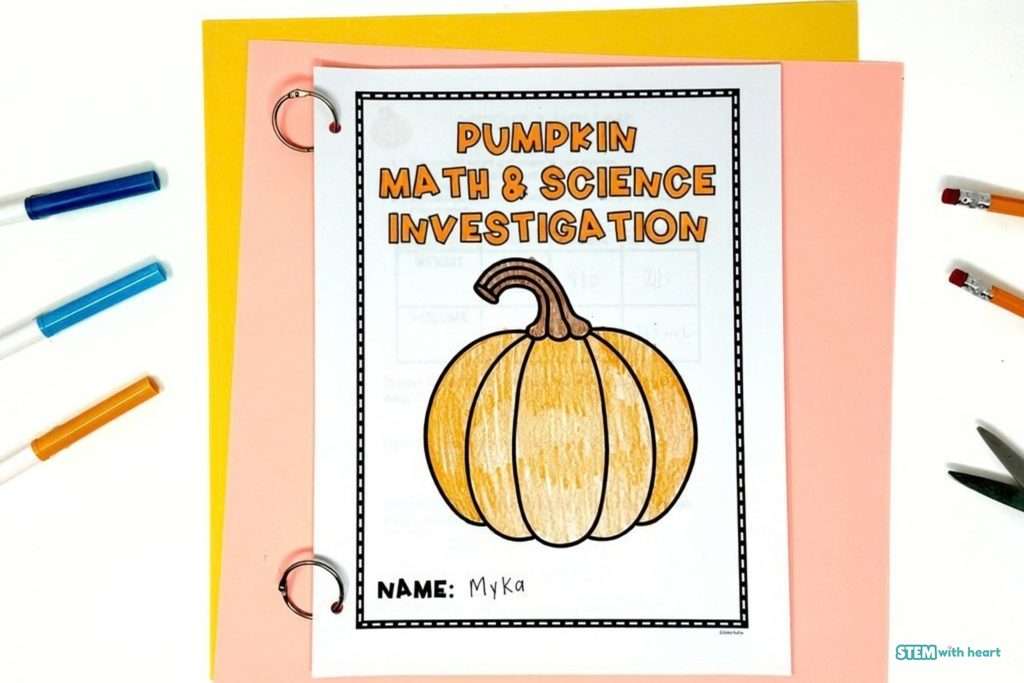
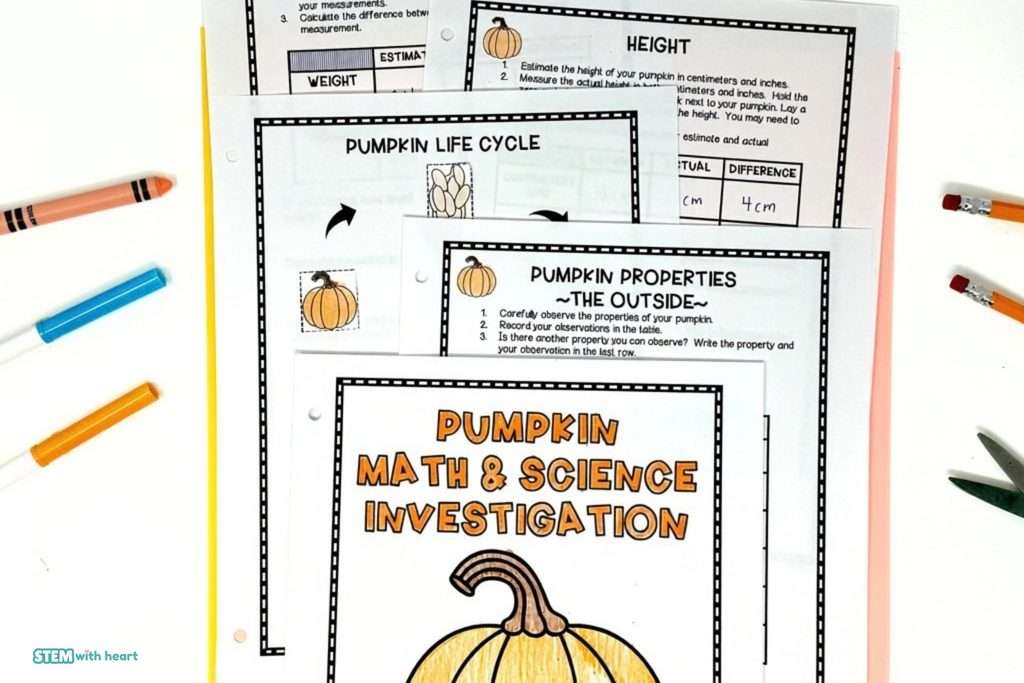
A Pumpkin Investigation booklet is also helpful for keeping everything organized. Students can record their estimates, measurements, observations, and data in one place as they move through the activities.
Depending on your schedule, you can complete all nine activities during one Pumpkin Investigation Day or spread them throughout the week.
What You’ll Need for a Pumpkin Investigation
You don’t need a lot of special supplies to make your Pumpkin Investigation Day work. Most of what you’ll need is probably already in your classroom.
Gather:
- Pumpkins (one per student, pair, or small group)
- Rulers or measuring tapes
- A scale for weighing pumpkins
- Containers or trays for collecting seeds
- Paper towels or wipes for cleanup
- Crayons or colored pencils
- Pumpkin Investigation recording pages or science notebooks
If students will be exploring the inside of their pumpkins, you’ll also need an adult to safely cut them open. Having the pumpkins opened ahead of time can make your investigation run much more smoothly.
Teacher Tip: Put measuring tools, seed containers, and other supplies into station bins before students begin. That way, groups can rotate through the activities without everyone needing the same materials at once.
6 Pumpkin Math Activities
Pumpkins give students a chance to practice familiar math skills with a real object they can measure, compare, and investigate. Before measuring, encourage students to make an estimate first. Comparing their predictions with the actual results adds another layer of mathematical thinking.
Here are six pumpkin math activities to try:
- Estimate and measure volume. Have students predict the volume of their pumpkin and then investigate how much space it takes up.
- Estimate and measure weight. Students predict how much their pumpkin weighs before checking it on a scale.
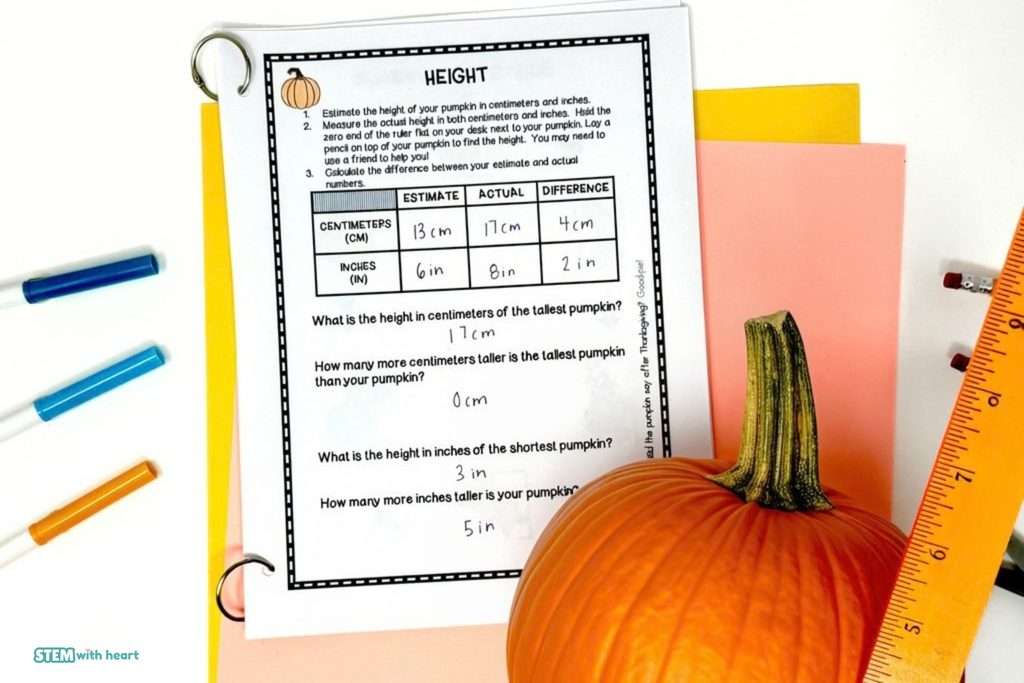
- Estimate and measure height. Compare estimates with actual measurements and discuss which pumpkins are tallest and shortest.
- Count the ribs. Students examine the outside of their pumpkin and count its vertical ribs.
- Estimate and count the seeds. Before opening the pumpkin, students predict how many seeds they’ll find. Then sort the seeds into groups of ten to make counting easier.
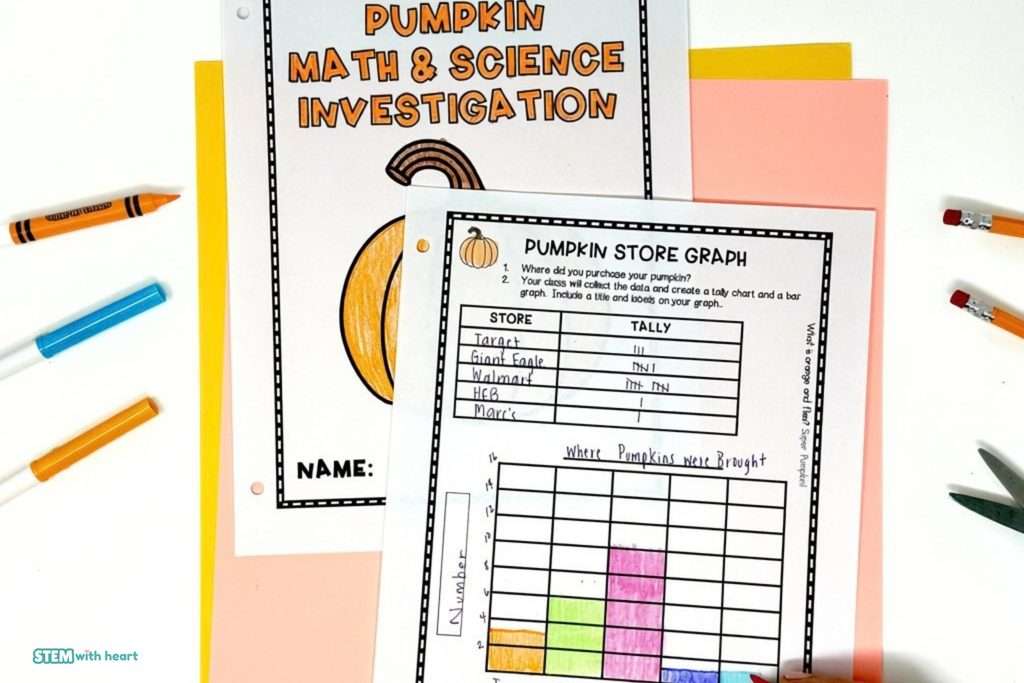
- Graph pumpkin prices. Collect data about how much the pumpkins cost and where they were purchased, then use the information to create a bar graph.
These activities naturally incorporate estimation, measurement, counting, place value, data collection, and graphing while giving students a reason to use those skills.
Teacher Tip: Turn It Into Math Stations
If completing all of the activities at once feels overwhelming, set up a few pumpkin investigation stations instead. Small groups can rotate through measuring, weighing, observing, and counting activities while recording their results in their investigation booklets.
This can be especially helpful if you have limited supplies or only a few pumpkins for the class.
3 Pumpkin Science Activities
Once the measuring is finished, it’s time to take a closer look at the pumpkin itself. Pumpkin investigations give students plenty of opportunities to practice making careful observations, describing physical properties, and learning about the life cycle of a plant.
Try these three hands-on pumpkin science activities:
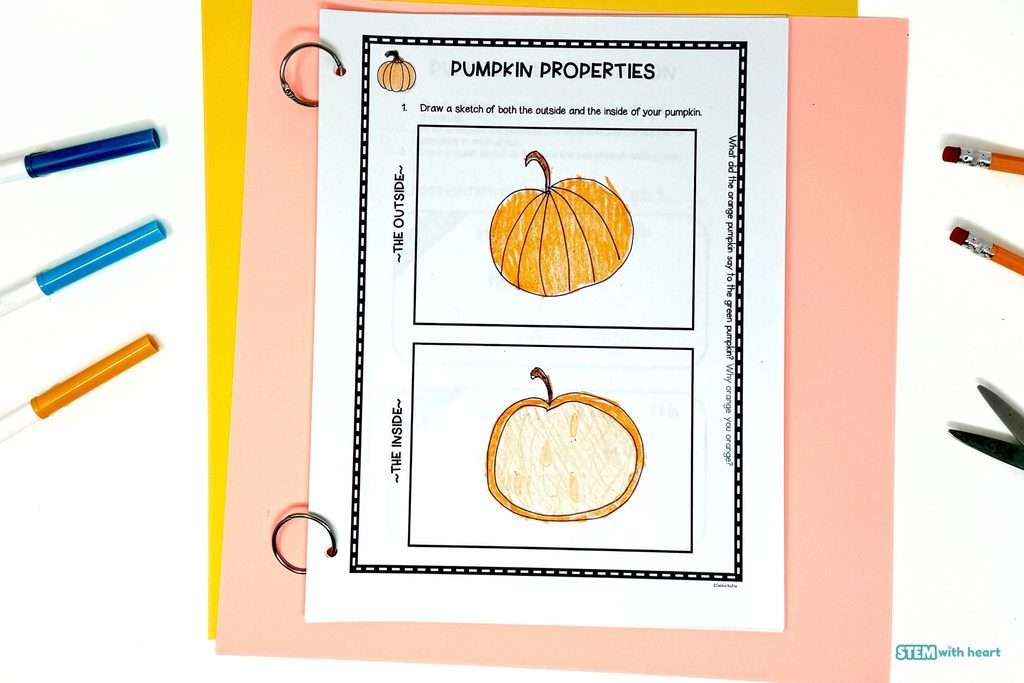
- Observe the outside of a pumpkin. Students examine properties such as color, texture, size, and shape. Have them record their observations and make a detailed sketch.
- Investigate the inside of a pumpkin. After opening the pumpkin, students use their senses to describe its color, texture, smell, seeds, and pulp. They can record their observations and draw what they see.
- Explore the pumpkin life cycle. Review how a pumpkin grows from seed to mature fruit, then have students put the stages of the pumpkin life cycle in the correct order.
Bonus: Compare the Properties of Pumpkins
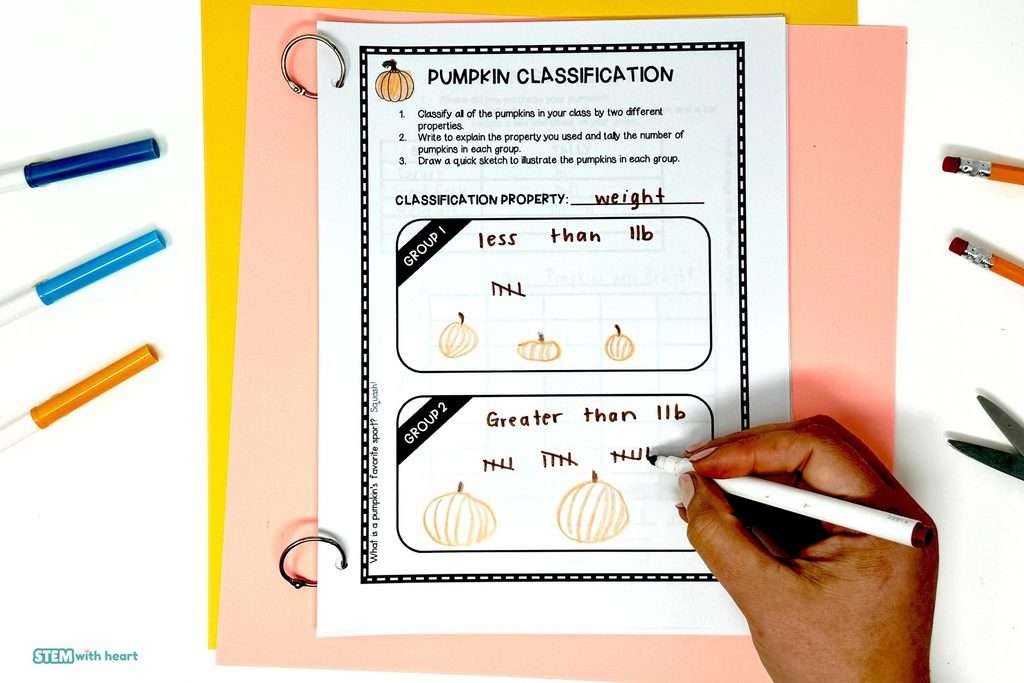
Bring the class back together after the investigations to create a Properties of Pumpkins anchor chart.
What did students notice? Were all of the pumpkins orange? Were they all round? Did larger pumpkins always have more seeds?
Comparing the class results gives students another opportunity to use evidence from their own observations to describe similarities and differences among pumpkins.
Extend the Learning
Your pumpkin investigation doesn’t have to end when the booklets are finished.
Students can compare class data, write about something that surprised them during the investigation, or make a claim based on their results. You could even save a pumpkin and observe what happens to it over time as it decomposes.
These simple extensions help students see that science isn’t always about getting a “right” answer, it’s about observing, asking questions, collecting information, and noticing patterns.
Ready for Your Own Pumpkin Investigation Day?
A Pumpkin Investigation Day is an easy way to bring seasonal excitement into your classroom while giving students meaningful practice with math and science skills. Students aren’t just completing a fall-themed worksheet—they’re estimating, measuring, observing, collecting data, and learning from a real object.
If you’d like everything organized for you, my Pumpkin Investigation Math and Science Activities resource includes teacher directions, a family letter, and a student investigation booklet to guide students through the activities.
Take a look at the Pumpkin Investigation resource here.
Whether you complete all nine activities in one day or spread them throughout the week, your pumpkins can become a simple, hands-on way to make fall math and science memorable.
Happy Fall!
With heart,