Originally published May 2021 | Updated May 2026
Winding down the school year is always bittersweet.
You’re counting down the days to summer… but your class has also become a little family.
And saying goodbye, even a temporary one, is never easy.
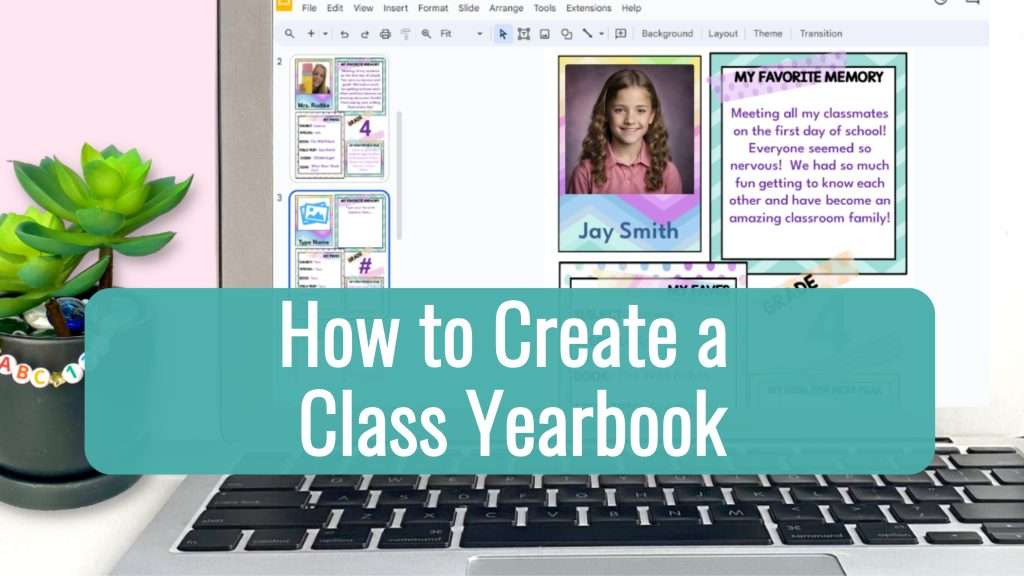
A class yearbook is one of the most meaningful ways I’ve found to close out the year. Not because it’s a cute craft project (though it is), but because it gives students something genuinely important: a chance to look back, feel proud, and hold onto the community they built together.
Here’s how to actually make it happen, without it becoming a weeks-long production.
Start With the Memories, Not the Materials
Before you open a single template or hand out a single sheet of paper, take 10–15 minutes as a class to brainstorm together.
Ask students:
- What’s one moment from this year you’ll never forget?
- What’s something you’re proud of that nobody saw?
- What would you want to remember about this class in 10 years?
This conversation does two things.
First, it surfaces memories you’d forgotten about , the STEM challenge that went sideways in the best way, the field trip where it rained the whole time, the day someone’s science project actually worked.
Second, it gets students emotionally invested before the project even begins.
Teacher tip: Jot the memories on an anchor chart as students share. That list becomes the backbone of your class pages later.
Then gather your photos. If you’ve been snapping pictures throughout the year (which, if you haven’t, no judgment, start now for next year), now is the time to organize them. A shared Google Drive folder works well so students can browse and pull photos for their own pages.
Student Yearbook Pages: Where Personal Reflection Lives
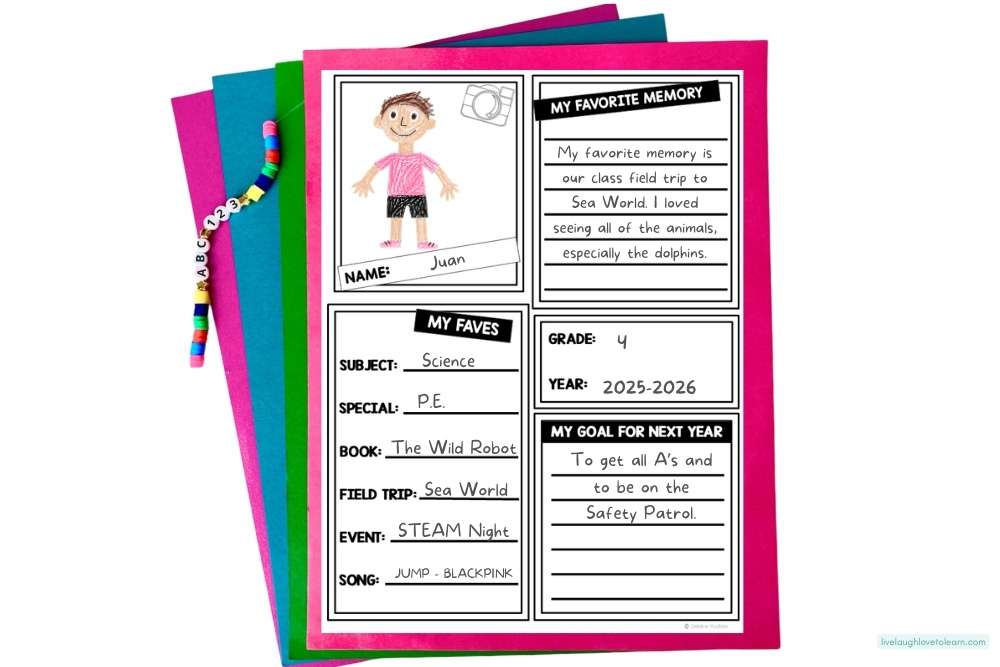
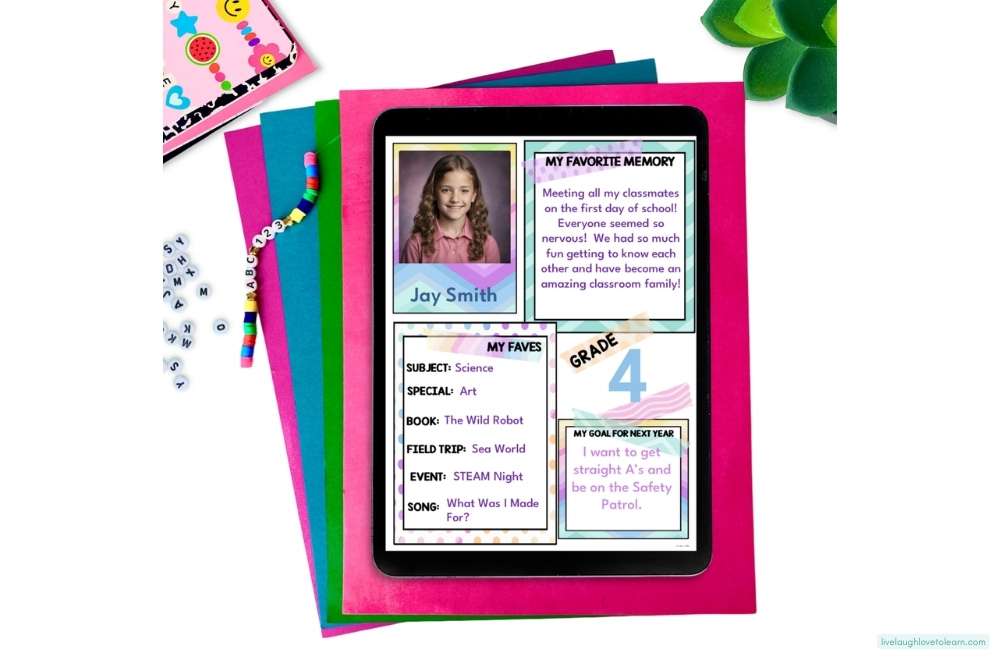
Each student creates their own page. This is the heart of the yearbook, the part families will read over and over.
A good student page goes beyond “favorite subject” fill-ins.
Encourage students to actually think:
- What’s one thing you learned this year that surprised you?
- Who helped you when something was hard?
- What do you want your next teacher to know about you?
The more specific the prompts, the more interesting the pages. “My favorite memory was the science fair” is forgettable. “My favorite memory was when Marcus dropped the baking soda too fast and it exploded on Ms. H” is the kind of thing that makes families laugh out loud.
A note on format: Whether students work digitally (in Google Slides, for example) or fill out printed pages, the reflection is what matters. Digital is great for easy sharing and no printing. Printable works beautifully for lower-tech classrooms, students who do better without a screen, or when you want a physical book families can actually hold. There’s no wrong answer, pick what fits your classroom.
Class Yearbook Pages: Where Community Gets Documented
This is where the yearbook becomes more than a collection of individual portraits.
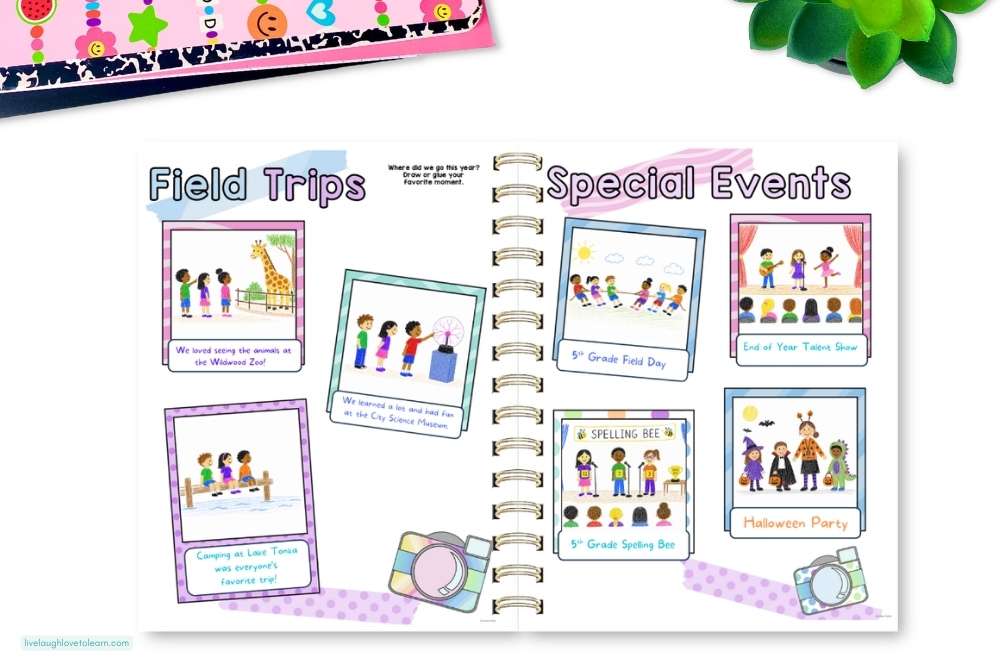
Assign small groups to create pages around shared experiences:
- Field trips
- Favorite class projects
- Running jokes or classroom traditions
- School events or assemblies
- “Things we’ll never forget”
Give each group time to discuss, select photos, and draft their page.
Then have groups share their pages with the class before finalizing.
This step matters more than it seems, students catch details others missed, add their own memories, and feel genuine ownership over the final product.
This is also a quiet SEL win.
Students are practicing communication, negotiation, and the slightly uncomfortable-but-important skill of “my idea didn’t make the final cut, and that’s okay.”
By the end of the year, most classes can handle that with grace. The yearbook gives them a real reason to practice it one more time.
The Cover: Make It a Whole-Class Moment
I’m a big fan of a whole-class signed cover. Every student contributes something, their name, a small drawing, a word that describes the year, and the result is something genuinely irreplaceable.
Other options that work well:
- Small group design: A few students sketch concepts and the class votes
- Class contest: Students submit designs and vote on a winner
Whatever you choose, make the cover feel special. It sets the tone for everything inside.
If you’re assembling a physical book, the cover becomes your actual front page. If you’re going digital and want that handmade feel, scan the signed cover and drop it in as the first slide.
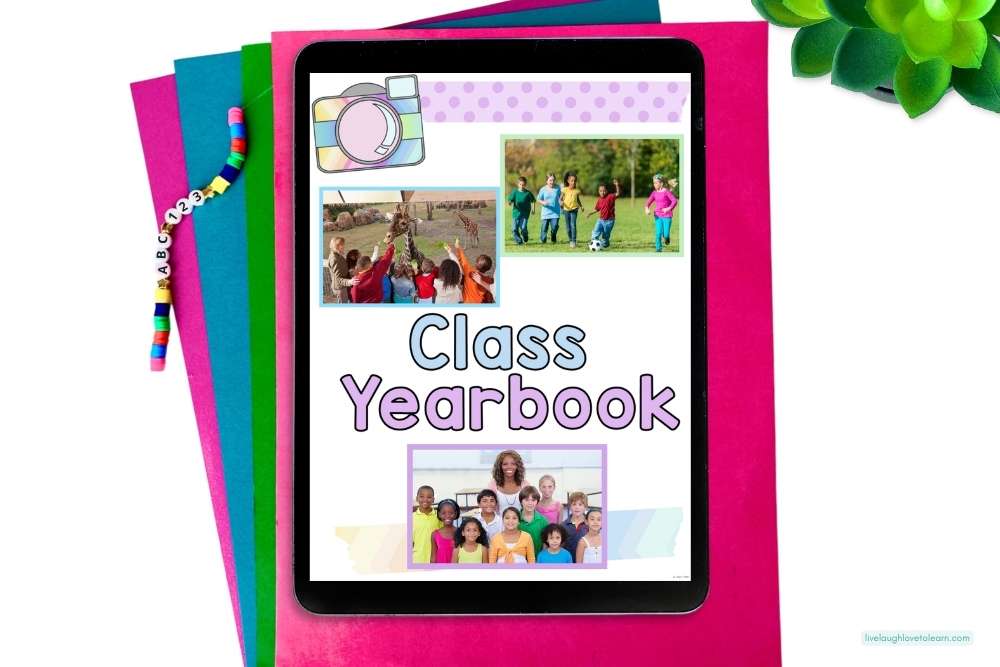
Class Yearbook Assembly Day is Simpler Than You Think
Putting it all together doesn’t have to be complicated.
For a physical yearbook: Compile student pages and class pages in order, add your cover, and staple, bind, or slip into a folder. Even a simple stapled packet feels special when students have poured themselves into it.
For a digital yearbook: Combine everything into one shared file and distribute the link to families. You can also export it as a PDF if you want something more permanent.
Either way, build in time for students to flip through the finished product before it goes home.
That moment, the one where they’re reading each other’s pages and pointing and laughing, is the whole point.
The Part That Makes It Worth It
Here’s what I’ve noticed, year after year:
students take the yearbook seriously in a way they don’t always take other end-of-year activities.
They edit their pages. They ask if they can redo their photo. They get genuinely excited when they see their words in print.
That’s because this isn’t busywork, it’s documentation. It’s evidence that their year happened, that it mattered, that they mattered.
And for some students, especially those who struggle to feel seen during the regular school year, having their name and face and words in a class yearbook is quietly significant.
That’s worth a couple of weeks of your end-of-year schedule.
Make It Easy on Yourself
If you love this idea but don’t want to build the whole thing from scratch, I’ve created both a digital version (Google Slides) and a printable version that are ready to use. Both include student pages, class pages, and a cover, with a structure that guides students through the process without you having to reinvent anything.
There’s also a free sample page if you want to try it before committing.
👉 Digital + Printable Yearbook Bundle (best value!)
Or grab just the format you need: Digital Class Yearbook or Printable Class Yearbook
Before You Go
Have you done a class yearbook before? I’d love to know how you handled it … especially if you’ve found a binding method that doesn’t require a trip to the office supply store.
Drop a comment below!