Summer teacher prep has a funny way of sneaking up on you.
One week into break, you’re on the couch and your brain is already making a list.
New anchor charts. That unit you want to redo. All the things.
Here’s what I want to say to you, teacher friend: not everything on that list needs to happen in June.
After 19 years in the classroom and way too many summers spent “getting ahead” only to feel burned out by August, I’ve figured out what’s actually worth doing now, and what will take care of itself later.
Let’s break it down.
Why Summer Prep Is a Double-Edged Sword
Summer is sacred. It’s the only chunk of time most teachers get to breathe, think, and rediscover who they are outside of their classroom. And yet, the pressure to be productive, to show up in August with everything organized, planned, and laminated, is real.
The problem? When we try to do everything in June, two things happen:
- We make decisions before we know what we actually need (because we haven’t met our students yet).
- We exhaust ourselves before the year even starts.
Finding that balance between rest and productivity is something a lot of educators wrestle with, Edutopia has a great piece on how to balance recharging, reflecting, and learning over the summer if you want to go deeper on this.
So here’s my framework:
Prep the things that free your brain and protect your energy.
Leave the rest for when you have more information.
What’s Worth Doing Now (June/July)
1. Reflect on last year, before you forget
Your clearest memories of what worked and what didn’t are right now. Grab a notebook or open a Google Doc and brain dump:
- What units or lessons felt flat?
- What classroom systems broke down by February?
- What moments made you proud?
- What would you do differently if you could start over?
You don’t have to act on any of it yet. Just capture it. Future-you will be so grateful.
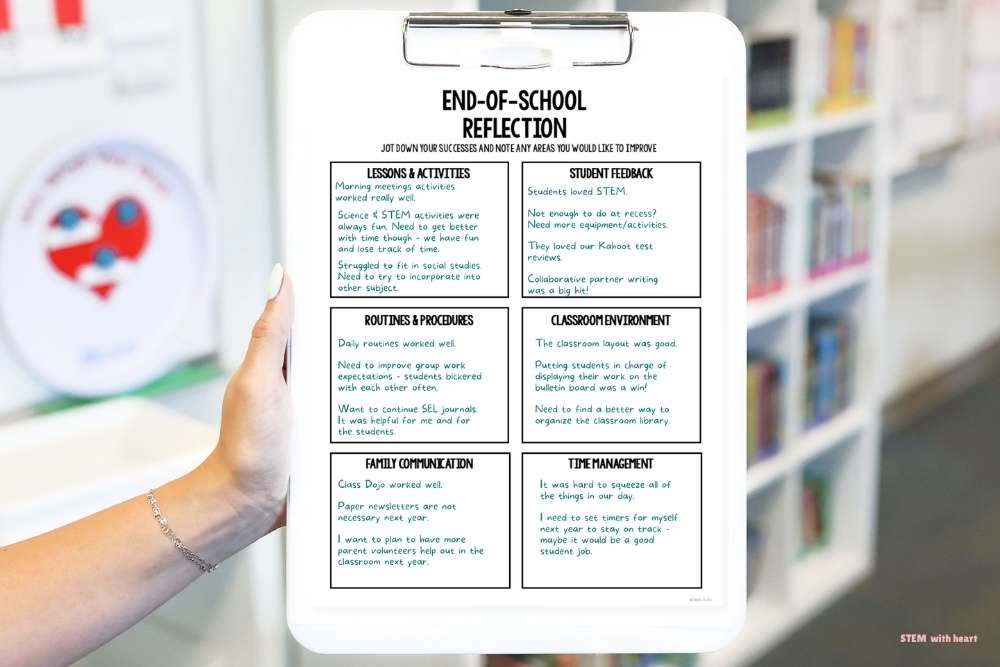
If you want a head start, I have a free End of Year Reflection & Planner that walks you through exactly this — capturing what worked, what didn’t, and how you want to set up your space for next year. Grab it here
2. Audit your digital files
Summer is the perfect time to clean up your Google Drive, TPT downloads folder, and resource library, when you’re not in the middle of using any of it. Delete duplicates, organize by unit or subject, and make a folder for “things to try this year.”
This is a low-energy task you can do with a podcast on and it pays off all year long.

3. Do any professional learning that genuinely excites you
Notice I said excites, not obligates. If there’s a book you’ve been wanting to read, a podcast series on math instruction, or a workshop on social-emotional learning, summer is the time. But only if it actually sounds good to you.
The goal is to come back to the classroom inspired, not depleted.
If you’re not sure where to start, Edutopia put together some practical ideas for how to relax and still be productive this summer , including a concept called “hard fun” that honestly applies to the classroom too.
4. Refresh or create your anchor resources
If you have tried-and-true activities, units, or tools you use every year, this is a good time to update them while they’re fresh in your mind. Tweak the parts that didn’t land. Add the extension activity you kept meaning to create.
These are the tools worth investing time in now, the ones you’ll pull out every single year.
What Can (and Should) Wait Until August
1. Decorating your classroom
I know. I know. The matching bulletin board sets are calling your name on Instagram. But decorating before you know your theme, your students’ interests, or even which room you’re in is a recipe for doing it twice.
Wait until mid-August, when setup energy is high and you have more information to work with.
2. Full unit plans for spring
Planning out March in June is heroic, and almost always wasted effort. You’ll adjust everything based on your students anyway. Focus on the first 6–8 weeks if you want to plan ahead. Leave the rest flexible.
3. Buying a ton of supplies
Sales are tempting. But buying $200 worth of organizational bins before you’ve reassessed your systems is how you end up with duplicate stuff you don’t need. Add things to a wishlist. Buy in August when you can see your actual space.
4. Overhauling your entire curriculum
If something needs to change, absolutely plan for it. But trying to rewrite your entire approach to math instruction or redesign every unit before the year starts is a fast track to summer burnout. Pick one thing to improve this year. Just one.
The Summer Prep Sweet Spot
Here’s what I’ve landed on after years of trial and error:
- Reflect in June.
- Rest and recharge in July.
- Set up and plan in August.
That rhythm protects your summer without leaving you scrambling in September. And it means the prep you do is actually useful, not just busy work that makes you feel like a good teacher.
You are already a good teacher. You don’t have to earn your rest.
Now go enjoy your summer. The classroom will be there in August.
With heart,