Updated: August 2026
Classroom management doesn’t have to mean constantly reminding students what not to do. Sometimes, one of the simplest shifts you can make is to spend more time noticing and reinforcing the behaviors you do want to see.
That’s where behavior punch cards can help.
Behavior punch cards are a simple positive reinforcement tool that gives students a visual way to see their progress. Instead of waiting until a student reaches a big goal, or only responding when something goes wrong, you can recognize all those small moments when a student makes a positive choice.
But punch cards can be more than a “do something good, get a punch, earn a prize” system.
When you pair them with clear expectations, individual goals, and a simple reward menu, behavior punch cards can help students take more ownership of their choices and recognize the progress they’re making along the way.
Here’s how to make them work in your classroom.
What Are Behavior Punch Cards?
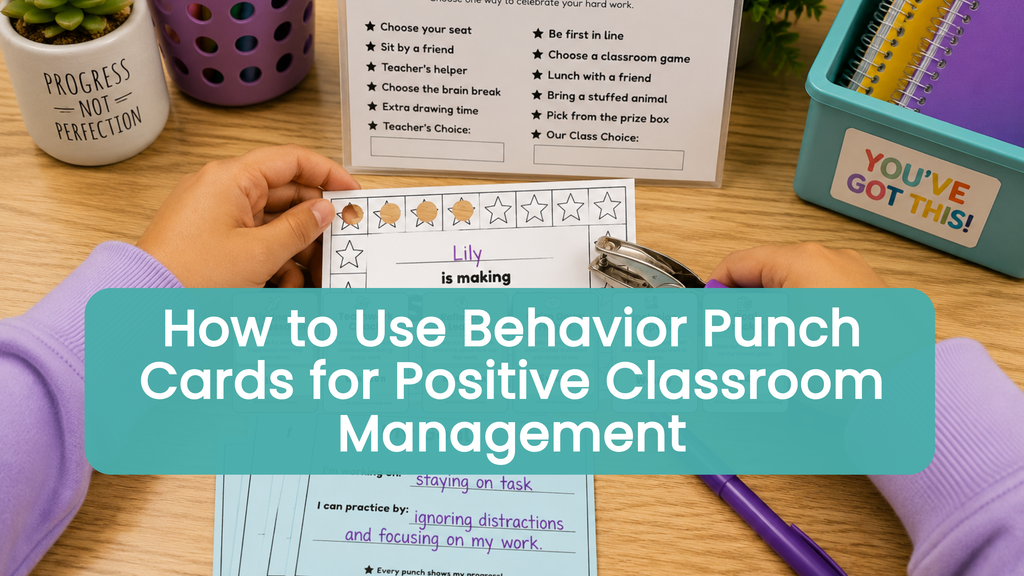
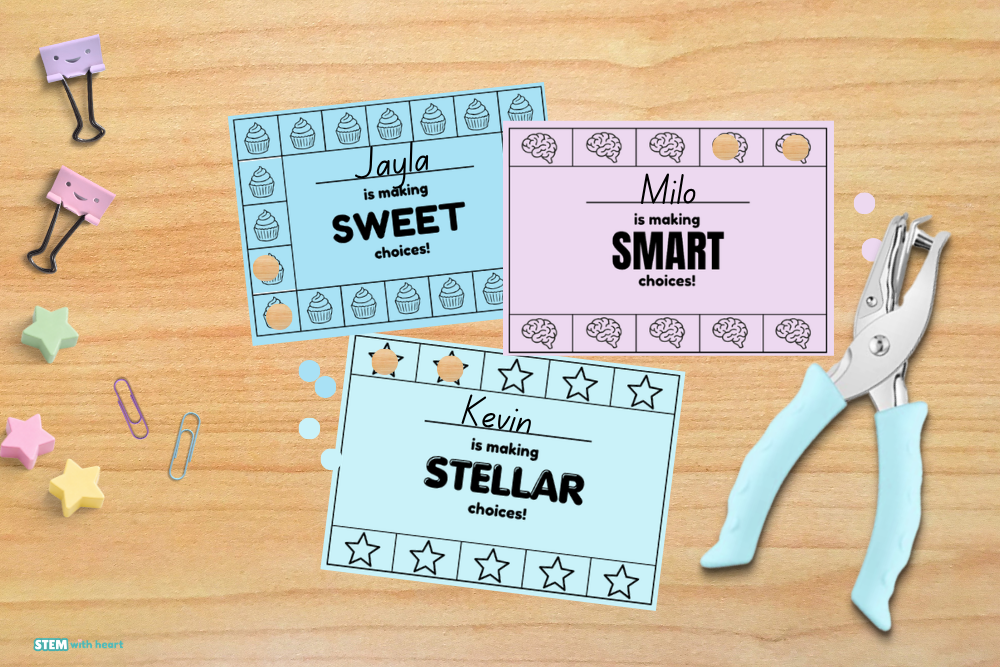
Behavior punch cards are individual cards students use to work toward a specific number of punches. Students earn a punch when they demonstrate an agreed-upon behavior, meet an expectation, or make progress toward an individual goal.
Once the card is complete, the student can celebrate their progress with a reward or classroom privilege.
The system is simple, which is exactly why I like it. There are no complicated charts to maintain or points to calculate. A quick punch gives students immediate feedback while providing a visual reminder that all those small positive choices add up.
1. Start With a Clear Behavior Goal
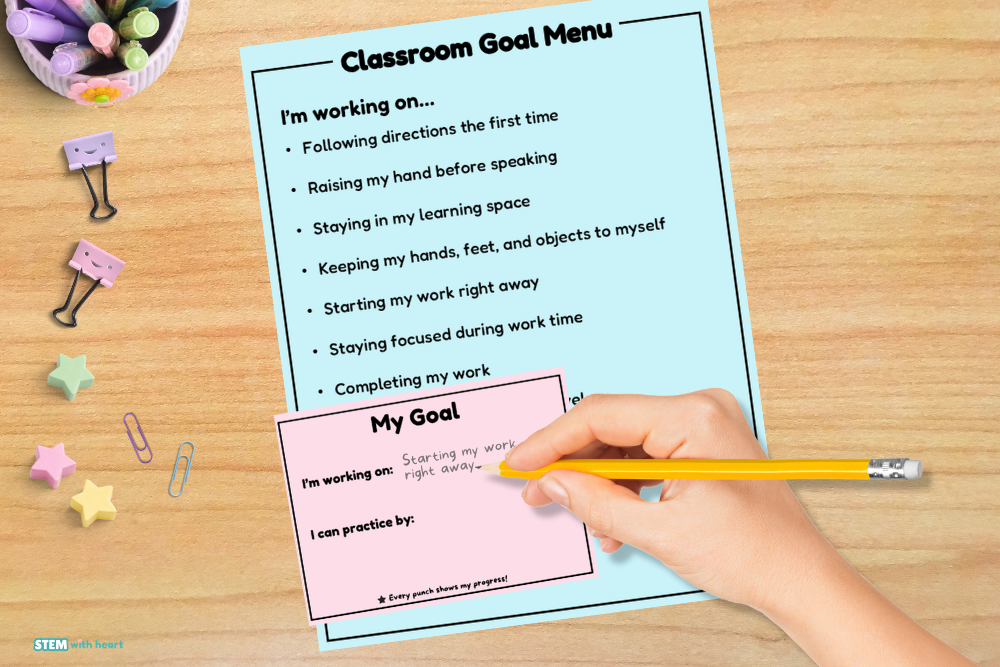
Before you start handing out punches, decide exactly what students are working toward.
You might use punch cards to reinforce general classroom expectations, such as:
- following directions the first time
- transitioning calmly
- using classroom materials responsibly
- staying on task
- working cooperatively with a group
- showing kindness or respect
You can also use behavior punch cards for individual student goals.
Instead of a broad goal like “make good choices,” help a student identify one specific behavior they can practice.
For example:
Instead of: I will behave during math.
Try: I will begin my math work within two minutes.
Or:
Instead of: I will be respectful.
Try: I will wait until someone finishes speaking before I respond.
Specific goals make it easier for students to understand what success looks like—and easier for you to recognize it when it happens.
2. Choose an Achievable Number of Punches
Not every student needs to work toward the same number of punches.
Some students benefit from frequent reinforcement and need to experience success quickly. A card with 5 punches might be the perfect starting point.
Other students may be ready to work toward a longer-term goal using a 10- or 20-punch card.
Think about the student’s age, the behavior they’re practicing, and how often they’ll have an opportunity to earn a punch.
If a student could realistically earn one punch each day, a 20-punch goal may feel very far away. On the other hand, if students have multiple opportunities to earn punches throughout the day, a longer card may work well.
You can always start small and gradually increase the number of punches as a behavior becomes more consistent.
The goal is for the card to feel achievable while still giving students something meaningful to work toward.
3. Be Clear About What Earns a Punch
Students shouldn’t have to guess what they need to do to earn a punch.
If you’re using behavior punch cards with your whole class, consider brainstorming examples together.
You might create a quick anchor chart titled “Ways We Can Earn a Punch” and add examples such as:
- getting started right away
- completing a transition successfully
- solving a small problem independently
- contributing positively to a team
- showing responsibility
- using a calming strategy when frustrated
For individual goals, talk with the student about what you’ll be watching for.
Then, when you give the punch, pair it with specific positive feedback.
Instead of simply saying, “Great job!” try:
“You got started as soon as the timer went off. That’s exactly the goal you’re working on.”
The punch is motivating, but the feedback helps the student connect their action to their progress.
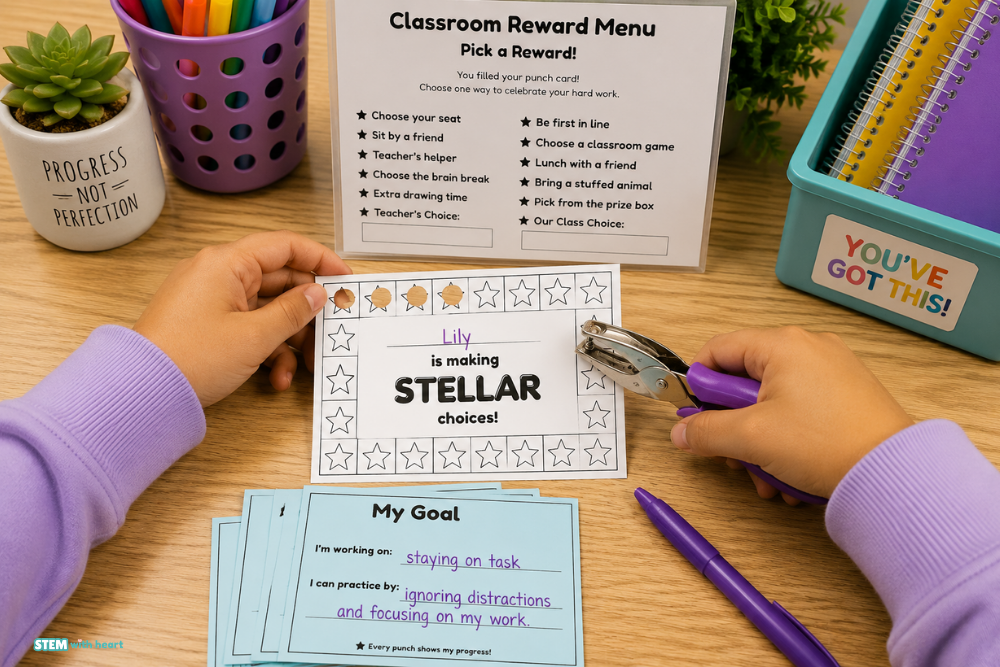
4. Use a Classroom Reward Menu
One question teachers often have is: What happens when the punch card is full?
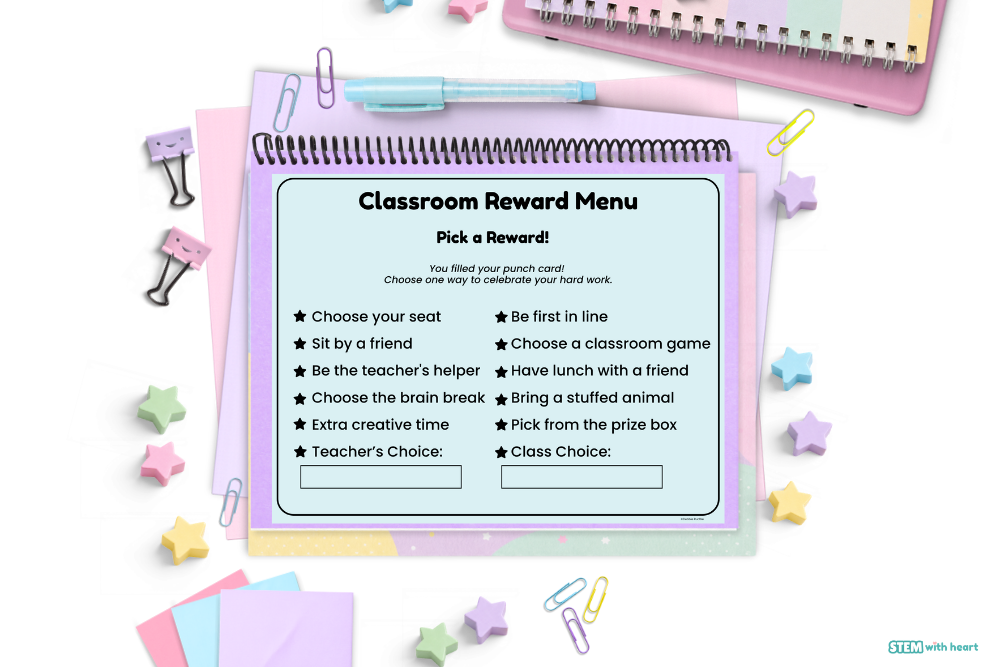
This is where a classroom reward menu can make the system much easier to manage.
Rather than deciding on a reward every single time a student completes a card, create a menu of choices ahead of time.
And rewards definitely don’t have to mean candy or an expensive treasure box!
Some classroom reward ideas include:
- have lunch with the teacher or a friend
- choose your seat for part of the day
- use a special classroom supply
- be the teacher’s helper
- choose a class brain break
- have extra drawing or reading time
- sit with a friend
- be first in line
- choose a classroom game
- bring a stuffed animal for the day
- have lunch with the teacher or a friend
Choose options that make sense for your classroom and that you’re comfortable offering regularly.
You can even involve students in creating the menu. Ask them to brainstorm classroom privileges or experiences they would enjoy, then choose the options that are realistic for you.
Student input makes the rewards more motivating without creating more work, or expense, for you.
5. Add Goal-Setting and Reflection
This is one of my favorite ways to make behavior punch cards more meaningful.
Instead of focusing only on filling the card, help students pay attention to what they’re getting better at.
Before beginning a new card, students might complete a simple statement:
My goal is to __________.
As they earn punches, occasionally ask:
- What did you do to earn that punch?
- What choice are you proud of?
- What’s getting easier?
- What do you want to keep practicing?
When the card is complete, take a minute to celebrate the student’s progress before moving immediately to the reward.
You could ask:
“What helped you reach your goal?”
Then decide together what comes next. Does the student need to continue practicing the same behavior? Are they ready for a slightly bigger goal? Or is it time to choose something new?
That tiny reflection helps shift the focus from “I filled my card!” to “Look what I learned to do.”
Try Behavior Punch Cards in Your Classroom, FREE!
Get the free Behavior Punch Card + Goal-Setting Pack with:
- Bright Theme 10-punch behavior card
- Student goal-setting cards
- Classroom reward menu
Ways to Use Behavior Punch Cards in the Classroom
One of the benefits of behavior punch cards is their flexibility. You don’t have to use them exactly the same way with every student.
Here are a few possibilities:
Classroom Expectations
Use punch cards to reinforce the routines and expectations you’ve already taught. Look for students demonstrating behaviors such as being prepared, following directions, taking care of materials, or transitioning successfully.
Individual Behavior Goals
Choose one specific, achievable goal based on what an individual student needs to practice. This can be especially helpful when a student needs more frequent positive feedback than the rest of the class.
Work Habits
Punch cards can help students practice habits such as getting started promptly, staying with a task, completing assignments, or checking their work.
Teamwork and Collaboration
If students frequently work in groups, use punch cards to recognize behaviors such as listening to teammates, sharing materials, contributing ideas, encouraging others, and working through disagreements respectfully.
Social-Emotional Skills
Punch cards can also reinforce skills you’re already teaching, such as showing kindness, using a calming strategy, asking for help, demonstrating perseverance, or solving a problem appropriately.
The key is to connect the punch to a specific behavior students understand and can practice.
Tips for Making Behavior Punch Cards Work
A few simple guidelines can keep your punch card system positive and manageable.
Keep goals specific. Students need to know exactly what they’re working toward.
Notice progress, not perfection. If a student is practicing a challenging skill, recognize genuine steps in the right direction.
Pair punches with feedback. Tell students why they earned the punch so they connect their behavior with the recognition.
Don’t take punches away. Once a student has earned a punch, let them keep it. If they make a poor choice later, address that behavior separately rather than removing progress they’ve already made.
Make success attainable. If students go days without earning a punch, the system will quickly lose its motivating power. Adjust the goal or number of punches when needed.
Keep rewards simple. Classroom privileges and experiences can be just as exciting as physical prizes, and they’re much easier on your budget.
Most importantly, remember that the punch card is just the tool. The real value comes from the conversations, feedback, and opportunities for students to recognize their own growth.
Tips for Making Behavior Punch Cards Work
A few simple guidelines can keep your punch card system positive and manageable.
Keep goals specific. Students need to know exactly what they’re working toward.
Notice progress, not perfection. If a student is practicing a challenging skill, recognize genuine steps in the right direction.
Pair punches with feedback. Tell students why they earned the punch so they connect their behavior with the recognition.
Don’t take punches away. Once a student has earned a punch, let them keep it. If they make a poor choice later, address that behavior separately rather than removing progress they’ve already made.
Make success attainable. If students go days without earning a punch, the system will quickly lose its motivating power. Adjust the goal or number of punches when needed.
Keep rewards simple. Classroom privileges and experiences can be just as exciting as physical prizes, and they’re much easier on your budget.
Most importantly, remember that the punch card is just the tool. The real value comes from the conversations, feedback, and opportunities for students to recognize their own growth.
Want More Punch Card Options?
If you’d like to use behavior punch cards without designing your own, I’ve created a set of Behavior Punch Cards for Positive Classroom Management with fun, student-friendly designs.
Each theme includes 5-, 10-, and 20-punch options, so you can choose a goal that works for your classroom or individual students.
Use them for classroom expectations, individual behavior goals, work habits, teamwork, social-emotional skills, or any positive behavior you’d like to encourage.
Because sometimes the smallest moments of recognition can help students see just how much progress they’re making.