
Winter is a great time to incorporate STEM activities into your classroom curriculum. Not only do they provide a fun and engaging way to learn, but they also allow students to apply their knowledge and skills to real-world problems. One way to do this is through a winter STEM challenge that focuses on reviewing the engineering design process.
The engineering design process is a series of steps that engineers follow to solve a problem or meet a need. It is a crucial concept for students to understand, as it helps them develop critical thinking, problem-solving, and teamwork skills. By participating in a winter STEM challenge that involves the engineering design process, students can learn and apply these skills in a fun and meaningful way.
Table of Contents
Winter STEM Challenge
In this blog post, we will look at an example of a winter STEM challenge that can be used to review the engineering design process in the classroom. We will also discuss the benefits of using STEM challenges in general and how they can be adapted to meet the needs of different age groups and learning abilities. So grab your coats and let’s get started!

Here is how you can use a fun winter-themed yeti zip line STEM challenge to practice the engineering design process in your classroom. Start by introducing the engineering design process to your students. I share the process steps using my projector and provide each team with a STEM Challenge journal booklet to record notes, sketches, observations of the final designs, reflection questions, and a rubric.
This process typically involves the following steps:
Step 1: Define the Problem
Present the problem by asking a question. How can we create a device to safely transport the “yeti” down the mountain using only the materials provided?
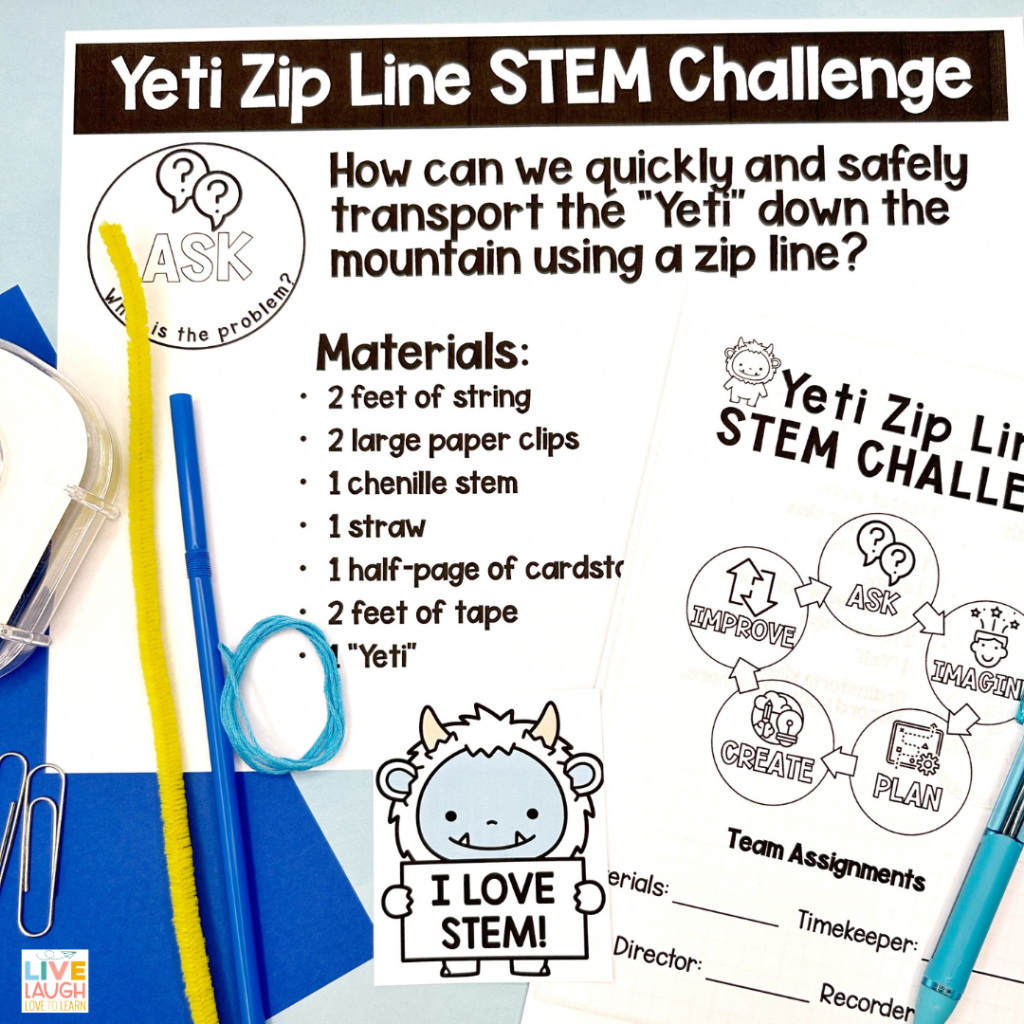
Make sure that students understand the problem they are tasked to solve. Do they understand how a zip line works? Do they have experience zip lining? Ask your students and have a discussion about zip lines. If needed, show a short video clip of a zip line in action.
Step 2: Brainstorm and Plan
Students will work together in groups to brainstorm and discuss any and all ideas for a device to transport the yeti. Encourage the students to come up with as many ideas as possible, without worrying about whether or not they are practical or feasible. Encourage them to think creatively and consider a wide range of potential solutions.
Students will then plan their design. Have the students sketch out their ideas in their STEM Challenge journal or separate pieces of paper, either individually or in small groups. Encourage them to include as much detail as possible in their sketches, including any dimensions, materials, and any other relevant information.
Once the students have finished sketching out their ideas, have them present their sketches to the rest of the group. Encourage the students to explain their ideas and how they envision the device functioning.
After all of the ideas have been presented, have the students vote on which ideas they think are the most promising. The team can then choose one or more of the top ideas to focus on and develop further.
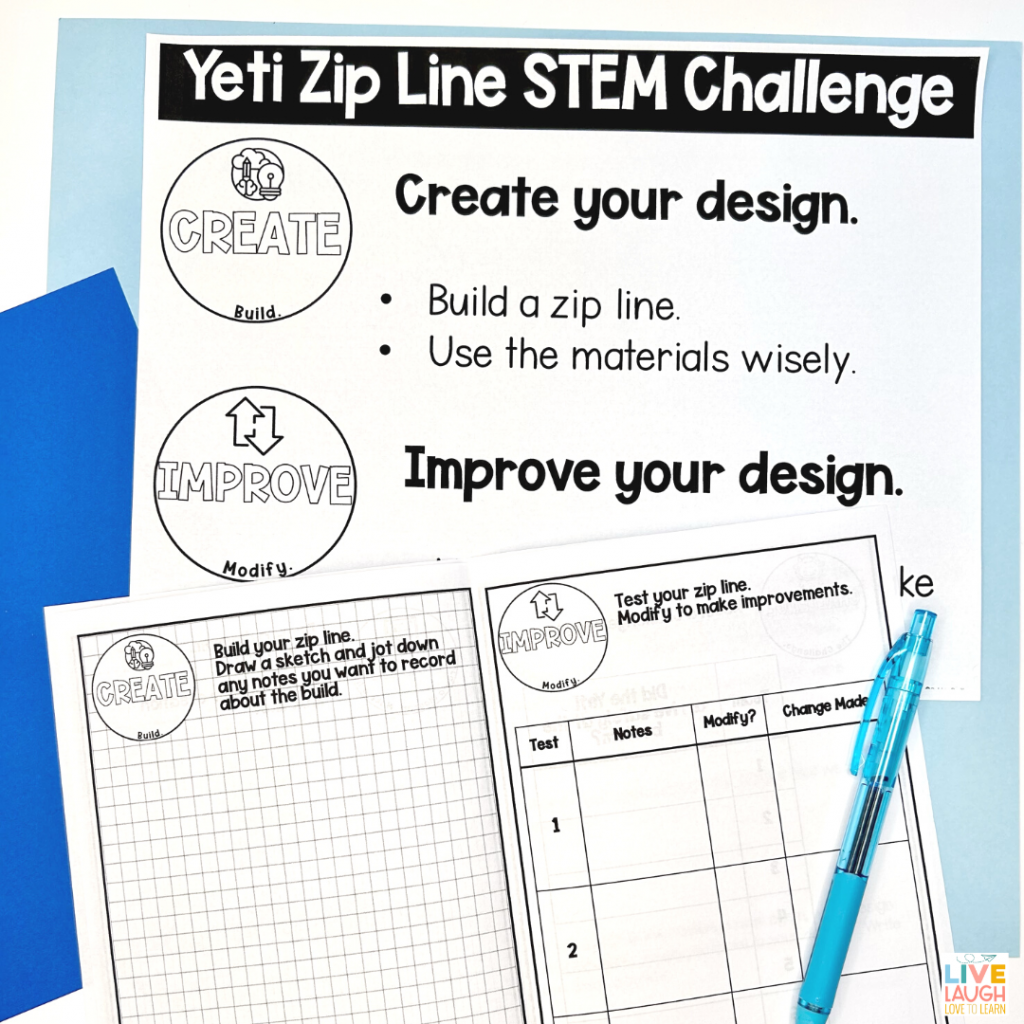
Step 3: Create
This is the students’ favorite part, building the device. Students will work together using only the materials provided and the time allotted to build a device to transport the yeti down the mountain.
Step 4: Improve
I set up a main zip line in the classroom for the challenge, however, students will not use this line to test their creation. They may only use the string provided to test how their device works. I give my students 10 minutes to build, test, and improve their design. I have students record and take notes on any modifications they make to improve their design in their STEM challenge journal.
Step 5: Test
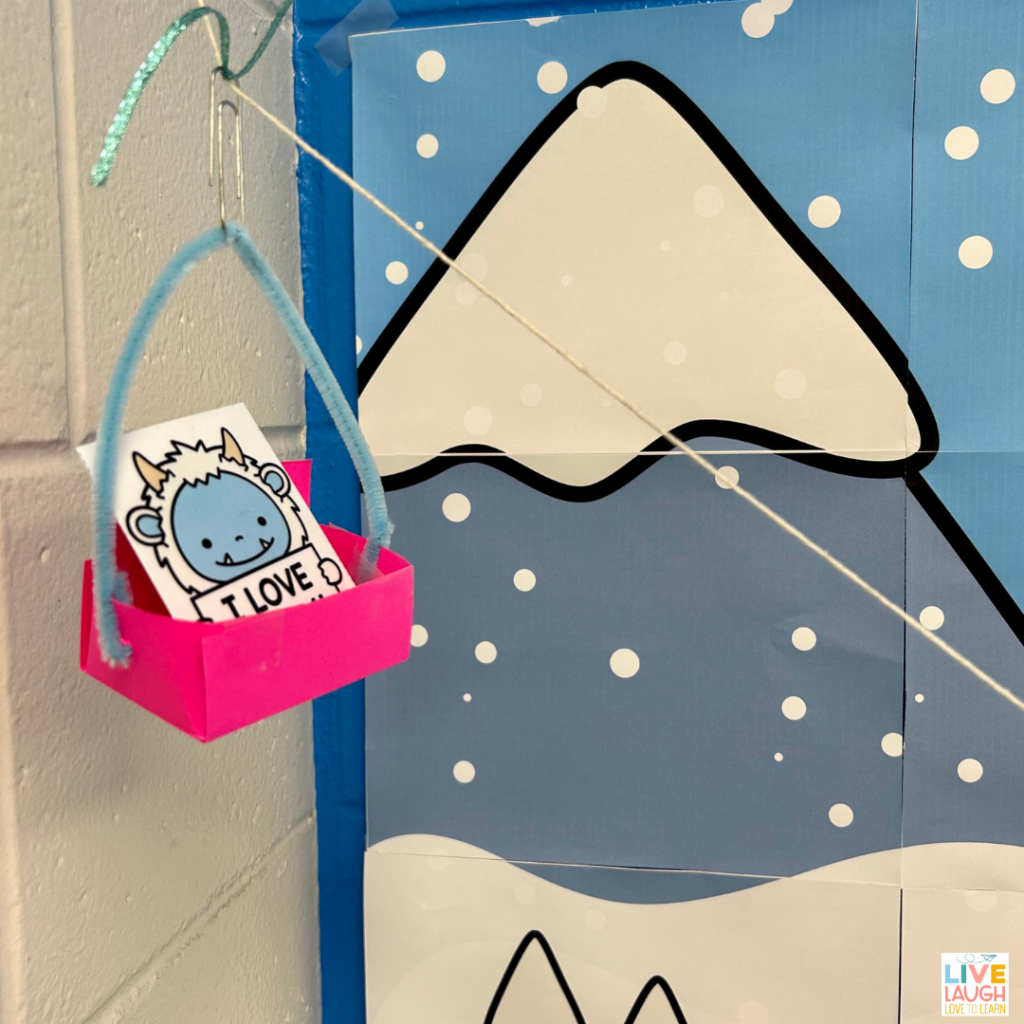
This is the challenge. Teams will place a yeti in their creation and send it down the main zip line. All teams will observe each device to see how it performs and whether or not the yeti arrives safely at the bottom of the “mountain”.
Students record the results of each team’s designs in their STEM challenge journal.
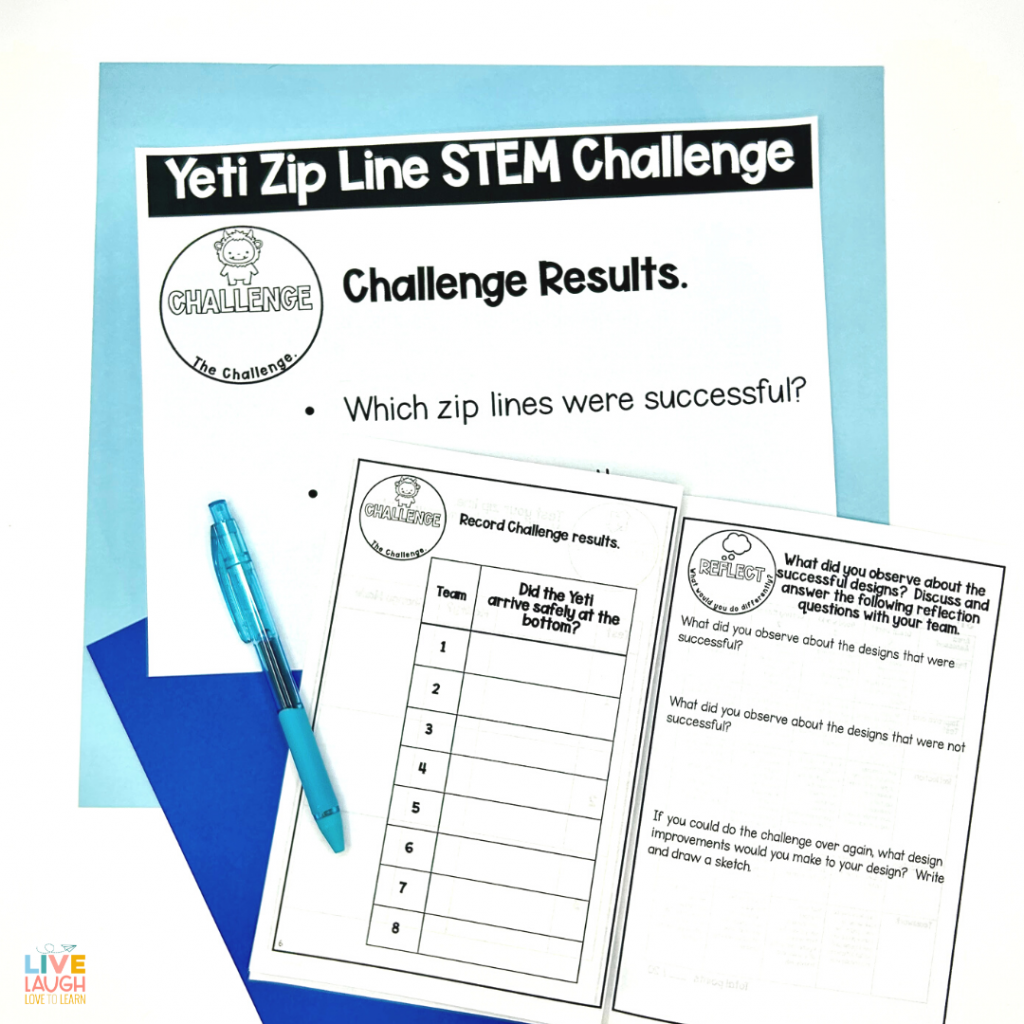
Step 6: Reflect
The final step is having students reflect on the challenge. What type of designs were successful? Which designs were not successful? What would they do differently if they had the opportunity to work on the challenge again? Reflecting on what worked and what didn’t work is so vital to understanding design principles and learn from mistakes.
Winter STEM Challenge
Celebrate winter AND practice problem-solving using the engineering design process with STEM challenges. Help your students build their creativity, collaboration, critical-thinking, and problem-solving skills with a fun winter STEM challenge. You can also use this activity as an opportunity to introduce or reinforce scientific concepts related to the challenge, such as friction and air resistance. Encourage students to think about how these concepts might affect the movement of their yeti zip line vehicles.
Yeti Zip Line Challenge
Interested in a Save the Yeti Zip Line Challenge? You can find it here, Winter STEM Yeti Zip Line Challenge. It includes everything you and your students will need to complete the challenge while following the steps of the engineering design process.
Happy Winter!

Want to read more about using STEM in the classroom?