
Are your students finding it tough to wrap their heads around multiplying fractions? You’re not alone! But there’s a game-changing strategy you can try: teaching them how to multiply fractions with area models. This visual approach allows students to “see” the math, turning an abstract concept into something concrete and approachable. By using area models, students gain not only a deeper understanding of fraction multiplication but also the confidence to tackle even more complex math problems. In this post, I’ll share why area models are so effective and how you can use them in your classroom to simplify teaching multiplying fractions.
What are Area Models?
An area model is a visual tool that helps break down complex math concepts into manageable parts. When teaching fractions, an area model is typically a rectangle divided into smaller equal parts, representing the denominators of the fractions being multiplied. The numerators show how many of these parts are shaded or selected. When two fractions are multiplied, their overlapping sections reveal the product—making the process easy to follow and understand.
Area models are especially effective because they bridge the gap between abstract numbers and real-world applications. From splitting a pizza to calculating portions in recipes, students begin to see how multiplying fractions applies in everyday life.
Multiply Fractions with Area Models
Start your lesson with a visual demonstration to introduce the concept. I love using the free online interactive tool GeoGebra Multiplying Fractions to model how area models work. It’s a quick way to show students the relationship between overlapping fractions and their products.
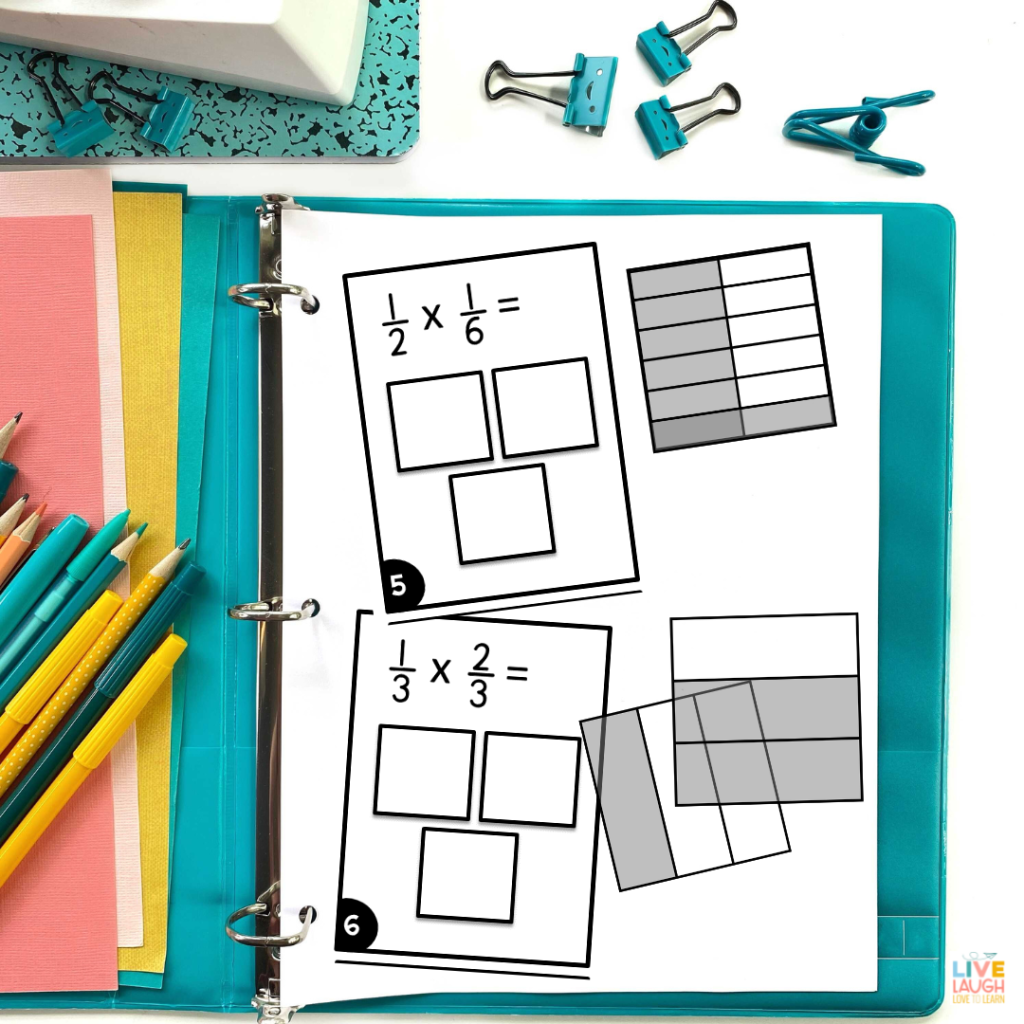
Once students are familiar with the idea, you can move on to hands-on practice. I use transparent fraction models made from printed overhead transparency film. These can be layered on top of each other to visually demonstrate how the areas overlap to represent the product. With a document camera, I walk my students through creating and solving problems step-by-step.
Next, I provide students with printable area model practice pages where they create their own fraction multiplication problems, draw the models, and solve for the product. I also include task cards that challenge them to either draw area models or match fraction multiplication expressions to pre-made area models. These activities give students multiple ways to practice and reinforce the concept.
Digital Tools for Multiply Fractions with Area Models
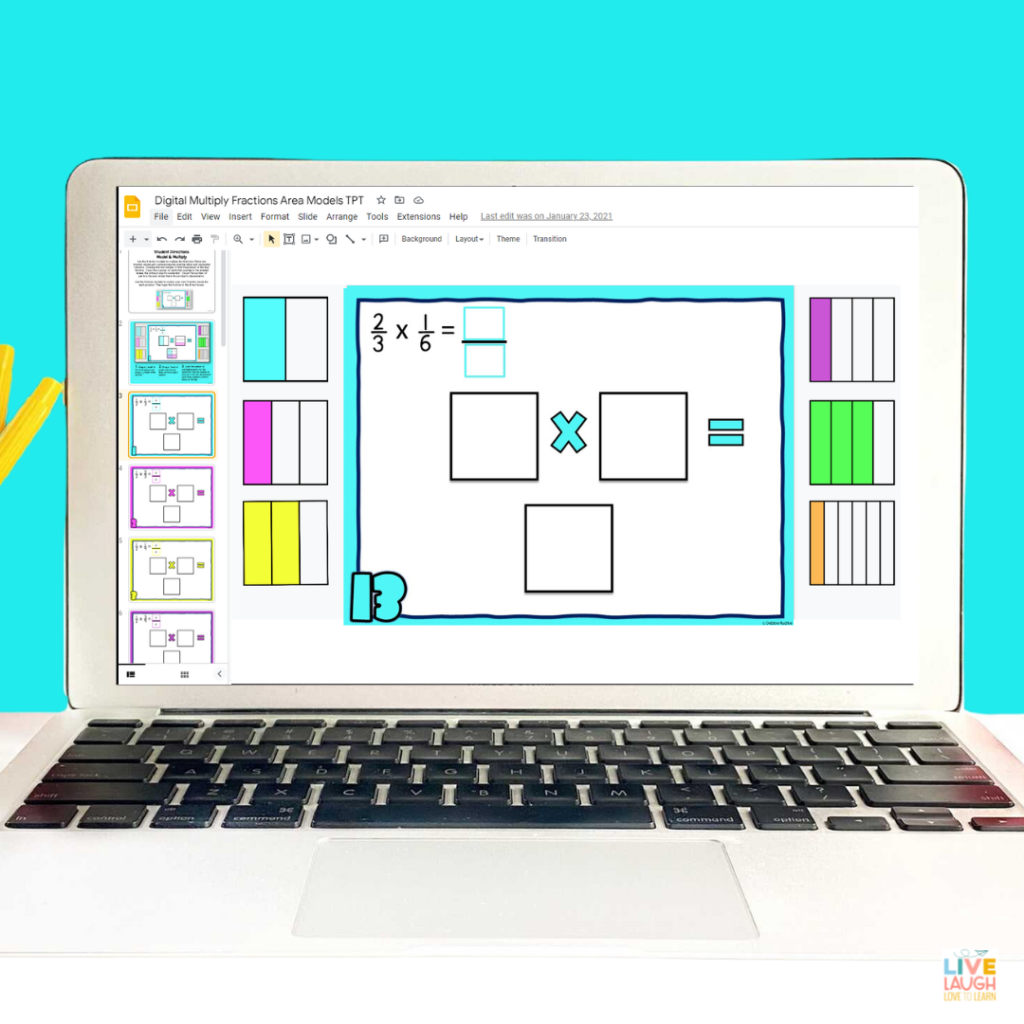
For classrooms that don’t have access to transparency film or prefer tech-based activities, a digital version is a great alternative. I created a resource, Digital Multiply Fractions with Area Models, using Google Slides and Google Forms. Students can manipulate moveable transparent fraction models directly on their devices to practice multiplying fractions. It’s interactive, engaging, and eliminates the need for printed materials!
Why Use Area Models for Multiplying Fractions?
The beauty of area models lies in their ability to make abstract concepts accessible. By visualizing the fractions as parts of a whole and showing how these parts combine, students can better understand the “why” behind the math. This method works wonders for struggling learners who need to see the process in action, as well as for students ready to move on to more challenging problems.
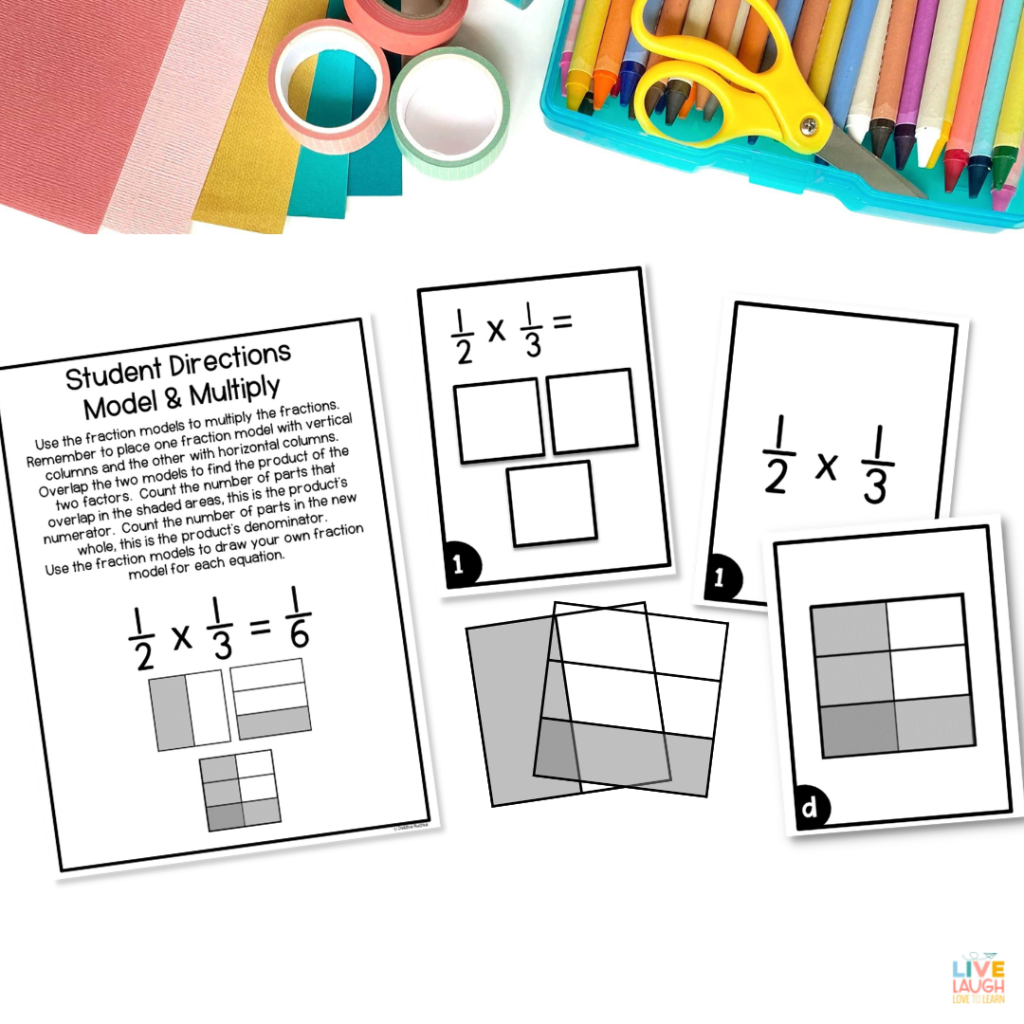
If you’re ready to simplify multiplying fractions for your students, check out my printable and digital resources. These tools include fraction models, task cards, matching activities, and assessments to make learning fun, hands-on, and effective.
Multiplying fractions with area models can be a valuable tool for students to visualize and understand the concept of fraction multiplication. By breaking down the fractions into smaller units and representing them as a visual model, students can better grasp the concept and develop a deeper understanding of fractions.
Let’s make multiplying fractions with area models a success in your classroom!

Looking for more math tips?