

STEM challenges in the classroom should be one of the most engaging parts of your classroom.
But if you’ve ever tried one, you know the reality can look very different.
One student takes over.
Another does nothing.
Materials get grabbed.
And somehow… it turns into chaos instead of collaboration.
Here’s the truth:
STEM challenges don’t fail because of the activity.
They fail because students haven’t been taught how to work together.
Once you fix that, everything changes.
Table of Contents
STEM Challenges in the Classroom: Why Structure Matters
STEM challenges in the classroom often fail for one simple reason: students haven’t been taught how to collaborate. Without structure, group work quickly turns into frustration instead of problem-solving. The good news is, this is completely fixable with a few simple systems.
When STEM challenges in the classroom are structured well, students stay engaged, collaborate more effectively, and take ownership of their learning.
In this post, I’m sharing 5 simple strategies to help you run STEM challenges that are structured, engaging, and actually build teamwork.
1. How to Start STEM Challenges in the Classroom With a Clear Purpose
It’s easy to get excited about a fun STEM activity…
…but without a clear objective, it quickly turns into “just building.”
Before you start, ask yourself:
- What skills do I want students to practice?
- What problem are they solving?
- How does this connect to what we’re learning?
Your objective might focus on:
- Engineering design
- Problem-solving
- Collaboration
- Communication
- Perseverance
When students understand the purpose, they’re more invested—and more willing to work through challenges instead of giving up.
If you want to go deeper with this, I share more ideas in my post on how to add social-emotional learning to any STEM challenge.

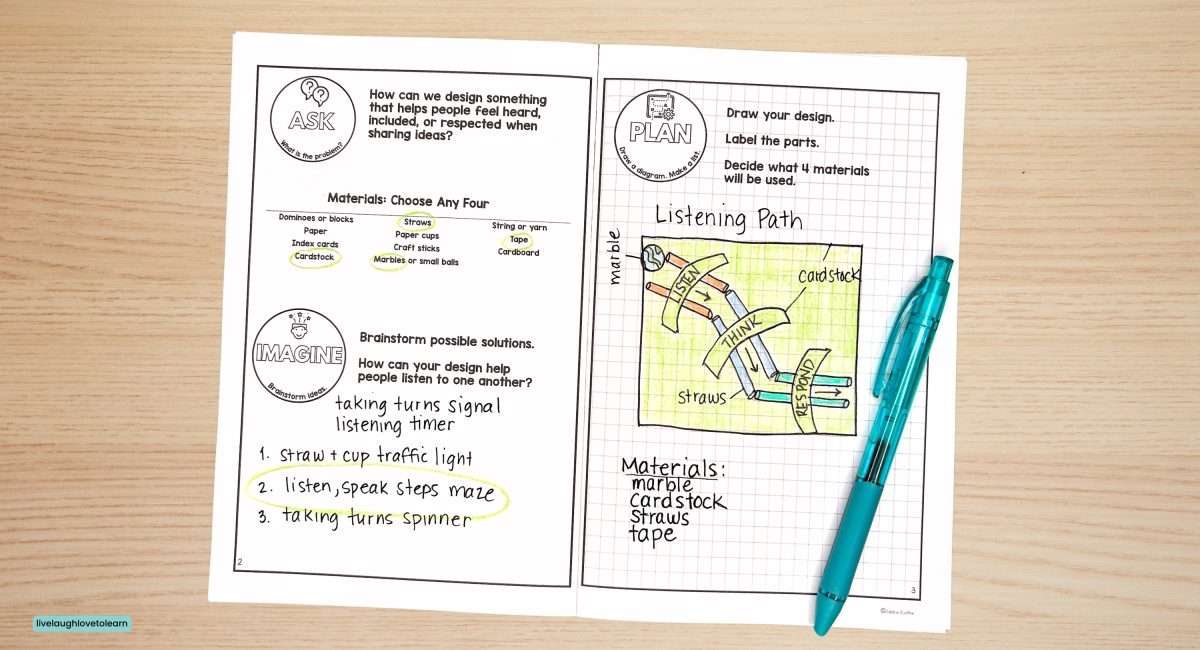
2. Don’t Skip the Planning Stage (This Is Where the Magic Happens)
This is one of the biggest mistakes I see teachers make:
Students get materials… and immediately start building.
That’s when the problems start.
The planning stage is where students:
- share ideas
- practice communication
- learn to listen to each other
- begin working as a team
Without it, one student takes over while others disengage.
Even just 5–10 minutes of planning can completely change how your STEM challenge runs.
Try having students:
- sketch their design
- label materials
- explain their thinking to their group
This step alone will reduce frustration so much during the building phase.
3. Use Time Limits to Build Focus (Not Pressure)
Time limits aren’t just about keeping your lesson on track.
They actually help students build self-management skills.
When students know:
- how long they have to plan
- how long they have to build
- when they’ll test
…they stay more focused and productive.
A simple structure might look like:
- 5 minutes: Plan
- 20–35 minutes: Build + Improve
- 10–15 minutes: Test + Share
- 5–10 minutes: Reflect
You can adjust this depending on your schedule, but having clear time expectations makes a big difference.
4. Why STEM Challenges in the Classroom Fall Apart (and How to Fix It)
Here’s something I had to learn the hard way:
STEM group work doesn’t fall apart because of behavior.
It falls apart because students don’t have a clear answer to the question:
“What am I supposed to be doing right now?”
Without structure:
- one student takes over
- others sit back and watch
- materials get grabbed or hoarded
- frustration builds quickly
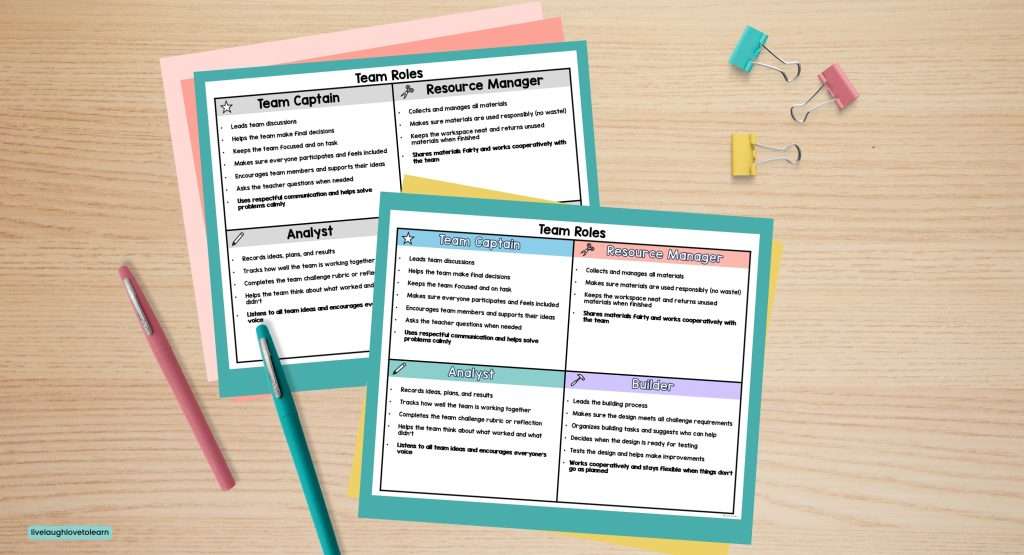
That’s why I now always use clearly defined team roles during STEM challenges.
When each student has a specific job, everything changes:
- The builder focuses on construction
- The materials manager controls supplies
- The recorder tracks ideas
- The team captain keeps everyone on track
Quieter students have a way to contribute.
Stronger personalities have boundaries.
And the entire group functions more smoothly.
👉 If you want an easy way to implement this, I break it down here:
STEM Team Roles That Actually Work in the Classroom
And if your students struggle with frustration or conflict during group work, having simple strategies (or even a calm-down space) can make a huge difference in how your STEM time runs.
5. Build in Reflection (This Is Where Real Learning Happens)
STEM challenges are fun—but without reflection, students miss the most important part.
Reflection is what turns an activity into real learning.
It’s also where students build:
- self-awareness
- problem-solving skills
- resilience
After the challenge, ask questions like:
- What worked well in your design?
- What didn’t work the first time?
- What changes did you make?
- How did your team handle challenges?
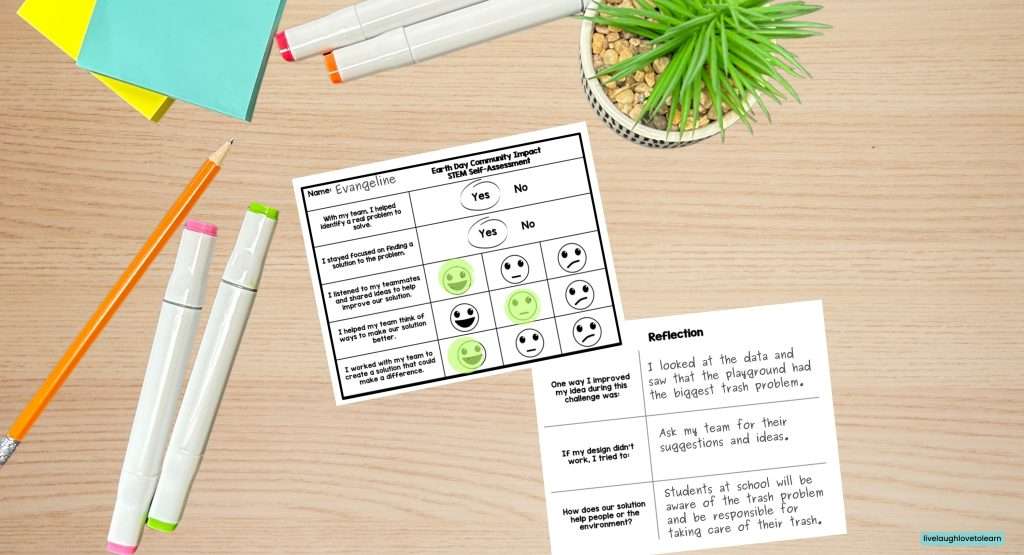
You can also include:
- a quick written reflection
- a group discussion
- a simple self-assessment
These moments help students understand that mistakes are part of the process, not something to avoid.
Want Your STEM Groups to Actually Work Together?
If your STEM challenges tend to feel a little chaotic…
…it’s usually not the activity.
It’s the structure.
Giving students clear roles is one of the simplest ways to fix that.
👉 Grab my FREE STEM Team Roles cards to give every student a job, build accountability, and make group work run so much smoother.
Final Thoughts
STEM challenges don’t have to feel overwhelming.
With the right structure, they become one of the most powerful ways to:
- build problem-solving skills
- strengthen teamwork
- and help students develop confidence
And once your students know how to work together…
everything changes.
