
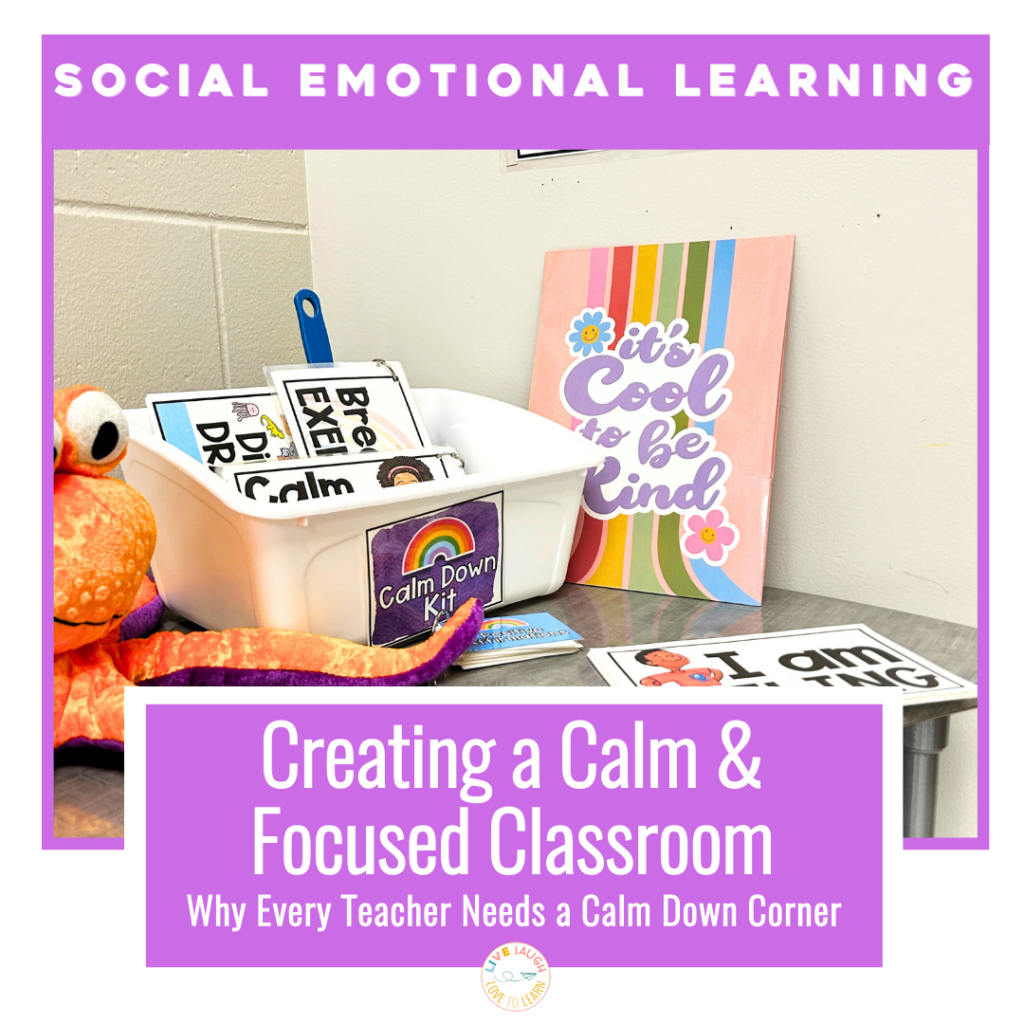
Picture this: It’s a busy school day, and one of your students starts to feel a bit overwhelmed. You might notice them fidgeting, having a tough time concentrating, or looking like they could use a hug. It’s clear they need a little time to regroup, but how can you offer support without throwing off the whole class or losing track of your morning routine?
As a teacher, I’ve faced this scenario countless times. That’s why I created a Calm Down Corner in my classroom, and it’s been a game-changer.
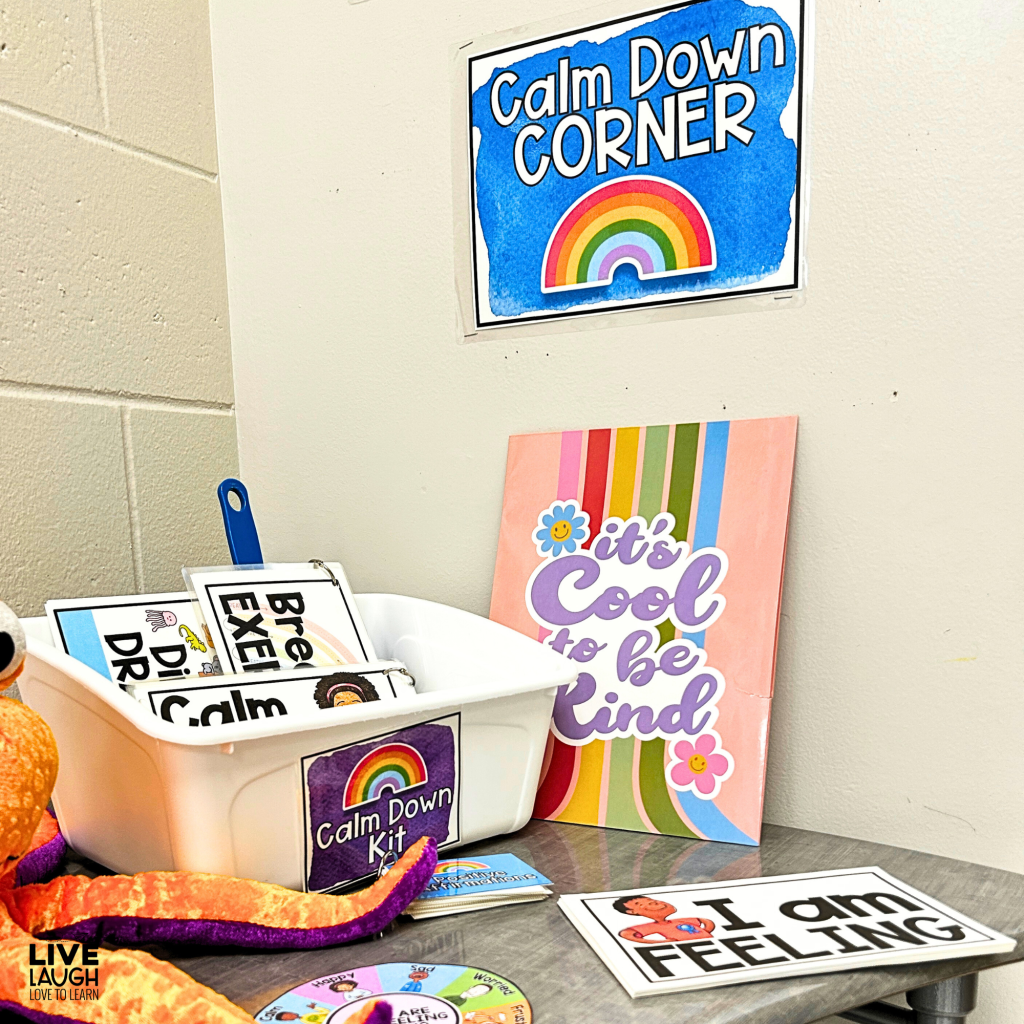
This simple but powerful classroom tool gives students a designated safe space to manage their emotions, reset, and return to learning with a clear mind. In this post, I’ll share my experience implementing a calm down corner, explain why every classroom needs one, and show you how my Calm Down Corner Kit can make the entire process stress-free.
Why a Calm Down Corner?
It isn’t just a cozy space in the classroomm it’s a structured tool that empowers students to develop emotional regulation skills. Here’s why it’s a game-changer:
- Reduces Classroom Disruptions: When one of my students started using our Calm Down Corner during math anxiety moments, his outbursts decreased from daily occurrences to just once or twice a month. Students who can self-regulate are less likely to have emotional outbursts that interrupt learning.
- Teaches Self-Regulation: Another student went from asking for help with every emotional challenge to independently using breathing techniques she learned in our Calm Down Corner. With clear strategies and tools, students learn to identify their emotions and develop their own calming techniques.
- Fosters Independence: After implementing our Calm Down Corner, I noticed a big reduction in emotional support requests during instruction time. Instead of needing immediate teacher intervention, students take ownership of their emotions and learning.
- Supports Social-Emotional Learning (SEL): Research shows that students with strong emotional regulation skills perform better academically and have improved peer relationships. A Calm Down Corner aligns with SEL best practices, helping students build crucial emotional intelligence.
- Saves Teacher Time and Energy: Since implementing a structured Calm Down Corner, I spend less time managing behavioral issues and more time teaching. What used to take 15-20 minutes of class time to resolve now takes students just 5-10 minutes of independent regulation time.
What to Include in a Calm Down Corner
Creating a cool-down area doesn’t have to be complicated. Here are a few essentials:
- Comfortable Seating: A small chair, cushion, or bean bag makes the space inviting.
- Emotion Wheel or Chart: Helps students identify how they’re feeling before choosing a calming strategy. If you’re looking for a simple and effective tool to help students recognize and name their emotions, check out my post on how to use an Emotion Wheel in your classroom. You can also grab my Free Emotion Wheel printable to start using it right away! ➡️ Click here to get a free Emotion Wheel.
- Calm Down Tools: Stress balls, fidget toys, or sensory bottles provide tactile ways to release tension.
- Breathing and Mindfulness Cards: Simple techniques like deep breathing or visualization help students reset.
- Reflection Journal or Strategy Cards: Encourages students to think about what helps them calm down and return to learning.
➡️Check out these 5 Mindfulness Activities for Kids you can also include in your corner.
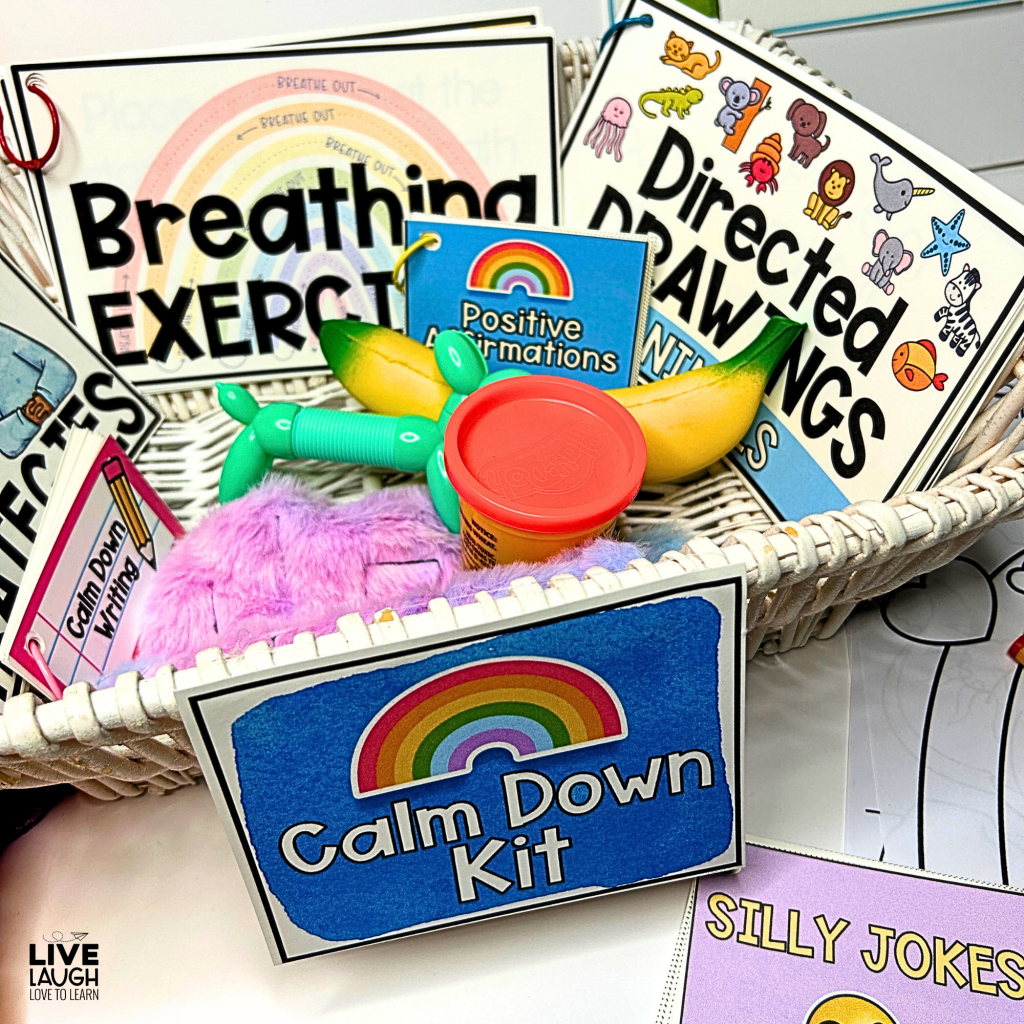
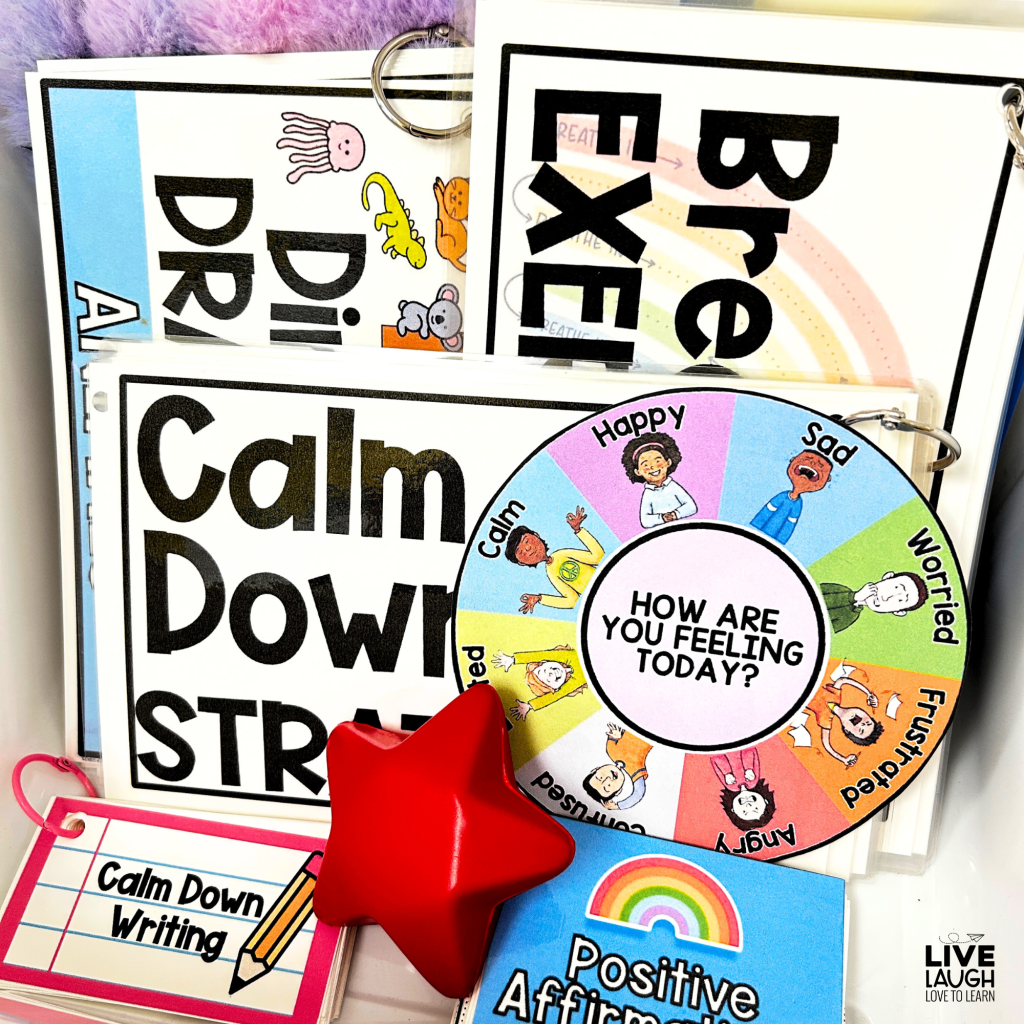
If you want a done-for-you solution, my Calm Down Corner Kit includes everything you need: calm down strategy cards, an emotion wheel, student-friendly reflection prompts, and more!
How to Implement a Calm Down Corner Successfully
A self-regulation safe space works best when students know how and when to use it. Here’s your roadmap to success:
- Introduce It: Start with a class meeting explaining the purpose and expectations. I use a simple role-play demonstration showing appropriate usage times and behaviors.
- Model Its Use (5 to 10 minutes daily for the first week): Share appropriate examples like, “I’m feeling frustrated because my computer isn’t working. I’m going to use the Calm Down Corner to take a break and choose a strategy from our calming menu.”
- Normalize Emotional Breaks: Regularly remind students that everyone has big feelings sometimes. In my classroom, we celebrate when students recognize their need for a break: “I noticed Sam realized he was feeling frustrated and used our Calm Down Corner strategies. That shows excellent self-awareness!”
- Establish Clear Procedures:
- Set a 5-10 minute timer for each visit
- Create a simple sign-out system
- Limit to one student at a time
- Establish a non-verbal signal for requesting Calm Down Corner time
- Encourage Reflection: After using the space, students can reflect on what helped them feel better.
- Track and Celebrate Progress: Keep a simple log of your corner usage and celebrate improvements in self-regulation skills during morning meetings.
- Make It Accessible: Ensure students know they can use the Calm Down Corner when needed, with clear procedures in place.
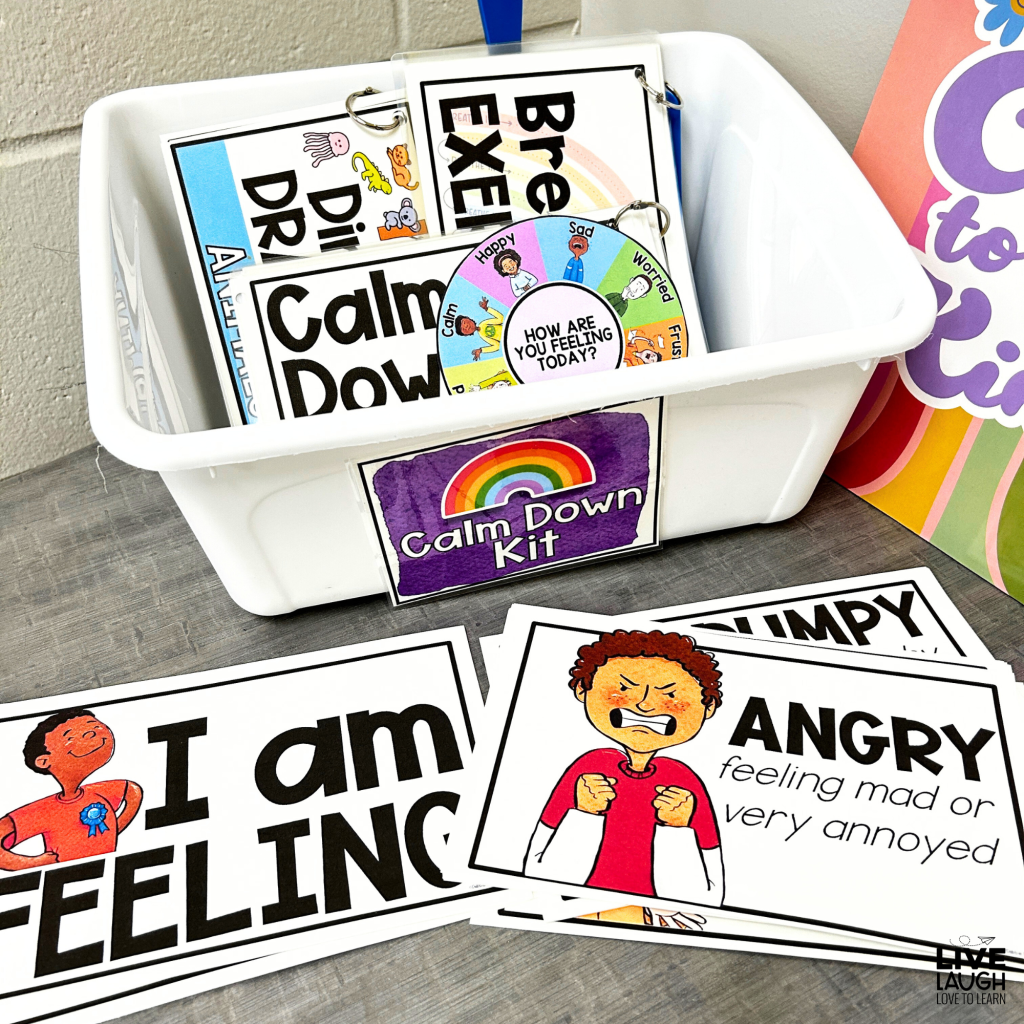
Make Setting Up a Calm Down Corner Easy
Feeling overwhelmed with setup? My Calm Down Corner Kit makes it easy to create an effective space without spending hours planning. This resource provides visual supports, reflection tools, and calming strategies so you can focus on what matters—helping students thrive.
Click here to check out the Calm Down Corner Kit!
Final Thoughts
A well-designed Calm Down Corner can transform your classroom into a calmer, more focused learning environment. By providing students with tools to manage their emotions, you’re fostering lifelong emotional regulation skills.
Do you already have a Calm Down Corner in your classroom? What’s your favorite calming tool to include? Let’s share ideas in the comments!
