
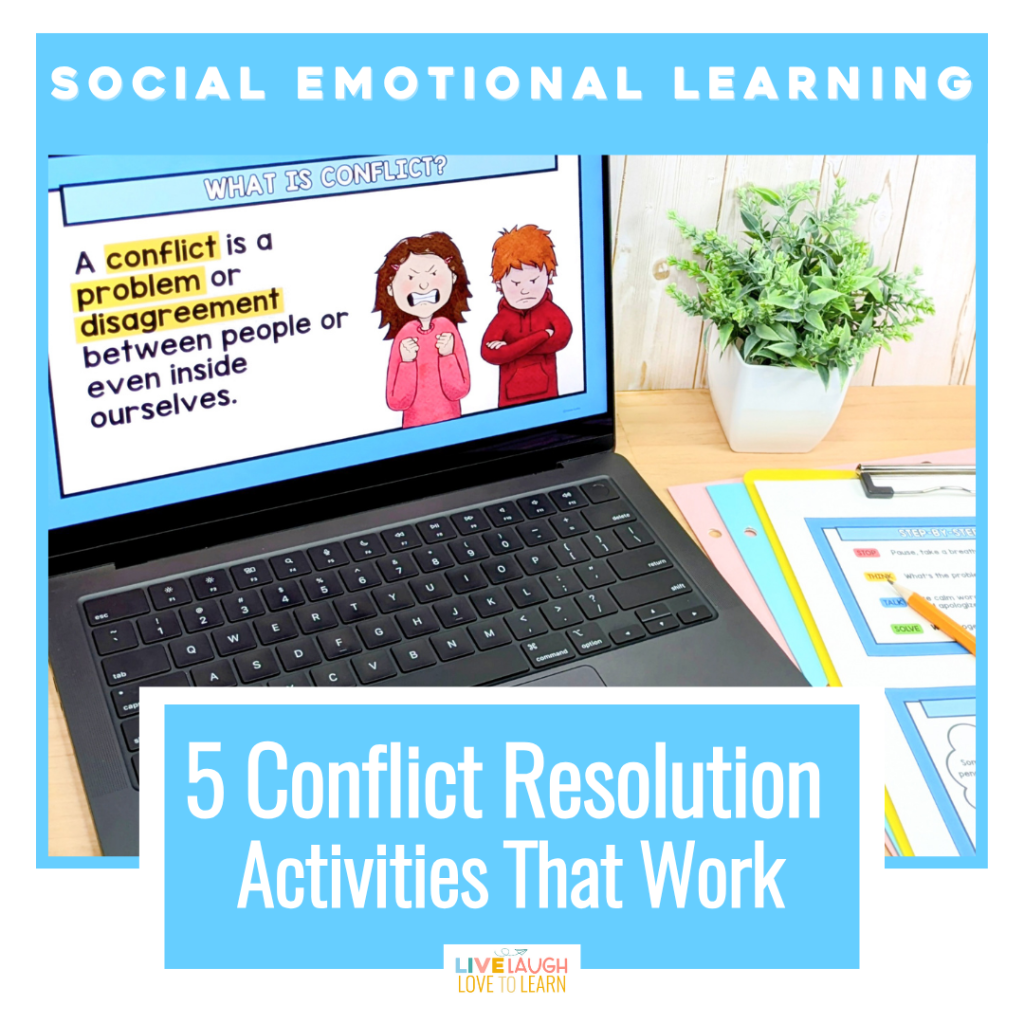
If you’ve ever had to stop a lesson because two students were arguing about who gets the red marker, you know just how often conflict pops up in the classroom.
Maybe it’s a disagreement over game rules, or partners who can’t agree on how to share materials.
For upper elementary teachers, these little moments can feel constant,
and exhausting.
The good news? Conflict doesn’t have to derail your day.
In fact, when handled the right way, conflicts can actually strengthen your classroom community.
Students who learn to resolve conflicts respectfully gain lifelong skills: communication, empathy, and problem-solving. The trick is giving them clear tools and plenty of practice.
Today, I’m sharing five conflict resolution activities for elementary students that you can use right away to help you teach conflict resolution in your classroom.
These strategies not only help your students manage disagreements, they also save you from playing referee all day long.
1. Normalize Conflict as a Learning Opportunity
One of the biggest mindset shifts you can make is to stop viewing conflict as something “bad.”
Kids often think they’re in trouble just because they had a disagreement. But the reality is, conflict is part of everyday life, whether you’re on the playground, working on a group project, or even as adults trying to make a decision with a partner.
Try telling your students, “It’s okay to disagree. What matters is how we handle it.”
This simple message reframes conflicts as learning opportunities.
You can take it further by sharing age-appropriate examples: athletes who work out disagreements with teammates, or historical leaders who solved conflicts in creative ways.
By normalizing conflict, you create a classroom culture where students don’t shut down or get defensive, they lean into problem-solving.
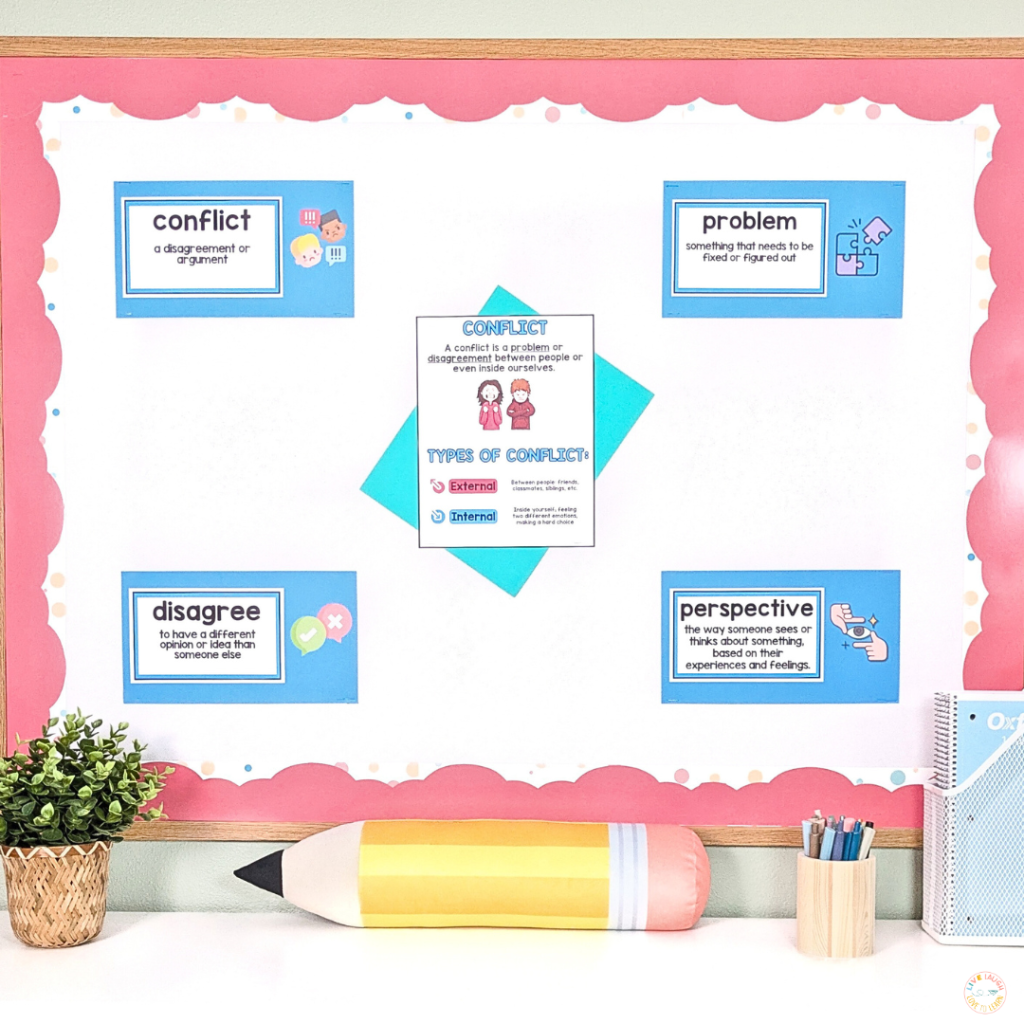
2. Teach Clear Conflict Resolution Activities for Students
When emotions are running high, students can’t always think of the “right” words to say.
That’s why they need a simple, memorable process to fall back on.
A model like STOP–THINK–TALK–SOLVE works well because it’s short, visual, and easy to remember.
You might create a colorful poster of the steps and hang it in a visible spot. Walk your students through what each step looks like:
- STOP: Take a deep breath and pause before reacting.
- THINK: Consider how you’re feeling and what the problem is.
- TALK: Use calm voices and respectful words to explain your side.
- SOLVE: Work together to come up with a fair solution.
The key here is practice before the conflict happens.
Model the steps during morning meetings or SEL time.
Once students see the routine in action, they’ll be more likely to use it on their own when the next disagreement arises.
These steps are the foundation of effective conflict resolution activities because they give kids a clear process to follow.
Practice these simple mindfulness activities with your students ➡️ 5 Mindfulness Activities for Kids
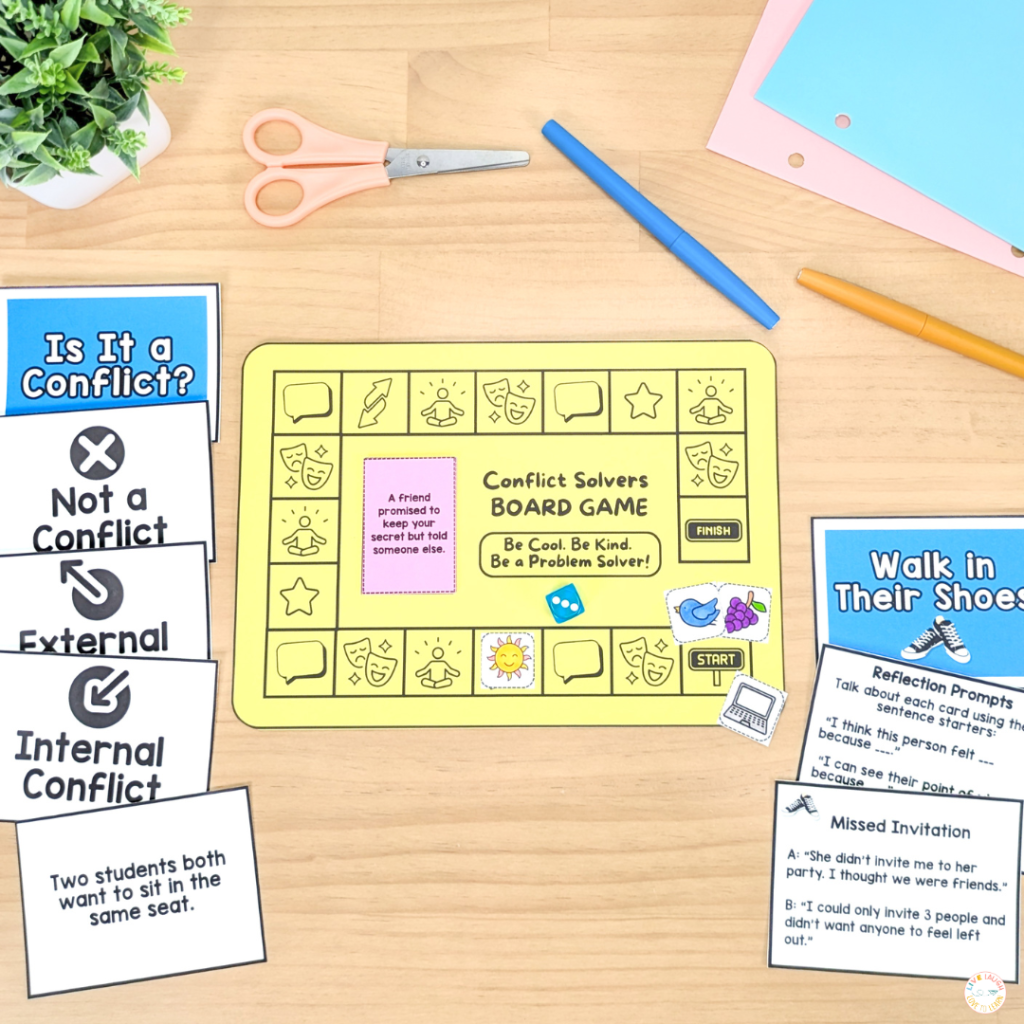
3. Role-Play Conflict Resolution Activities
Kids love role-playing, and it’s one of the most effective ways to build conflict resolution skills.
Instead of just talking about what they should do, role-play lets them practice the exact words and actions in a safe, low-stakes way.
Role-play is one of the most powerful conflict resolution activities for elementary students because it helps them apply what they’ve learned in real-life situations.
You can start with common situations:
- Two students want to be line leader.
- Group members disagree on how to build a STEM project.
- A student feels left out of a game at recess.
Assign roles and let students act it out.
Then, pause and ask the class what strategies worked and what could be improved.
This debriefing step is where real learning happens.
You can even rotate scenarios each week so students see different perspectives.
Conflict resolution role-play not only gives students the tools to handle conflicts, but it also builds empathy, because sometimes they’re asked to take on the role of the “other” person in the disagreement.
Want to help your students strengthen their speaking and listening skills too? Check out my post on easy ways to build communication skills in upper elementary. It’s filled with ideas that pair perfectly with these role-play conflict resolution activities.
4. Encourage “I” Statements
Have you ever noticed how quickly an argument escalates once students start pointing fingers? “You never let me…” or “You always…” instantly puts the other person on defense.
Teaching “I” statements is a small shift that makes a big impact.
Instead of blame, students focus on expressing their own feelings and needs. For example:
- ❌ “You never share the markers!”
- ✅ “I feel frustrated when I don’t get a turn with the markers. Can we make a plan to share?”
This simple reframe helps students take responsibility for their emotions while keeping the conversation respectful. You can introduce “I” statements with sentence stems on an anchor chart, or even have students practice writing them in journals before trying them out in real conversations. Over time, you’ll notice less finger-pointing and more problem-solving language in your classroom.
Teaching students to express their feelings calmly starts with helping them understand those emotions in the first place. You can learn more about that in my post on how to develop emotional intelligence in students.
5. Create a Conflict Resolution Corner
Sometimes, students just need a change of space to calm down and work through an issue.
Setting up a Conflict Resolution Corner gives them a safe place to do just that.
This doesn’t have to be fancy, you can use a small table or a quiet spot in the room with a few helpful tools.
Here’s what you might include:
- A Conflict Resolution Process Chart (like STOP–THINK–TALK–SOLVE)
- An Apology Guide with sentence stems for making things right
- Problem-Solving strategies with fair solutions (rock-paper-scissors, coin flip, taking turns)
- A Reflection Sheet where students can jot down feelings and solutions
- A few calming strategies (like stress balls, mindful breathing cards, or coloring pages)
This space empowers students to work through conflicts on their own, while still keeping it structured and respectful. Over time, you’ll notice your students becoming more independent and confident in handling disagreements.
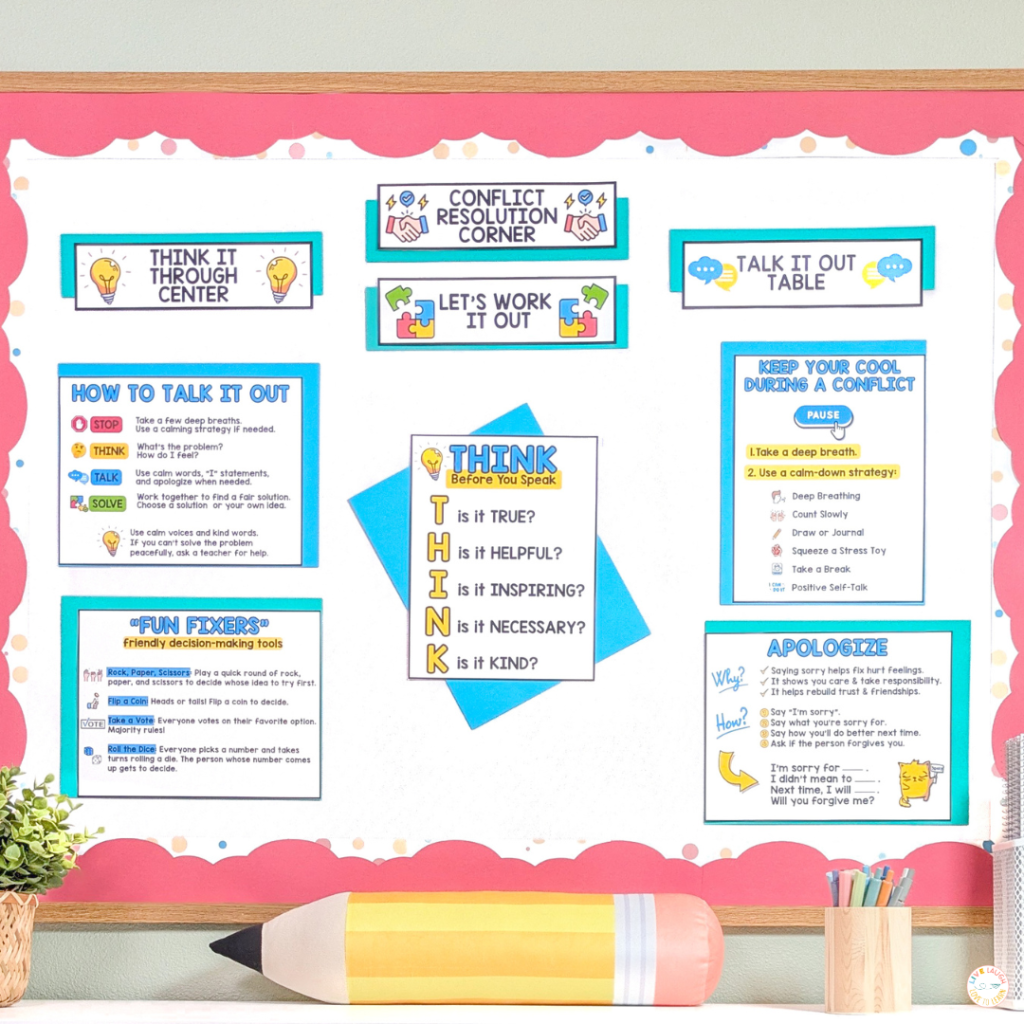
These conflict resolution activities for elementary students give your learners space to practice independence and empathy.
✨ Want everything done for you?
If you’d love to teach conflict resolution but don’t have time to create all these tools from scratch, I’ve got you covered.
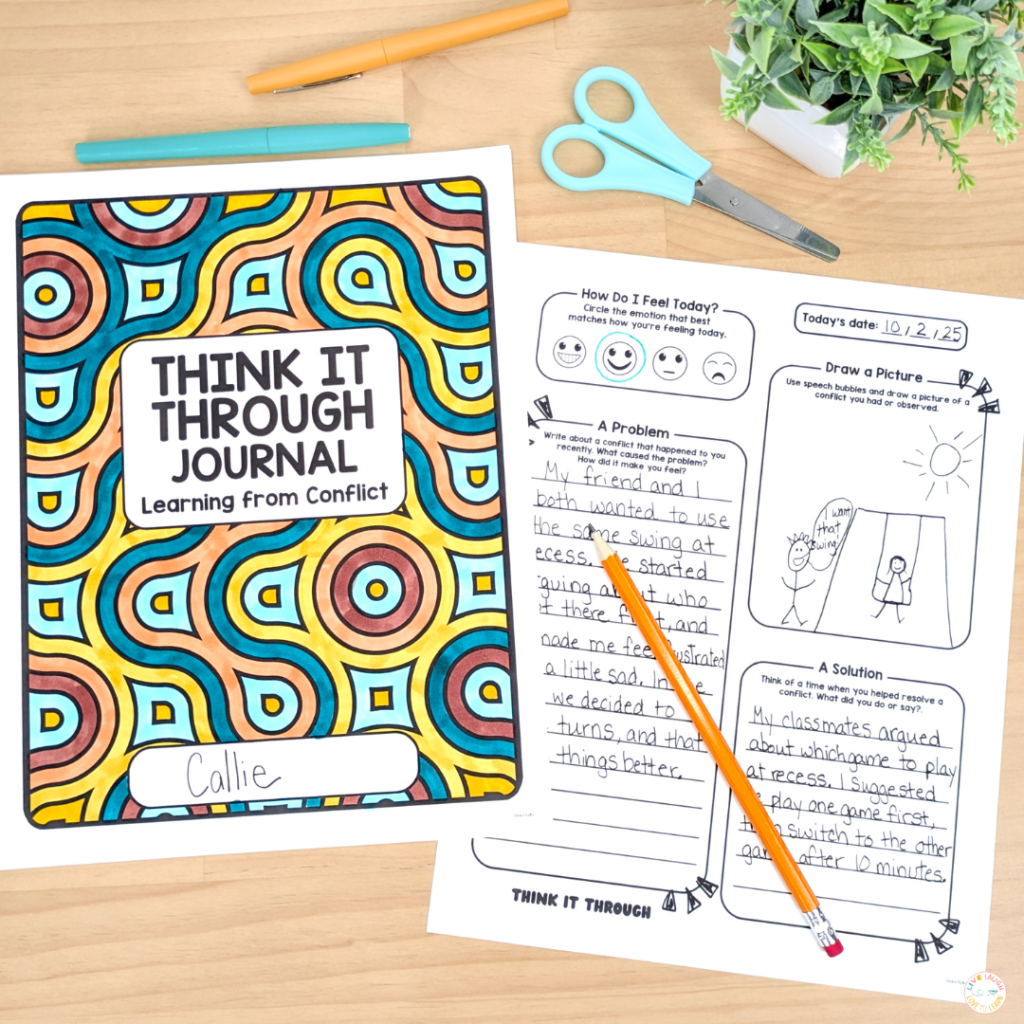
My Conflict Resolution Unit for 4th and 5th grade includes everything you need to teach these skills step by step.
You’ll get:
- 20+ ready-to-use mini-lessons with clear objectives
- Vocabulary cards & anchor charts to build SEL language
- Realistic conflict scenarios for role-play practice
- Group activities and games to make learning fun
- Journals, reflection sheets, and a SMART goal tracker
- A complete Conflict Resolution Corner Kit with posters, charts, and problem-solving tools
It’s designed to be low-prep for teachers and high-impact for students.
Final Thoughts
Conflicts are part of every classroom, but they don’t have to feel overwhelming.
By introducing these conflict resolution activities for elementary students, you’re giving your kids tools they’ll use for the rest of their lives, at school, at home, and beyond.
The more opportunities you give them to practice, the less you’ll find yourself stepping in as “referee.”
And honestly, there’s nothing more rewarding than watching your students solve problems on their own, with kindness and respect.
To learn more about the core SEL competencies that support conflict resolution, visit CASEL, the Collaborative for Academic, Social, and Emotional Learning.
Before students can work through conflict, they often need to regulate firstm these calm down strategies are a great starting point.
If you’re focusing on social-emotional learning this year, you might also love my posts on building communication skills in upper elementary and developing emotional intelligence in students. Together, they form the foundation for a peaceful, respectful classroom culture.
