
(that actually work in real classrooms!)
If you’ve ever tried a mindfulness activity with kids and it lasted about 12 seconds before someone whispered “Do we HAVE to?”, you’re not alone.
The truth is, mindfulness works for students… when the activities are simple, concrete, and designed with kids in mind.
Today I’m sharing 5 mindfulness activities kids can actually do, no special tools, no perfect silence, just real classroom routines that help students focus, calm down, and manage those big feelings.
These work beautifully during transitions, after recess, during morning meetings, or as part of your SEL instruction…
If you’re working on helping students understand emotions, this post on developing emotional intelligence in students is a great place to start.
Let’s dive in.
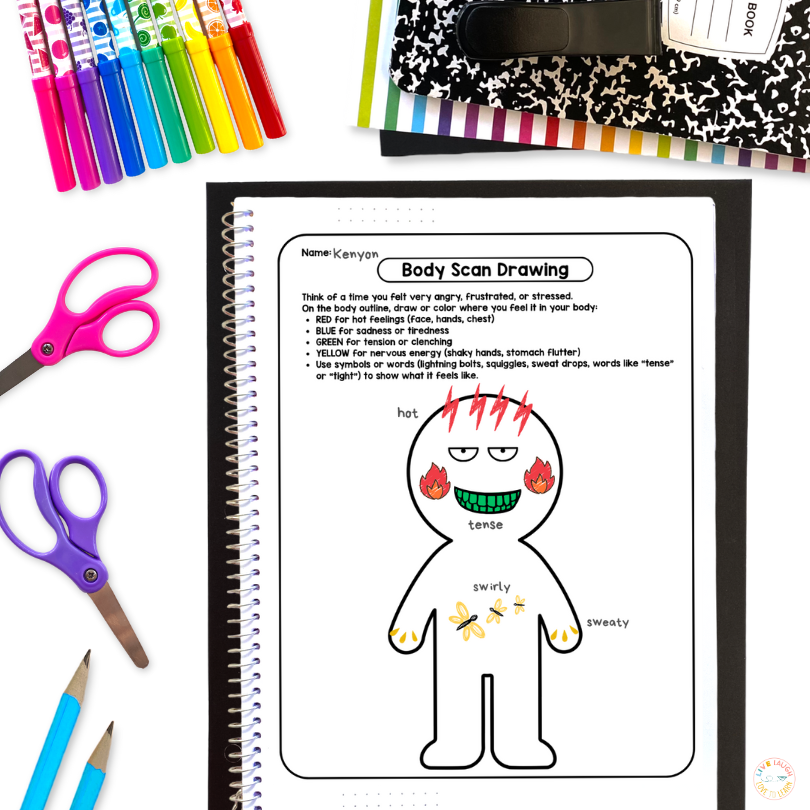
1. The Body Scan Drawing
Most mindfulness activities ask kids to “check in with their body,” but that can be abstract. This one makes it concrete.
How it works:
Students outline a simple figure on paper and lightly “shade” where they feel different sensations, tight shoulders, warm cheeks, butterflies in the stomach, etc.
Why it works:
Kids learn to notice early signs of stress or dysregulation before it becomes a meltdown or shutdown.
Try this:
Let students color-coded areas (blue = sadness, yellow = nervous, wiggly, red = angry, overwhelmed).
➡️For more strategies on identifying and managing emotions in the classroom, check out my Managing Emotions SEL Unit.
2. 5-4-3-2-1 Awareness Countdown
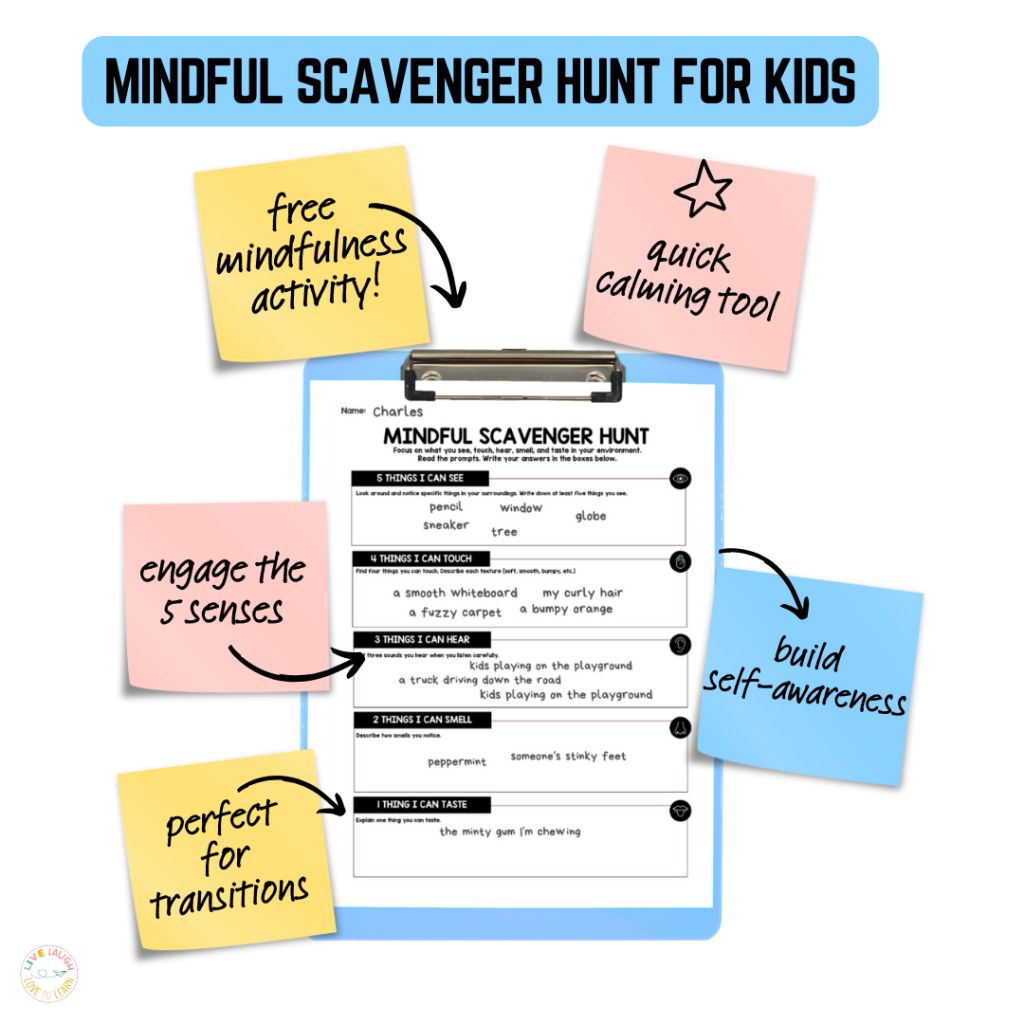
A classic grounding technique, but still a winner with kids.
How it works:
Students identify:
- 5 things they can see
- 4 things they can touch
- 3 things they can hear
- 2 things they can smell
- 1 thing they can taste
Classroom tip:
Turn it into a call-and-response routine:
“Find five things you can see… Go!”
Kids stay focused because it feels like a quick game, not meditation.
Grounding strategies like this pair beautifully with conflict resolution activities for elementary students when tensions start rising. ➡️ “5 Conflict Resolution Activities for Elementary Students”
3. Mindful Breathing With a Visual
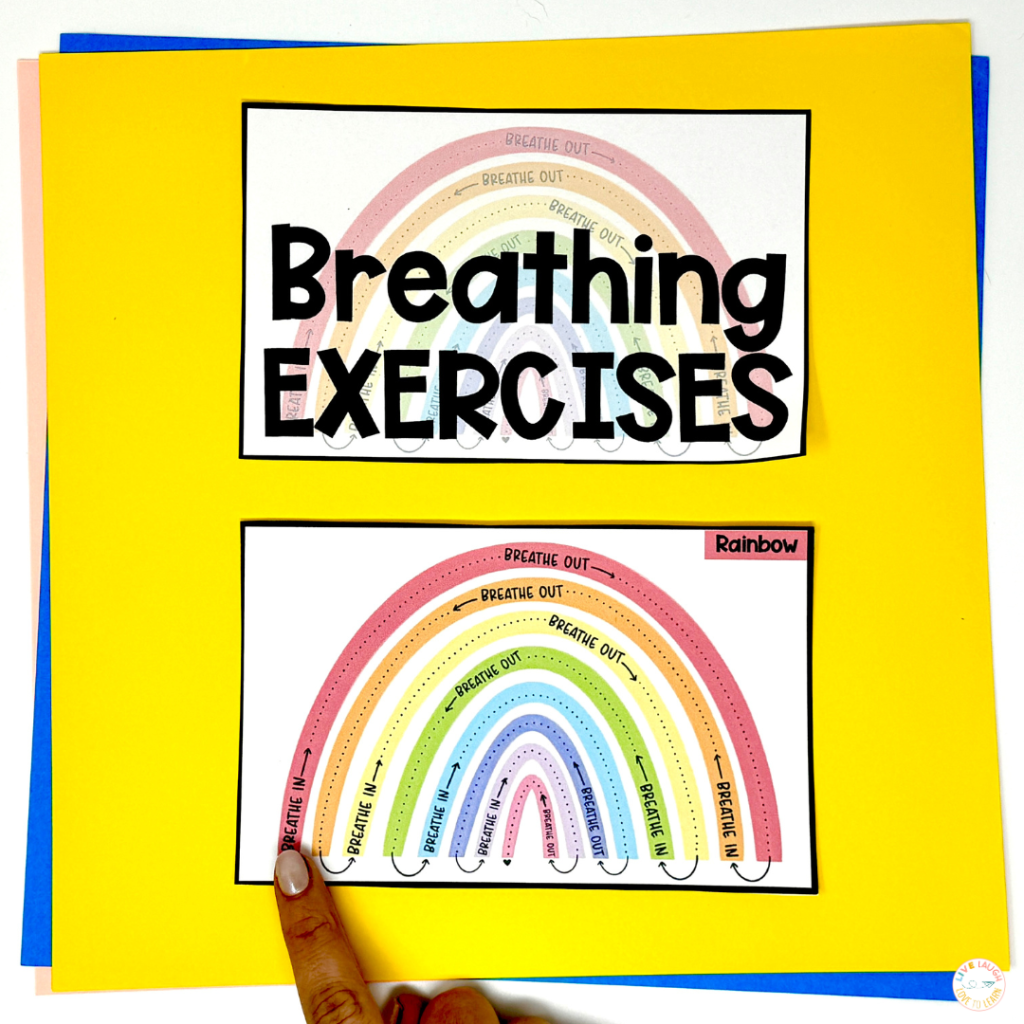
Kids struggle with “just breathe.” But breathing with something? That sticks.
Ideas:
- Trace a figure-eight with your finger while breathing in/out
- Use a breathing “rainbow”
- Blow slowly on a sticky note to keep it gently fluttering
- Use a “smell the flower, blow the candle” prompt
Bonus:
Introduce a “favorite breathing technique” and let students choose the one that works best for them.
Student choice boosts buy-in every time.
If you’re building a toolbox of calming strategies for students, a calm down corner can be the perfect place to practice breathing visuals. ➡️ “How to Create a Classroom Calm Down Corner”
4. The Focus Jar (No Glitter Needed!)
You don’t need messy glitter jars for this, try a digital focus jar or visual focal point projected on your board.
How it works:
Show a looping slow-motion video: falling sand, floating bubbles, gentle rain, or a lava lamp. Ask students to quietly watch for 20–30 seconds.
Why it works:
Kids settle into calm much faster when you give their eyes something soothing to focus on.
5. The One-Minute Mindful Reset
When students learn to reset quickly, your whole day runs smoother.
How it works:
Set a 1-minute timer and guide them through:
- 10 seconds breathing
- 10 seconds noticing feet on the floor
- 10 seconds relaxing shoulders
- 10 seconds softening face muscles
- 20 seconds silently just “being”
Why it works:
Short, predictable, kid-friendly — and easy to repeat daily.
🌟 This makes a perfect warm-up for the reflection journals inside the Managing Emotions SEL Unit.
Pairing mindfulness with hands-on calm down strategies gives students even more tools to draw from.
Want a Free Mindfulness Tool to Try Tomorrow?
Try This Free Mindfulness Activity!
Want an easy, no-prep way to help students practice mindfulness in real time?
Grab my Mindful Scavenger Hunt—a simple sensory-awareness activity that helps kids slow down, notice their surroundings, and reset their brains for learning.
Perfect for transitions, morning meetings, or calm-down practice.
👇 Get it free and I’ll send it straight to your inbox!
➡️ Mindful Scavenger Hunt (Free Printable)
Wrap-Up: Mindfulness Kids Will Actually Use
Mindfulness doesn’t have to be complicated or quiet or 20 minutes long. When we simplify it, make it visual, and practice consistently, kids learn skills they can use during challenges — academic or emotional.
If you’re building mindfulness into your weekly SEL routine, you might also love the Managing Emotions SEL Unit, which includes:
✔️ Hands-on activities
✔️ Kid-friendly breathing tools
✔️ Reflection pages
✔️ SEL vocabulary
✔️ Two card-based mindfulness-style activities
✔️ Pre- and post-assessments
It’s the perfect next step for helping students recognize their emotions and practice strategies that truly work.
If you want a simple mindfulness activity you can use tomorrow, don’t forget to grab the Mindful Scavenger Hunt Freebie. It’s a kid-approved way to help students slow down, look closely, and reset their brain for learning.
And if you want a full month of lessons and tools that teach emotional awareness, grounding strategies, and self-regulation, check out my Managing Emotions SEL Unit, it pairs perfectly with every mindfulness activity in this post.
