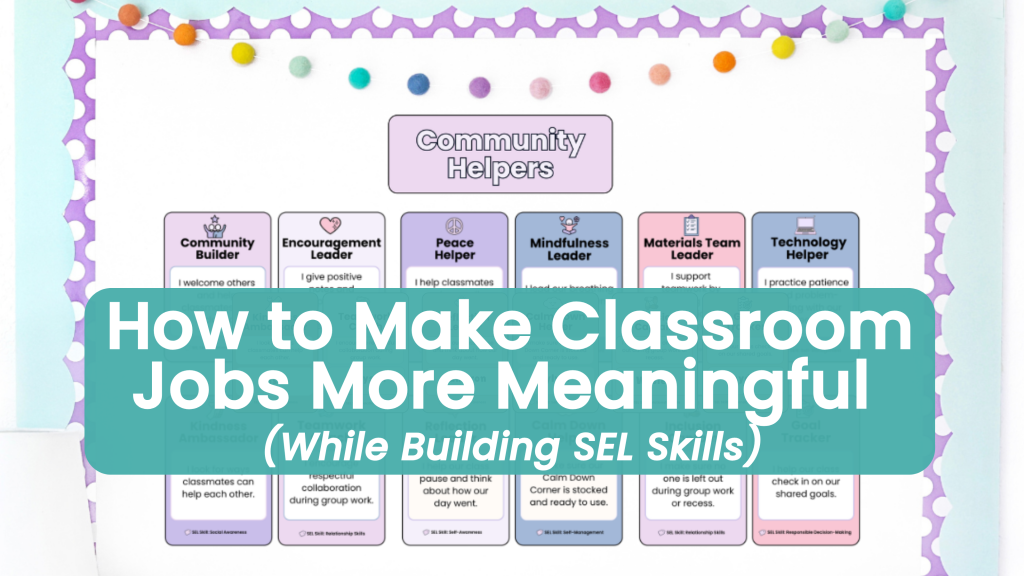
Classroom jobs have been around forever.
Paper passer. Line leader. Pencil sharpener. Door holder.
They help keep your classroom running smoothly, and students usually love having a special responsibility. But somewhere along the way, classroom jobs often become just another management system, a list of chores that gets rotated every week.
What if classroom jobs could do more?
What if they could intentionally teach students responsibility, kindness, leadership, self-management, and teamwork every single day?
With just a few small changes, your classroom jobs can become one of the easiest ways to build social-emotional learning into your daily routine.
Think Beyond the Task
Most classroom jobs focus on what students do.
Collect papers.
Pass out supplies.
Turn off the lights.
Those responsibilities are important, but they’re only part of the picture.
Instead, think about the life skills students are practicing while they complete those jobs.
A student who welcomes new classmates is practicing inclusion.
A student who helps classmates solve small disagreements is building conflict resolution skills.
A student who checks on classroom materials is learning responsibility and accountability.
When we connect classroom responsibilities to real-life skills, students begin to see themselves as contributing members of the classroom community, not just helpers.
Give Every Job a Purpose
One of my favorite ways to strengthen classroom jobs is to explain why each job matters.
For example:
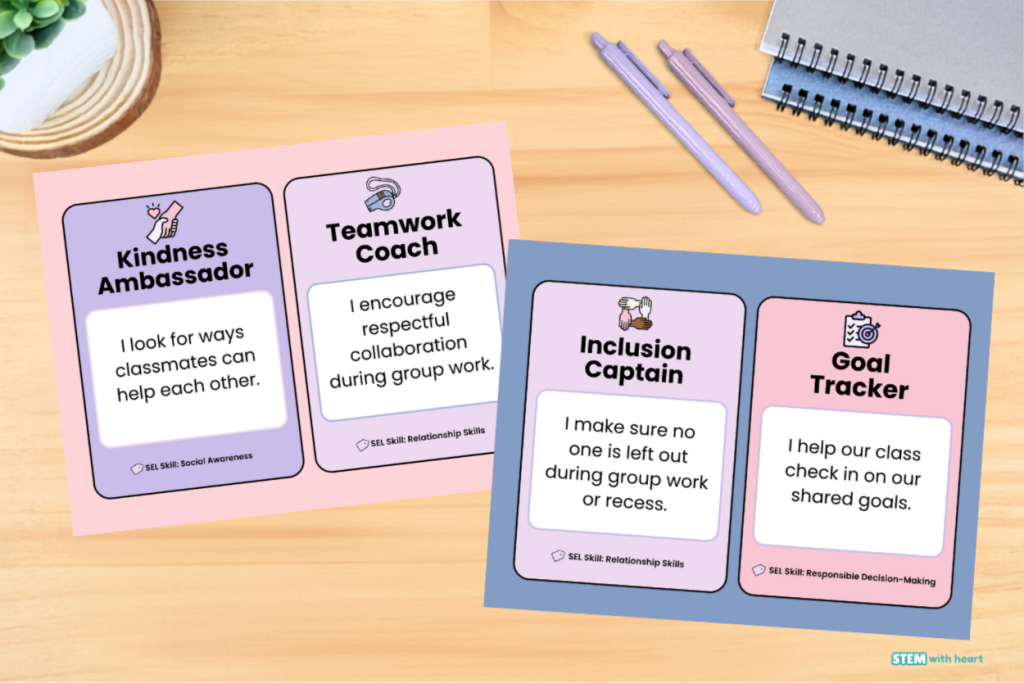
- A Kindness Ambassador notices when someone needs encouragement.
- An Inclusion Captain helps everyone feel like they belong.
- A Mindfulness Leader reminds the class to pause, breathe, and reset during busy days.
- A Goal Tracker celebrates progress and encourages perseverance.
- A Community Builder looks for ways classmates can support one another.
The task itself may only take a few minutes each day, but the mindset lasts much longer.
Students begin looking for opportunities to practice these skills throughout the day, not just when they’re “on duty.”
This same idea works well for STEM-focused roles too , I break down a similar approach in STEM Team Roles for Upper Elementary , where each role ties to a specific collaboration or problem-solving skill.
Make SEL Visible
Students learn best when they can see connections.
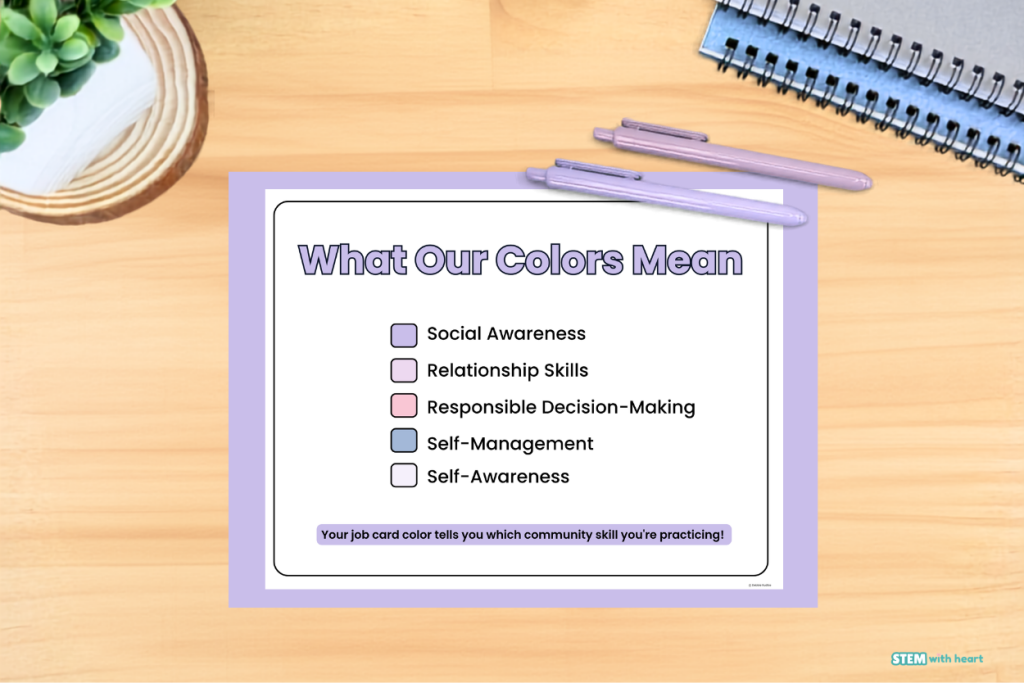
One simple way to reinforce social-emotional learning is by grouping classroom jobs around the skills they build.
For example:
- Self-Awareness – noticing emotions, strengths, and personal growth
- Self-Management – managing emotions, staying organized, and making thoughtful choices
- Social Awareness – showing empathy and understanding others
- Relationship Skills – communicating, cooperating, and including others
- Responsible Decision-Making – making safe, respectful, and responsible choices
When students begin recognizing these skills in everyday classroom routines, SEL becomes something they do instead of just something they learn about during a lesson.
If you’re looking for more ways to build these skills outside of a formal SEL lesson, I shared some favorite strategies in How to Develop Emotional Intelligence in Students , many of them pair naturally with classroom job routines.
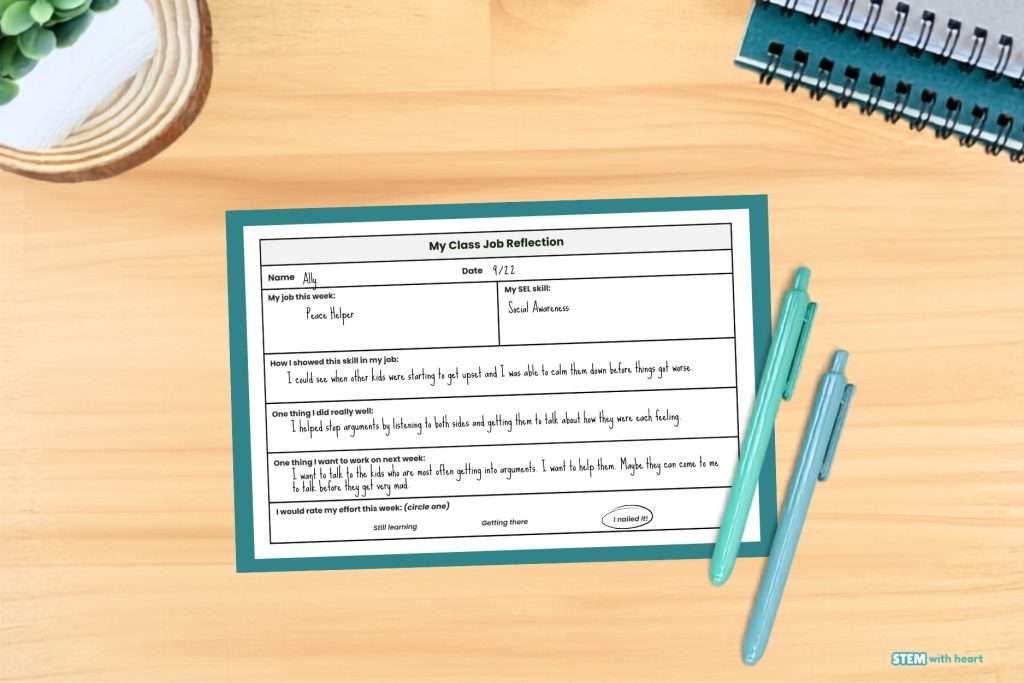
Help Students Reflect
One of the most powerful (and often overlooked) parts of classroom jobs is reflection.
Instead of simply rotating jobs every Friday, ask students to think about questions like:
- What did you do well this week?
- When did you help someone?
- What was challenging?
- What skill did you practice the most?
- What would you like to improve next time?
Reflection helps students recognize that classroom jobs are about growing as a person—not just completing a task.
Over time, they’ll begin making those connections on their own.
Let Students Have a Voice
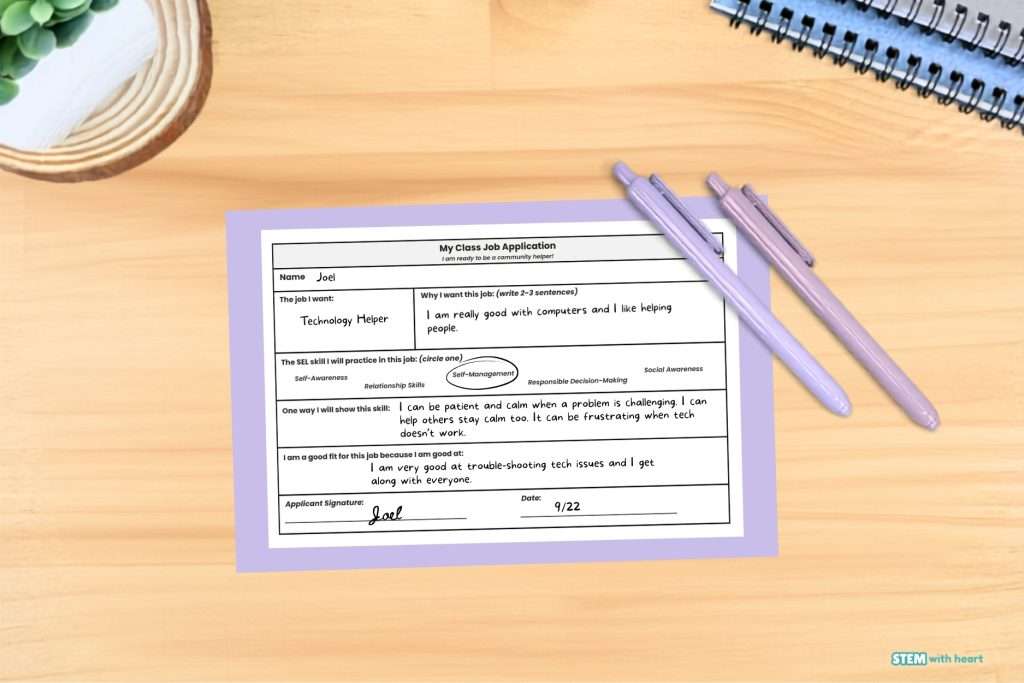
Students are much more invested when they have some choice.
Consider letting students complete a simple job application at the beginning of the year or before each new rotation.
Ask questions like:
- Which job interests you?
- Why would you be a good fit?
- What strength would you bring to this role?
Not every student will receive their first choice every time, but the application process encourages ownership and gives you insight into how students see themselves.
Build Leadership, One Small Job at a Time
Leadership doesn’t only happen during student council meetings or group projects.
It happens when students encourage a classmate who is having a hard day.
It happens when they help organize supplies without being asked.
It happens when they notice someone sitting alone.
Small classroom responsibilities create opportunities for students to practice empathy, responsibility, communication, and leadership every single day.
Those are skills they’ll carry far beyond your classroom.
A Simple Way to Get Started
If you’re looking for an easy way to make classroom jobs more intentional, I recently created an SEL Classroom Jobs resource that combines classroom management with social-emotional learning.
Instead of traditional classroom jobs, each role is connected to one of the five core SEL competencies, helping students see the purpose behind their responsibilities. The resource includes 12 meaningful classroom jobs, multiple display options, editable cards, a ready-to-teach mini-lesson, student job applications, and weekly reflection pages to make implementation simple.
Whether you’re setting up your classroom for back to school or refreshing your classroom routines mid-year, it’s an easy way to build leadership and strengthen your classroom community without adding another lesson to your day.
Final Thoughts
The best classroom jobs don’t just keep your classroom organized.
They help students discover that their actions matter.
When every student has an opportunity to contribute, encourage others, and take responsibility for their classroom community, those everyday routines become meaningful learning experiences.
Sometimes the smallest jobs teach the biggest lessons.
With heart,