
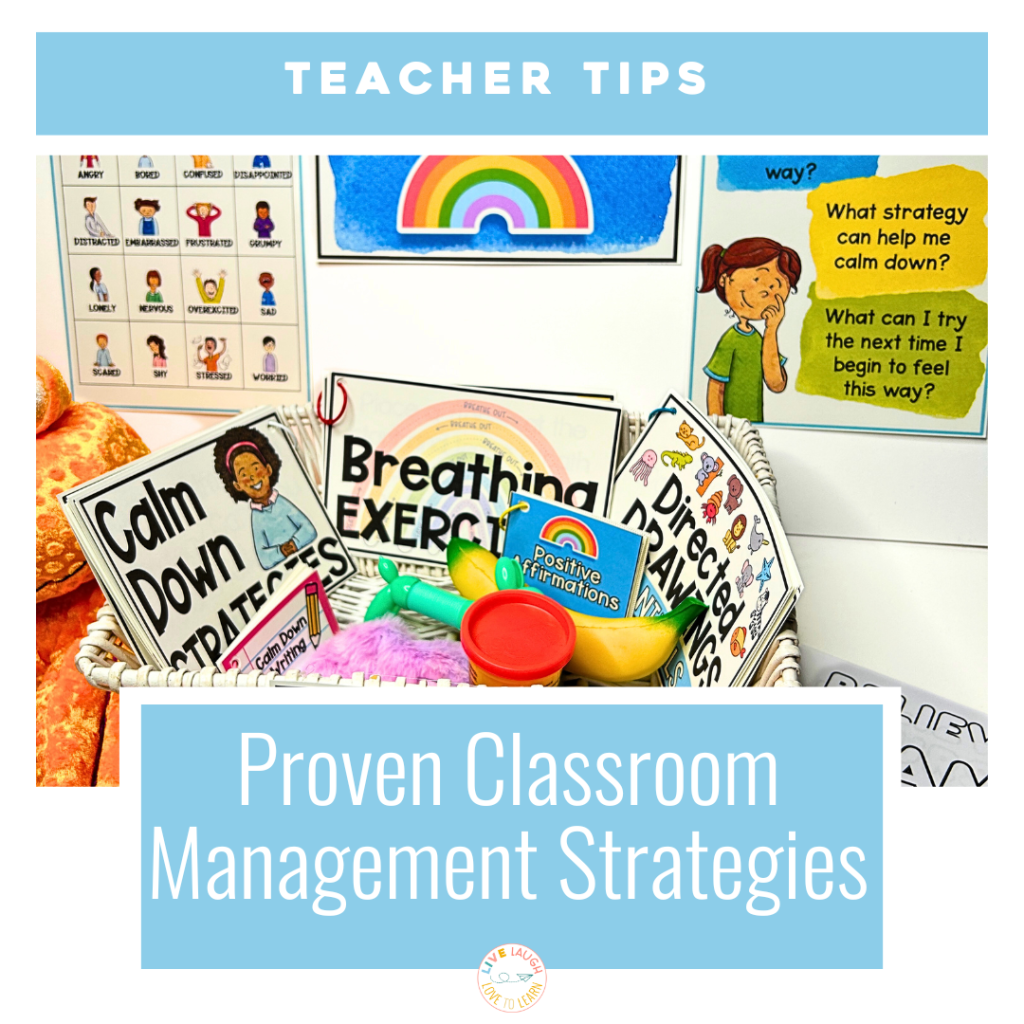
Every teacher everywhere encounters the difficulty of classroom management and managing challenging behaviors in their classroom. And there is no one-size-fits-all strategy that works for every behavior you’ll be faced with in your classroom. Every teacher needs a toolbox of strategies to manage behaviors and a few of my favorites has been proven to work in my own classroom.
One of my most successful ways to manage challenging behaviors is by having a calm down corner with calming strategies and student reflection. The calm down corner and the calming strategies are explicitly taught to students at the start of the school year and when needed throughout the year. This behavior strategy helps students to understand what may cause the behavior and help them to learn strategies to self-monitor and self-regulate their behaviors.
What Causes Challenging Behaviors?
Over my many years of teaching, I’ve noticed that each year more students come to school unable to self-regulate their feelings and emotions. Many children who have experienced trauma have difficulty managing their emotions and can react in an extreme way to a seemingly minor difficulty. My school has been implementing trauma-sensitive training to make our school a safe place for students – academically, physically, socially, and emotionally. A trauma-sensitive approach is beneficial for ALL students. These types of students are usually on the radar of a counselor or administrator but there are ways to help students learn about their emotions and teach them strategies to cope with them.
Managing Behaviors Strategy: A Calm Down Corner
One simple strategy to manage a child having difficulty is to have a dedicated space in your classroom for a brief time out. The time-out spot is not a consequence but a safe space with some quiet activities to take a little break.
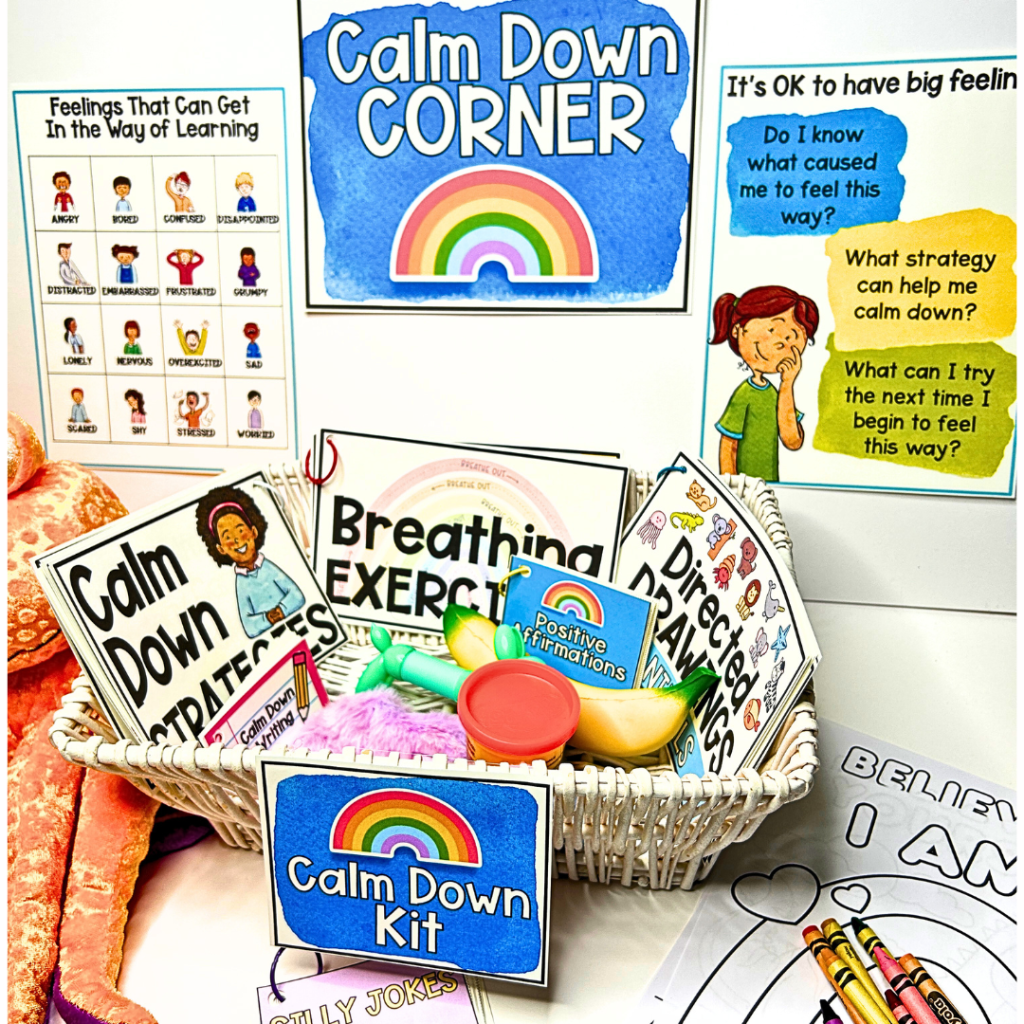
In my classroom, I have a Calm Down Corner in the back. It’s just a desk and the desk has a stash of tactile objects that students can use to help alleviate stress, anger, or frustration. I keep a small box that contains things such as a bean bag, modeling clay, pattern blocks, and foam dice. I carefully select items that are soft and won’t create much noise. At the Calm Down Corner, I also have colored pencils, an assortment of paper and coloring pages, a mirror, small toys, and a glitter bottle.
Classroom Management Strategy #1:
Teach What May Cause Behaviors
I introduce the Calm Down Corner to my students so that they understand why it is there and how to use it. To begin, we discuss as a class how at different times, different people have a range of feelings and emotions. We talk about positive and negative feelings and how these feelings can impact our lives in positive and negative ways.
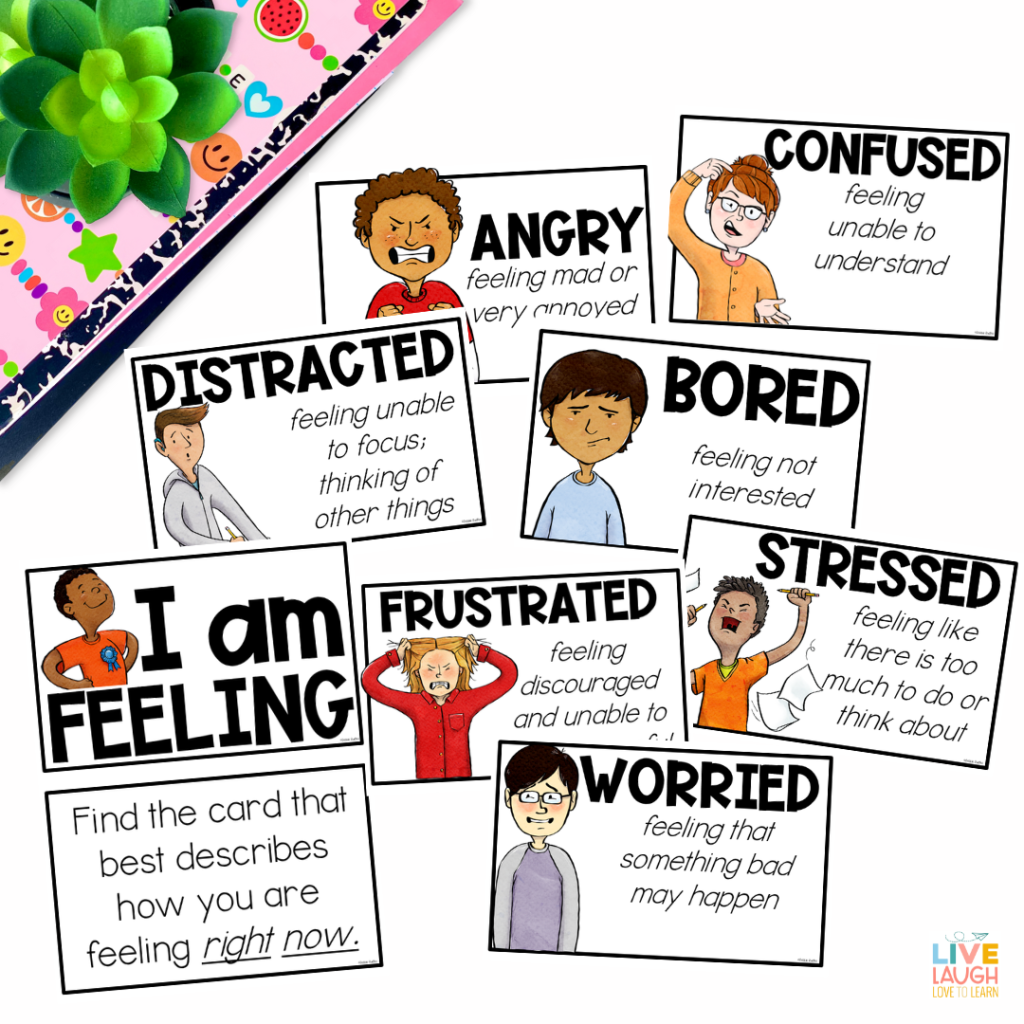
In groups, I have my students discuss different feelings and what might cause them. Maybe we get grumpy when we are hungry, worried because my puppy is sick, tired because I didn’t get a good night’s sleep. We then talk about how these feelings can affect behavior at school. We’ve all had situations where we have been negative feelings and couldn’t concentrate on a task that needed to be done. We might be really worried about something and spend time thinking about the worry and not focusing on learning. Or we may be so angry about something that we can’t sit still and just want to scream. These feelings are OK and normal and valid. Sometimes though, it can be difficult to manage those feelings and it can affect learning or behavior at school.
Classroom Management Strategy #2:
Teach Strategies to Manage Behaviors
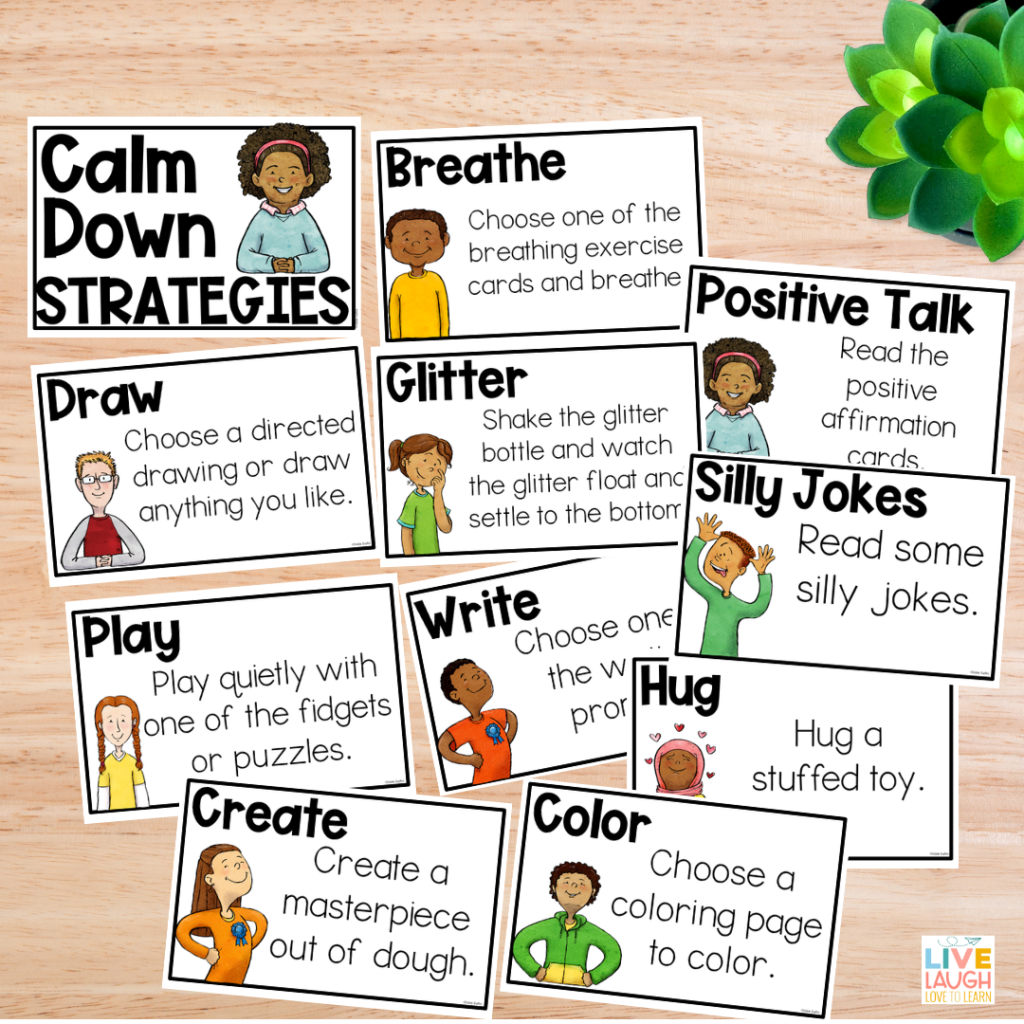
Next, I have students discuss in groups different strategies they can use to calm down so that they can focus on school. We share the strategies discussed as a whole class and then I share the strategies that are in the calm down station. We talk about how different strategies work for different people and for different feelings.
Classroom Management Strategy #3:
Using a Calm Down Corner
As a class, we come up with procedures and expectations for using the Calm Down Corner area. We create an anchor chart and I hang it near the calm down spot. My students are free to use the station when needed. I monitor the time they spend there and will check in with them after a short time (after a few minutes when we first start using the station) to make sure that they are ok and are focusing on using a strategy to refocus so that they can come back to learning as quickly as possible. At times, I have had children linger there and I will quietly tell them that they have just a few more minutes and then need to get back to work. I have also had students who could not calm down and this may require a private discussion with me, parent contact, or a meeting with a guidance counselor.
Classroom Management Strategy #4:
Student Reflection
At the Calm Down Corner, I also keep a stack of reflection forms. Students are encouraged to fill one out before they head back to join the class. Students keep their completed reflection forms in their folders so they can monitor the frequency of specific emotions and possible triggers as well as identify strategies that help them manage those emotions. I make a note of which students have visited the Calm Down Corner and make sure I touch base with them during a quiet time to have a brief chat about what happened and if a strategy helped. This also helps me identify patterns to be proactive and better understand my students’ needs.
Try A Calm Down Corner
Managing challenging behaviors in the classroom can be difficult for any teacher at any grade level but understanding that a child may not even know why they are acting out can help turn the challenge into a teaching opportunity and learning opportunity. Calming strategies need to be taught and students need the opportunity to try out and practice a variety of strategies to learn what works best.
Get started with my FREE Emotion Wheel—a powerful tool to help students identify and express their feelings.
📥 Sign up to download your free resource and transform your classroom!
Need more details on setting up a Calm Down Corner? Check out my post, The Best Calm Down Corner Printables for Your Classroom.

You may also like these blog posts: