
Do your students get excited about setting goals, only to forget them a week later?
You’re not alone. Setting meaningful goals is tough even for adults! But when students learn how to set SMART goals, Specific, Measurable, Achievable, Relevant, and Time-bound, they begin to see their own growth in real time.
In my classroom, goal setting became one of the most powerful tools for reflection and motivation. And the best part? It doesn’t take a fancy program or hours of prep, just a few structured conversations and a simple SMART Goal Toolkit.
Table of Contents
Why Goal Setting Matters in Elementary SEL
When students set goals, they’re not just planning tasks, they’re learning essential SEL skills:
- Self-awareness: recognizing their strengths and areas for growth
- Self-management: staying motivated and managing frustration
- Responsible decision-making: thinking through and managing frustration
Goal setting fits naturally into SEL instruction, especially in the Managing Emotions and Conflict Resolution units. When students reflect on emotional triggers or past conflicts, setting a goal helps them take ownership of their growth and develop strategies for managing stress and anxiety in the classroom.
👉 Learn more about how reflection builds emotional growth in my post on How to Develop Emotional Intelligence in Students.
What Are SMART Goals for Students?
| Letter | Meaning | Classroom Example |
| S | Specific | “I will raise my hand instead of calling out.” |
| M | Measurable | “I will do this 4 out of 5 times this week.” |
| A | Achievable | “I can practice this skill with reminders.” |
| R | Relevant | “This goal will help give others a chance to answer.” |
| T | Timely | “I’ll reflect on my progress every Friday.” |
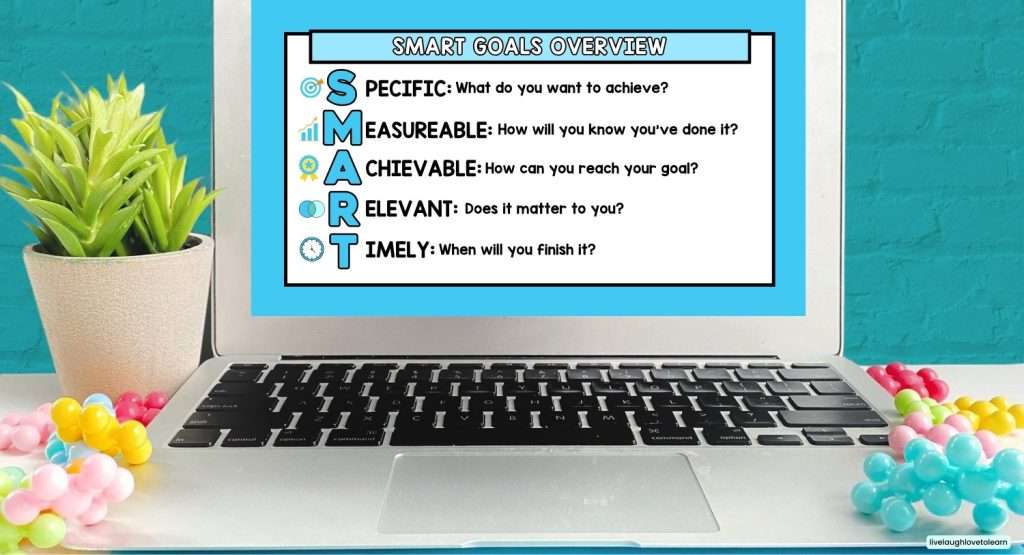
Breaking down goals into these five parts help students see exactly what success looks like and how to get there.
How to Teach SMART Goals in the Classroom
Start with reflection
Ask students to think about something they want to improve, academically or behaviorally. Use journal prompts such as:
“When do I feel proud of myself” or “What’s one habit I’d like to change?”
Model your own goal
Share a teacher example like:
“My goal is to give more specific feedback to student each day.”
Break it down together
Use an anchor chart or the SMART Goal Toolkit (below!) to guide students in turning their ideas into SMART goals.
Check in regularly
Set aside 5-10 minutes a week for reflection. Celebrate progress, and let students adjust goals as needed.
Connect to SEL Lessons
When students set emotional or behavioral goals, like “Use my calm-down strategy before reacting”, they practice self-management in meaningful, measurable ways.
👉 Need ideas for helping students manage big feelings? Read Creating a Calm and Focused Classroom: Why Every Teacher Needs a Calm Down Corner.
Classroom Examples of SMART Goals
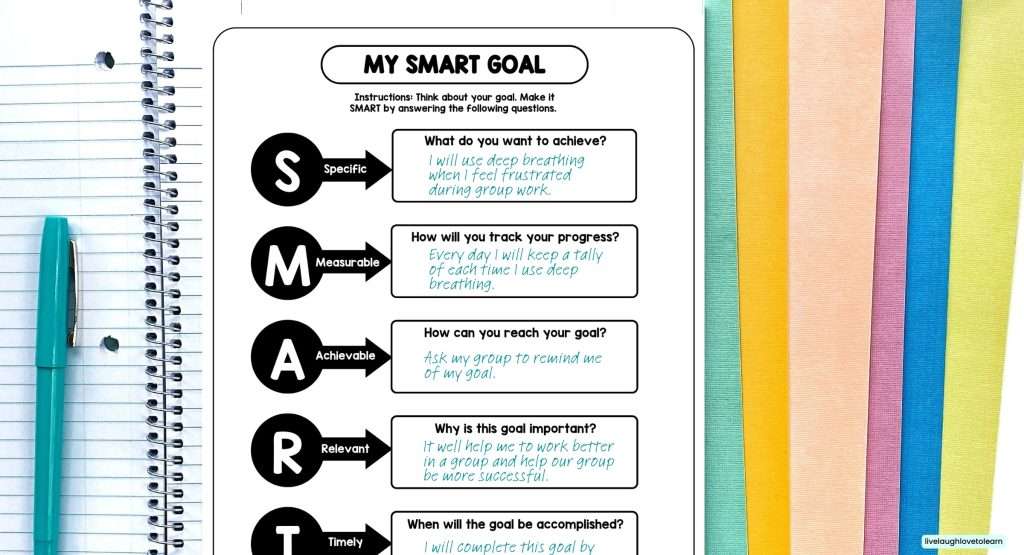
- “I will use deep breathing when I feel frustrated during group work.”
- “I will complete my morning work before the bell three days in a row.”
- “I will say one kind thing to a partner each day this week.”
Reflection and Celebration
Goal setting is only powerful when students reflect. Try these quick reflection routines:
- End-of-week journaling
- “Glow & Grow” feedback exchanges (free activity here)
- Class celebrations for reaching milestones
Reflection helps students recognize that growth is a process, and that progress deserves celebration.
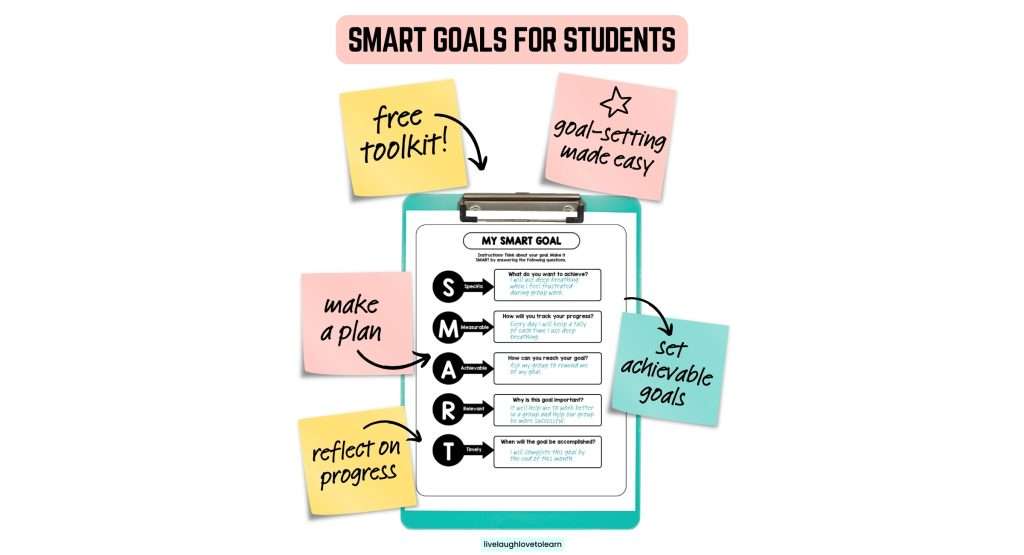
🎯 Free SMART Goal Toolkit for Students
Help your students set meaningful, achievable goals with this free SMART Goal Toolkit!
This easy-to-use printable includes:
✅ A goal-setting organizer
✅ SMART Goal Reference Card
✅ SMART Goal anchor chart in two sizes!
👉 Click here to download your free SMART Goal Toolkit!
If you love this activity, it pairs perfectly with my Managing Emotions and Conflict Resolution SEL Units, where students learn to self-reflect, track progress, and apply their goals in real classroom situations.
Final Thoughts
When goal setting becomes part of your weekly routine, students start viewing challenges as opportunities, not failures. A few minutes of reflection each week can lead to lasting growth in focus, confidence, and self-control.
🌟 Small goals. Big growth. Every student deserves that feeling of success,
