
Let’s be honest: kids today are stressed.
Between academic pressure, social dynamics, and the constant stream of difficult news they absorb through screens and conversations around them, anxiety in the classroom is higher than many of us have ever seen.
The good news? You don’t need to be a school counselor to make a meaningful difference. With the right tools and strategies in place, you can help your students build the emotional skills they need to manage stress, and create a classroom environment where every child feels safe, seen, and supported.
Social-emotional learning (SEL) helps students develop the skills they need to recognize emotions, regulate their responses, and navigate challenges in healthy ways.
Here’s what actually works.
Table of Contents
Why Students Experience Stress and Anxiety in the Classroom
Before we can help students manage stress, it helps to understand where it’s coming from. For upper elementary students especially, common stressors include:
- Academic pressure and fear of failure
- Social situations, fitting in, peer conflict, and bullying
- Transitions (new school year, new teacher, changing friendships)
- Test anxiety
- Family stress that follows them through the door each morning
- News and current events, natural disasters, political tension, school safety concerns, and other difficult headlines kids absorb through social media, TV, and adult conversations around them
That last one is worth pausing on. Upper elementary students are old enough to understand that something feels wrong in the world, but they don’t yet have the cognitive or emotional tools to process it. They hear things, at home, on their devices, from older siblings, and they carry that weight into your classroom without knowing how to put it down. Acknowledging this reality is part of meeting students where they are.
Many kids don’t have the vocabulary or the self-awareness to say “I’m feeling overwhelmed right now.” Instead, stress often shows up as acting out, shutting down, crying unexpectedly, frequent trips to the nurse, or difficulty focusing. Recognizing these behaviors as stress responses, not defiance, is the first step in being able to help.
Before students can manage stress or anxiety, they first need to recognize and name what they are feeling. This awareness is part of developing emotional intelligence, an essential skill that helps students understand their emotions and respond to challenges in healthier ways.
1. Teach Students to Name Their Emotions
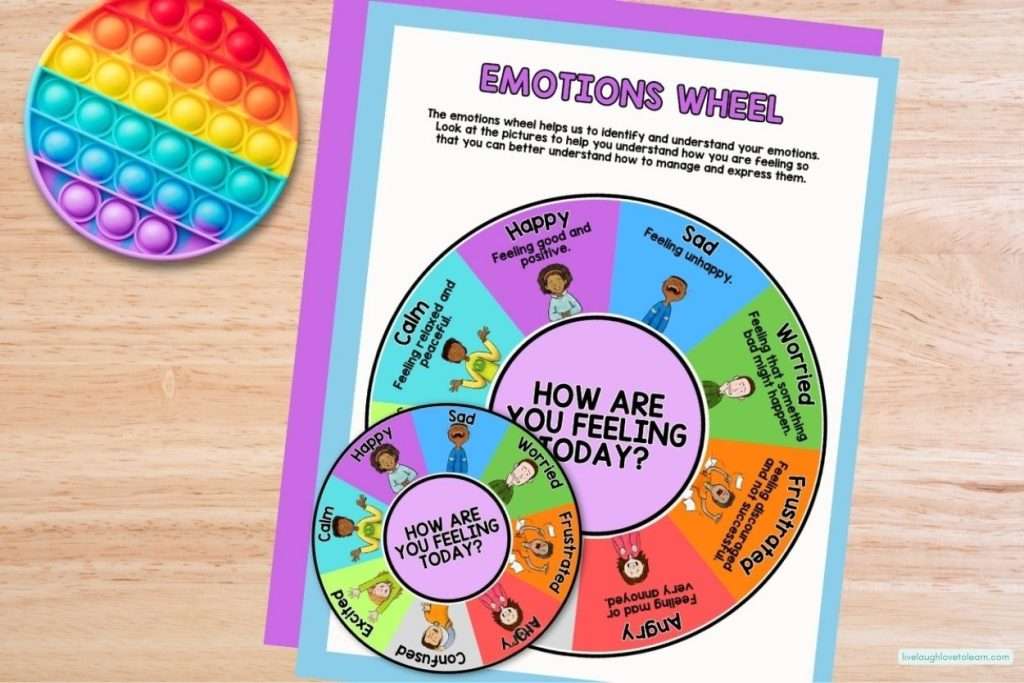
One of the most powerful things you can do for an anxious student is help them build an emotional vocabulary. When kids can identify and name what they’re feeling, they gain a sense of control over it. “I feel nervous about this test” is so much easier to work with than an undefined sense of dread.
Try starting your day with a quick emotional check-in. Ask students to rate how they’re feeling on a simple scale, or point to a feelings chart on your wall. Make it a normal, judgment-free part of your classroom routine.
Want a simple tool you can start using tomorrow? Grab my Free Emotions Wheel, a printable resource that helps students identify exactly what they’re feeling so they can begin building self-regulation skills right away.
In my Managing Emotions SEL Unit for 4th and 5th Grade, naming emotions is one of the foundational skills students practice in the very first week. The 4-week curriculum walks students through identifying feelings, understanding what triggers their emotional responses, and developing strategies for regulation, all in age-appropriate, engaging activities designed specifically for upper elementary students.
2. Create a Calm Down Corner
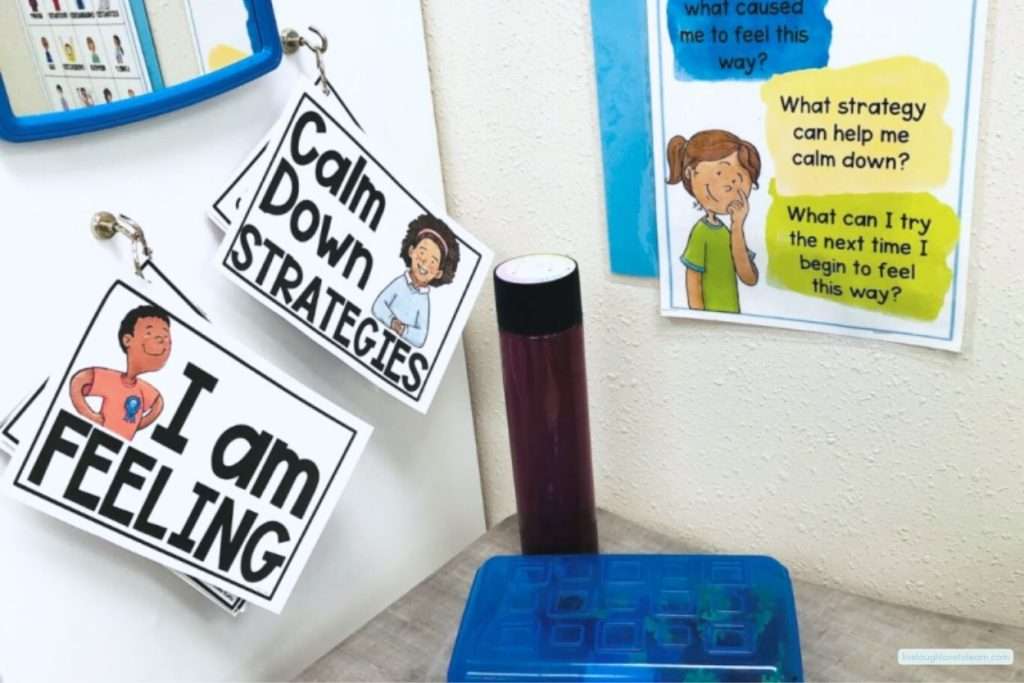
One helpful classroom support many teachers use is a calm down corner, where students can practice self-regulation strategies independently. Every classroom Every classroom needs a safe space where students can pause, regroup, and manage big emotions before they escalate.
A Calm Down Corner (sometimes called a Peace Corner or Regulation Station) gives students a proactive tool — a place to go before a meltdown happens, not after.
The key is making the space feel supportive and purposeful, not like a punishment. When designed thoughtfully, it becomes a place where students learn how to calm their bodies and refocus so they can return to learning.
Consider including tools such as:
- Feeling cards so students can identify what they’re experiencing
- Self-regulation strategy cards with simple techniques they can use independently
- Fidgets or sensory tools
- A visual calm-down checklist or breathing guide
- A calm, cozy aesthetic (a small rug, soft lighting, or a privacy screen)
My Calm Down Corner Kit includes everything you need to set one up, feeling cards, self-regulation strategy cards, and activities that help students learn to use the space independently. It takes the guesswork out of getting started, and your students will genuinely use it.
Introduce the corner at the beginning of the year, practice using it as a class, and set clear expectations for when and how to access it. Once it becomes part of your classroom culture, you’ll be amazed how much it reduces emotional disruptions.
3. Practice Breathing and Mindfulness Strategies
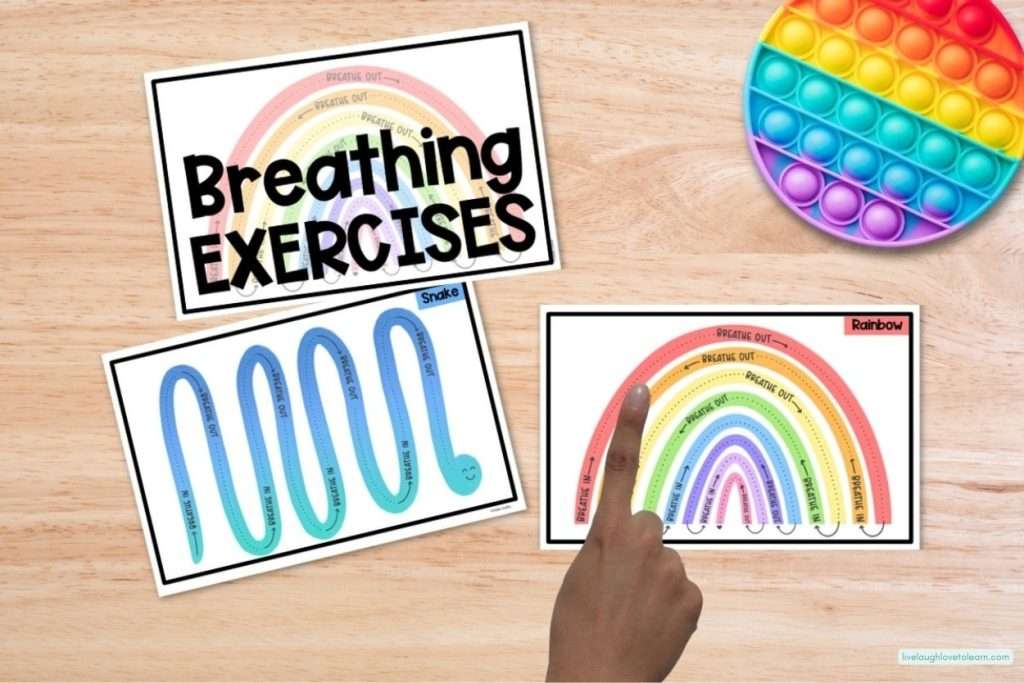
Simple, science-backed breathing techniques can dramatically calm the nervous system, and they take less than two minutes. The best part? Students can use them anytime, anywhere: before a test, in the hallway, at their desk.
A few favorites to teach:
Box Breathing
Inhale for 4 counts, hold for 4, exhale for 4, hold for 4. Repeat.
Belly Breathing
Place one hand on the chest, one on the belly. Breathe deeply enough that only the belly hand rises.
5-4-3-2-1 Grounding
Name 5 things you can see, 4 you can touch, 3 you can hear, 2 you can smell, 1 you can taste. This pulls the brain back to the present moment.
Post a simple visual reminder of your chosen techniques somewhere visible in your classroom. When you notice a student getting dysregulated, a quiet, calm reminder to “try your box breathing” can work wonders.
Free Classroom Tool:
If you’re working on helping students recognize and manage emotions, my Free Emotions Wheel is a simple tool many teachers use during morning check-ins or calm-down routines.
It helps students move beyond saying “I’m fine” and actually identify what they’re feeling.
→ Download the Free Emotions Wheel
4. Build a Classroom Culture of Emotional Safety
No strategy works in isolation. For students to feel comfortable using calm-down tools and naming their feelings, they need to trust that it’s safe to do so. That means building a classroom culture where emotions are treated with respect, not dismissed, mocked, or used as a source of embarrassment.
A few ways to build that culture:
- Model your own emotional regulation. When you’re frustrated, narrate it: “I’m feeling a little overwhelmed right now, so I’m going to take a deep breath.” Students learn what they see.
- Use classroom meetings or morning circles to discuss emotions, conflict, and problem-solving in a low-stakes setting.
- Respond to emotional outbursts with curiosity rather than frustration. “It looks like you’re having a hard time. What’s going on?” goes much further than “Calm down.”
- Celebrate emotional growth, not just academic achievement.
When emotions are treated as normal classroom experiences rather than disruptions, students feel safer asking for help and using the strategies you’ve taught them.
5. Teach Coping Strategies Explicitly
We wouldn’t expect students to learn long division by osmosis, emotional regulation skills need to be explicitly taught, too. That means carving out time to actually teach strategies for managing stress, rather than hoping students simply pick them up along the way.
One way to help students feel less overwhelmed is by breaking big challenges into manageable steps. Teaching students to set SMART goals gives them a clear plan and helps build confidence when tasks feel stressful.
At the same time, these skills don’t have to be taught in isolation. Many teachers reinforce social-emotional skills during everyday learning experiences, especially collaborative or hands-on activities where students naturally practice perseverance, communication, and problem-solving.
For example, STEM challenges can be a powerful way to reinforce emotional skills while students are engaged in academic learning. If you’re curious how that works in practice, here are some ideas for adding SEL to STEM challenges in your classroom.
For teachers who want a more structured approach, a dedicated SEL curriculum can help ensure these skills are taught intentionally and consistently. When social-emotional learning is sequential rather than reactive, students build a toolkit they can rely on when things get hard.
This is exactly why a structured SEL curriculum is so valuable. When social-emotional learning is intentional and sequential, rather than reactive, students build a genuine toolkit they can draw from when things get hard.
My Managing Emotions SEL Unit includes four weeks of lessons designed to help 4th and 5th graders identify emotions, understand their triggers, and practice practical self-regulation strategies. It’s designed to make teaching emotional skills simple and meaningful without adding a lot of prep to your plate.
For specific tools students can use in the moment, see these classroom calm down strategies that support self-regulation
6. Communicate with Parents
Parents are partners in supporting their child’s emotional health. When you can share the strategies you’re using at school and encourage families to reinforce them at home, you create a consistent, wraparound support system.
Send home a simple note or email explaining your classroom’s approach to emotional regulation. Share the strategies students are learning so parents can reference them when their child is struggling at home. The more consistency between school and home, the more effective these tools become.
Free Classroom Tool
If you’re looking for a simple place to start, the Free Emotions Wheel helps students identify what they’re feeling and begin building self-regulation skills.
A Final Thought
You became a teacher because you care about kids, all of them, not just the ones who make it easy. Supporting students through stress and anxiety is some of the most important work you’ll ever do. And the good news is, you don’t have to figure it all out yourself.
With the right resources, a little intentionality, and a lot of heart, you can help your students do more than just survive the school year, you can help them build emotional skills that will serve them for the rest of their lives.
Ready to get started? Check out the Managing Emotions SEL Unit for 4th and 5th Grade and the Calm Down Corner Kit in my Teachers Pay Teachers store , both are designed to make emotional learning easy to implement and genuinely meaningful for your students.
Helping teachers create classrooms where every student can learn and thrive,
