
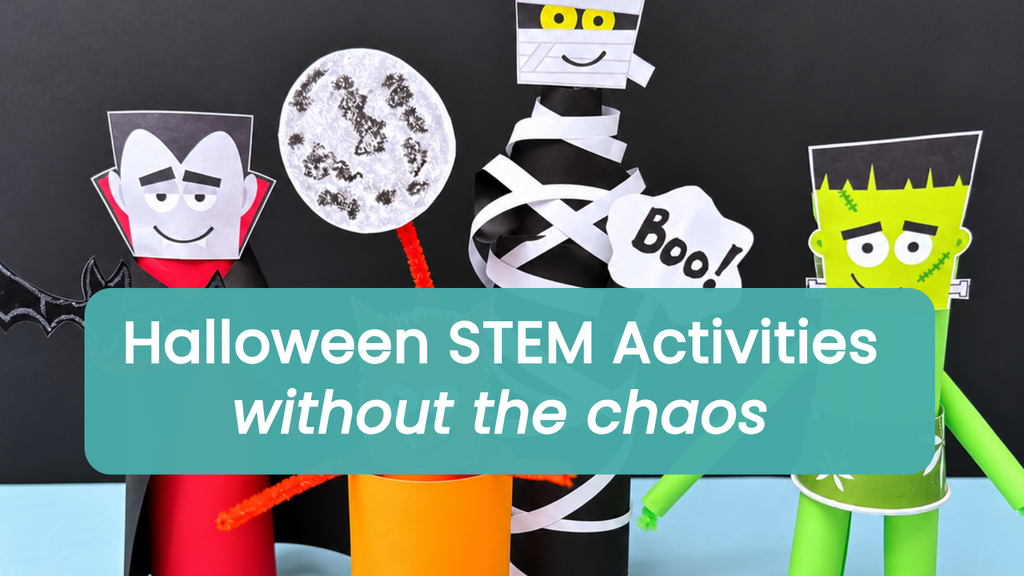
Halloween in the classroom can be a lot of fun, but it can also bring a little extra energy!
Add a hands-on STEM challenge to the mix, and suddenly students are excited about materials, designs, and building…while you’re trying to keep everyone working together and learning.
But Halloween STEM activities don’t have to feel chaotic.
With a little structure, a seasonal STEM challenge can actually be the perfect opportunity to help students practice teamwork, communication, problem-solving, and reflection while still enjoying all the fun of Halloween.
Here are a few simple ways to make Halloween STEM activities engaging and manageable.
1. Teach Teamwork Before You Start Building
One of the biggest mistakes we can make with group STEM activities is assuming students already know how to work as a team.
Before handing out materials, take a few minutes to talk about what successful teamwork actually looks and sounds like.
Students might brainstorm behaviors such as:
- Listening to everyone’s ideas
- Taking turns speaking
- Sharing materials
- Encouraging teammates
- Disagreeing respectfully
- Helping solve problems instead of blaming others
This doesn’t need to be a long lesson. Even a five-minute conversation can give students a shared understanding of what you expect once the challenge begins.
You can also ask:
What does a strong STEM team do when they don’t agree?
That question is especially important because disagreement is almost guaranteed during an engineering challenge, and that’s not necessarily a bad thing! Learning how to work through those moments is part of the experience.
2. Set Clear STEM Challenge Expectations
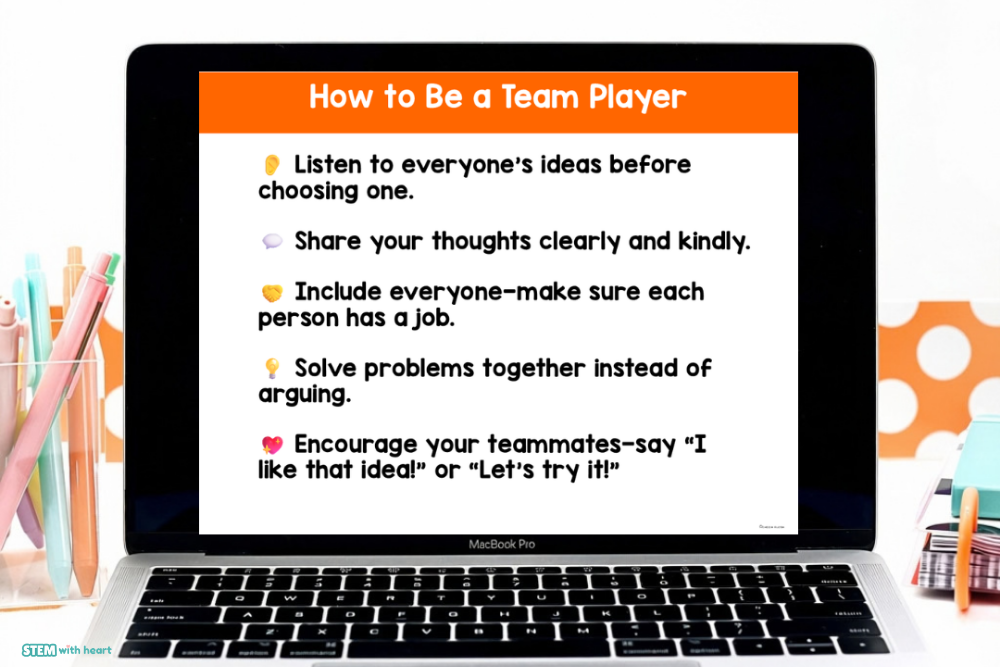
Halloween activities are naturally exciting, so this isn’t the time for vague directions.
Before students begin, establish a few clear expectations for the challenge.
For example:
Work as a team. Everyone should have a chance to contribute.
Share the materials. Materials belong to the team, not one person.
Try before asking for help. Encourage students to problem-solve together first.
Expect your design to change. Testing and improving are part of engineering.
Use kind and respectful words. Good ideas can come from anyone on the team.
Keeping expectations short and specific makes them much easier for students to remember while they’re working.
3. Give Every Student a Role
One of the easiest ways to reduce chaos during a STEM challenge is to make sure everyone has a job.
Team roles give students responsibility and help prevent one student from taking over the entire project while everyone else watches.
Depending on the challenge, students might take on roles such as:
- Project Manager – keeps the team focused and makes sure everyone participates
- Resource Manager – manages and gathers materials
- Analyst – records ideas, observations, or results
- Builder – helps lead construction while incorporating the team’s plan
The important part is reminding students that having a specific role doesn’t mean they work alone. The team still makes decisions and solves problems together.
Roles simply give everyone a way to contribute.
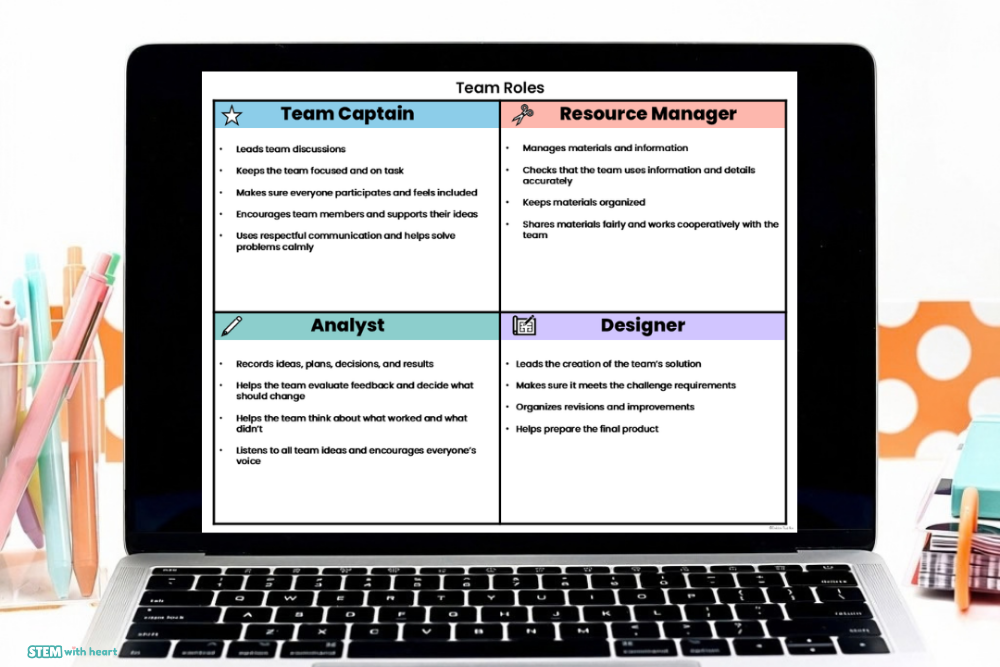
Want to make assigning team roles even easier? Grab my FREE STEM Team Roles resource to help students understand their responsibilities and work together more effectively during any STEM challenge.
4. Build in Time to Plan Before Students Touch the Materials
It’s tempting to put the supplies on the table and say, “Go!”
That’s also a very quick way to turn a STEM challenge into a free-for-all.
Instead, require teams to pause and plan before building.
Have students discuss questions like:
- What are we trying to create?
- What ideas does everyone have?
- Which idea should we try first?
- What materials might work best?
- How will we know if our design is successful?
Students can sketch their design in a STEM journal before they begin.
This small planning step slows down the initial rush for materials and shifts the focus from Let’s build something! to Let’s solve this problem together.
5. Choose Halloween STEM Activities That Encourage Teamwork
Some STEM challenges naturally lend themselves to teamwork better than others.
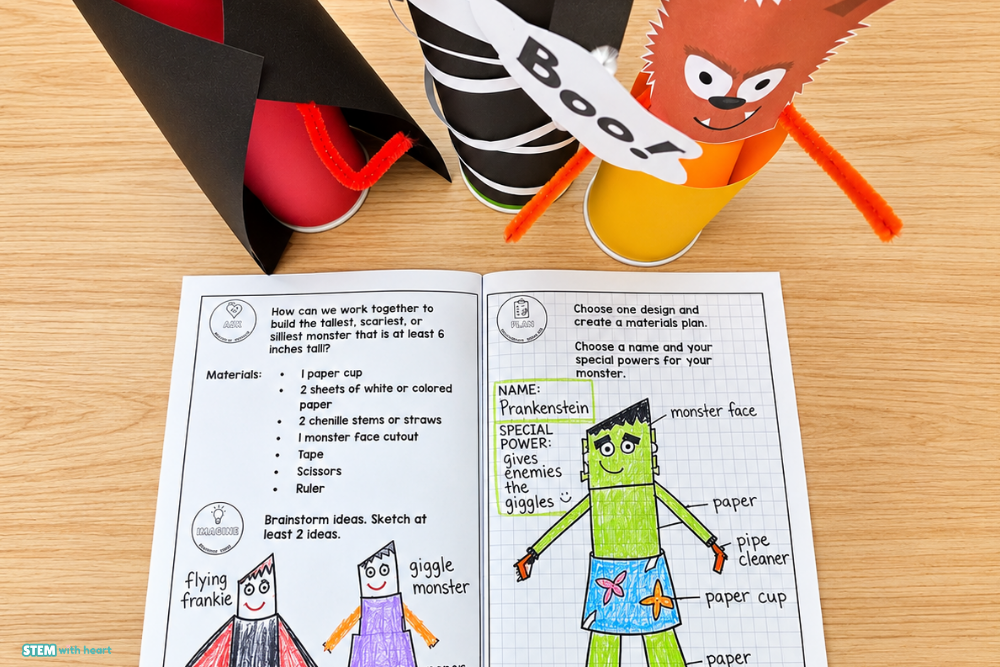
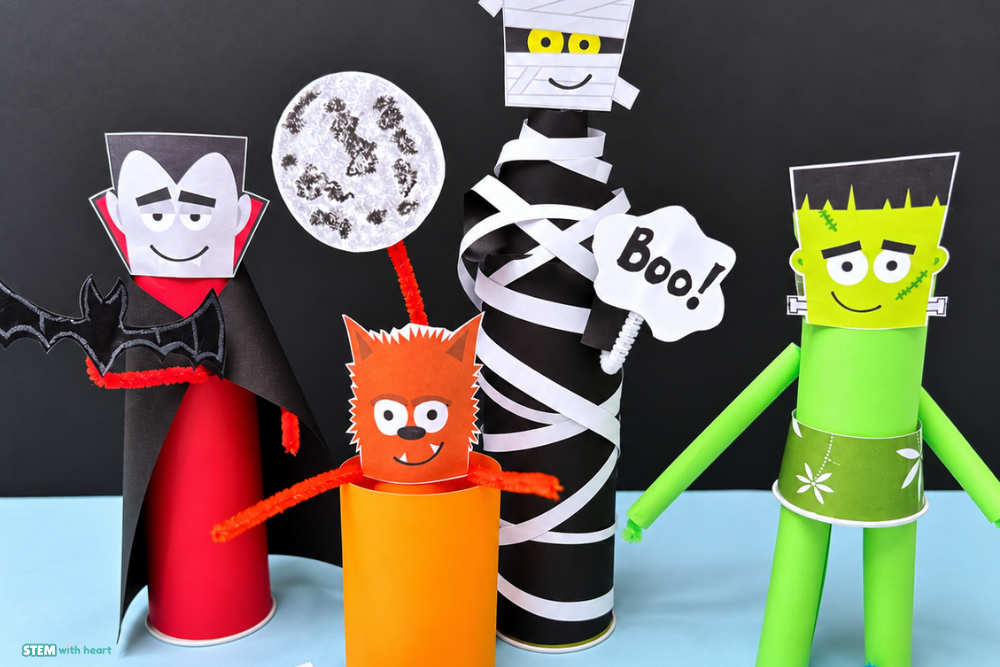
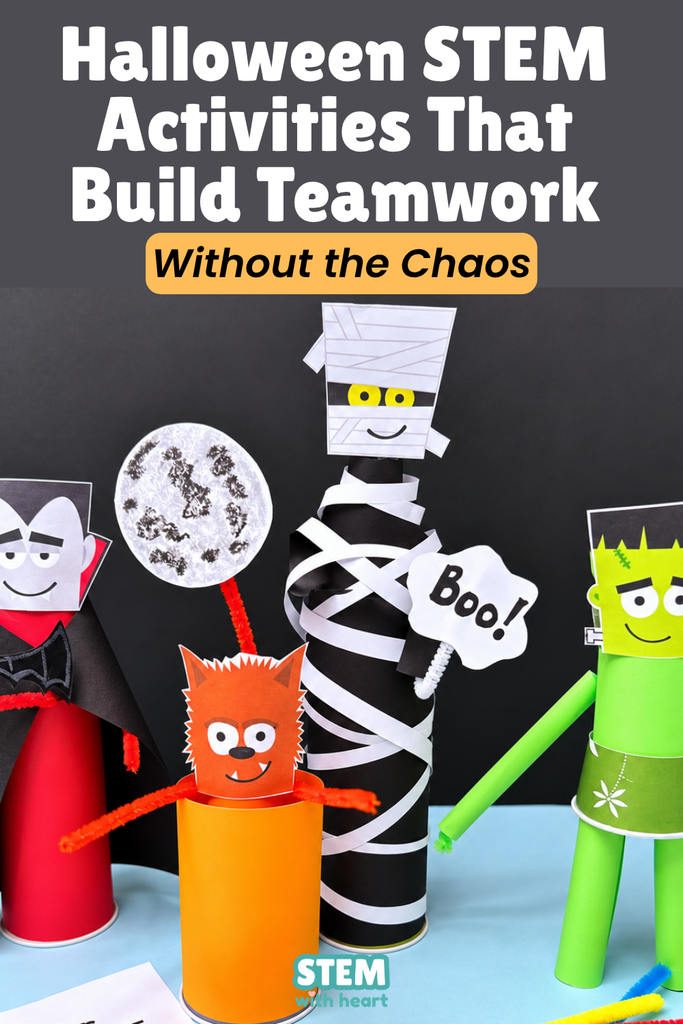
One of my favorites for Halloween is a Monster STEM Challenge.
Students work together to design and build a monster while following specific engineering criteria and constraints. The Halloween theme gives them plenty of room for creativity, but the real learning happens as they make decisions together.
Which design should they use?
How will they divide the work?
What happens when someone’s idea doesn’t get chosen?
How will they respond when part of the design doesn’t work?
Those moments turn a fun Halloween building activity into an opportunity to practice real teamwork skills.
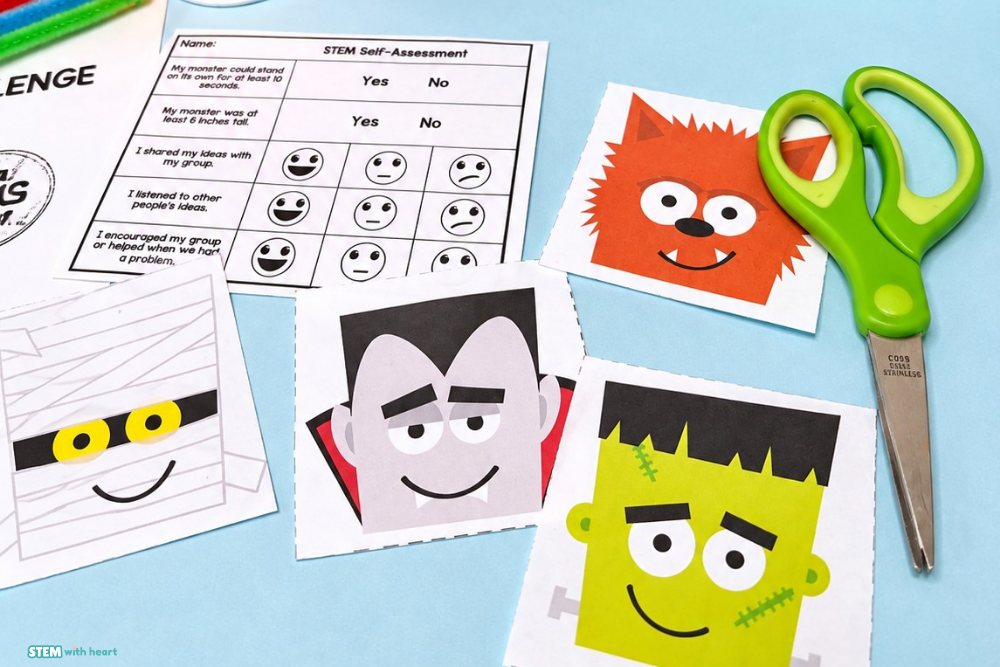
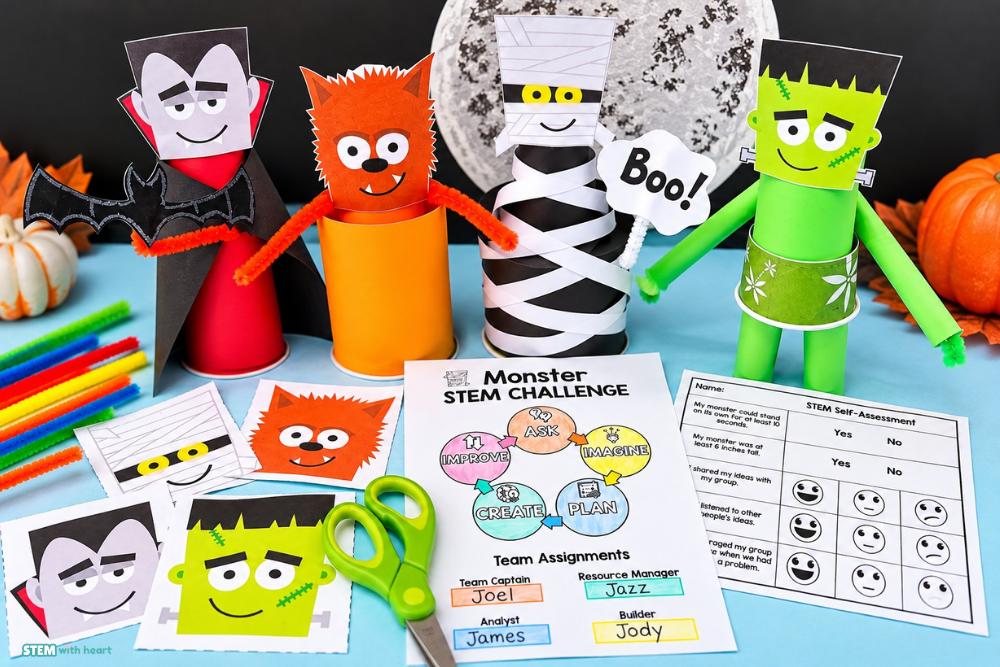
My Halloween Monster STEM + SEL Challenge combines the engineering design process with an explicit teamwork mini-lesson, team planning, reflection, and self-assessment so students aren’t just doing a group project—they’re learning how to work more effectively as a team.
Take a look at the challenge here ➡️ Monster STEM + SEL Challenge
6. Expect Productive Struggle
During a STEM challenge, students are going to get frustrated.
The tower falls.
The monster won’t stand up.
Two teammates want completely different designs.
Someone uses the last piece of tape.
It can be tempting to jump in and solve the problem for them, especially when classroom energy is already high.
Instead, give teams a chance to work through the problem.
Try asking:
What’s not working yet?
What could you change?
Whose idea haven’t you tried?
What can your team do next?
STEM challenges give students a safe place to discover that their first idea doesn’t have to work—and that changing a design isn’t failure. It’s part of the engineering process.
7. Don’t Skip the Reflection
The best teamwork lesson often happens after the building is finished.
Before cleaning everything up and moving on, give students a few minutes to think about how their team worked together.
Ask questions such as:
- How did you contribute to your team?
- What did your team do well?
- How did your team handle different ideas?
- What was challenging about working together?
- What would you do differently during your next STEM challenge?
You can discuss these questions as a class, have teams talk together, or use a quick student self-assessment.
This final step helps students recognize that how they worked together matters just as much as what they built.
Making Halloween STEM Fun and Purposeful
Seasonal activities don’t have to mean putting learning on pause.
A well-structured Halloween STEM challenge can give students the excitement they’re looking for while giving you a meaningful way to teach teamwork, communication, flexible thinking, and problem-solving.
The key is adding enough structure to channel all that Halloween excitement:
Teach the teamwork skill. Set expectations. Assign roles. Plan before building. Let students problem-solve. Then reflect.
Students still get to create, build, laugh, and enjoy Halloween, but underneath all that fun, they’re practicing skills they’ll use during every group project that follows.
And that makes the activity about much more than building a monster.
Looking for a Ready-to-Use Halloween STEM Activity?
My Halloween Monster STEM + SEL Teamwork Challenge is designed for 3rd, 4th, and 5th grade students and combines a hands-on Halloween engineering challenge with explicit SEL instruction.
Students practice teamwork as they move through the engineering design process, plan and build their monster, reflect on their team’s work, and complete a self-assessment.
It’s Halloween fun, with a purpose.
Halloween STEM doesn’t have to be chaotic to be fun! With a little structure and a focus on teamwork, those exciting building moments can become meaningful opportunities for students to grow as problem-solvers, teammates, and creative thinkers.
Here’s to less chaos, more collaboration, and a whole lot of learning!
Happy teaching!
With heart,
Looking for more ways to build teamwork during STEM?
Check out STEM Teamwork Activities: Collaboration Strategies That Actually Work for practical strategies to help students communicate, collaborate, and solve problems together.
You might also like: